Staff Report
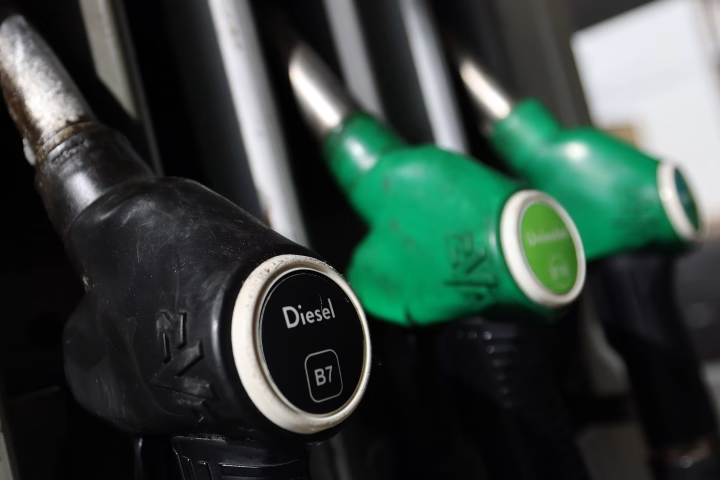
The European Union’s ambitious climate agenda, a cornerstone of its Green Deal, has encountered a significant political hurdle with the decision to delay the implementation of a carbon tax on heating fuels for buildings and fuel for transport until 2028. This deferral, a move born out of a complex interplay of economic anxieties, social concerns, and geopolitical realities, casts a long shadow over the bloc’s commitment to its 2030 emissions reduction targets and raises pertinent questions about the feasibility of its climate transition. While presented as a pragmatic adjustment, it undeniably represents a concession to rising public discontent and a recognition of the formidable challenges inherent in decarbonizing two of the most ubiquitous and essential sectors of European life.
Initially envisioned as a key mechanism within the revamped Emissions Trading System (ETS2), the carbon tax aimed to internalize the environmental costs of fossil fuel consumption in residential heating and road transport. The logic was clear: by making polluting activities more expensive, consumers and businesses would be incentivized to switch to cleaner alternatives, thereby driving down emissions. However, the timing of its proposed introduction could not have been more fraught. Europe has grappled with an unprecedented energy crisis, exacerbated by the war in Ukraine, leading to soaring inflation and a cost-of-living squeeze that has left many households struggling. Introducing a new levy that would directly impact household budgets for heating and commuting was, for many policymakers, a political non-starter, risking widespread public backlash and potentially fueling populist sentiment.
The political calculus behind the deferral is multifaceted. Member states, acutely aware of the potential for social unrest and electoral repercussions, voiced strong concerns about the regressive nature of such a tax. Lower-income households, who spend a larger proportion of their income on energy and transport, would disproportionately bear the burden, intensifying existing inequalities. This fear of a “gilets jaunes” style protest on a continental scale undoubtedly weighed heavily on the minds of negotiators. Furthermore, the economic uncertainties plaguing the continent, including the lingering effects of the pandemic and the ongoing energy crisis, created an environment ill-suited for the introduction of new financial pressures on consumers.
While the delay provides a temporary reprieve for households and a breathing space for policymakers, it also introduces a significant challenge to the EU’s climate commitments. The ETS2 was designed to play a crucial role in achieving the bloc’s target of a 55% reduction in greenhouse gas emissions by 2030, compared to 1990 levels. Pushing back the start date by three years inevitably shrinks the window for this mechanism to deliver its intended impact, placing greater pressure on other policy levers and potentially requiring more aggressive measures in the remaining years of the decade. This could lead to a scenario where the EU is forced to implement more drastic and potentially disruptive policies closer to the deadline, or, more concerningly, fall short of its ambitious targets.
To mitigate the social impact of the eventual carbon tax, the EU has established a Social Climate Fund, designed to help vulnerable households and small businesses transition away from fossil fuels. This fund, capitalized by revenues from the ETS2, is intended to cushion the blow of rising energy prices and support investments in energy efficiency and renewable energy. The deferral of the carbon tax, however, also delays the full capitalization and deployment of this crucial social safety net, leaving vulnerable populations exposed to existing energy price volatility for a longer period.
Looking ahead, the deferral serves as a stark reminder of the intricate balance between environmental ambition and social equity. The transition to a carbon-neutral economy is not merely a technological or economic challenge; it is profoundly social and political. Securing public buy-in and ensuring a just transition are paramount for the long-term success of the Green Deal. This will require not only robust financial support mechanisms but also clear communication, transparent policymaking, and a genuine effort to address the concerns of those who stand to be most affected. The next few years will be critical for the EU to demonstrate that its climate ambitions are not just aspirational targets but achievable realities, even when confronted with the complex and often uncomfortable truths of political and economic expediency. The 2028 deadline, now firmly etched, offers a brief respite, but the underlying tensions surrounding the Green Deal’s implementation remain as pressing as ever.