Staff Report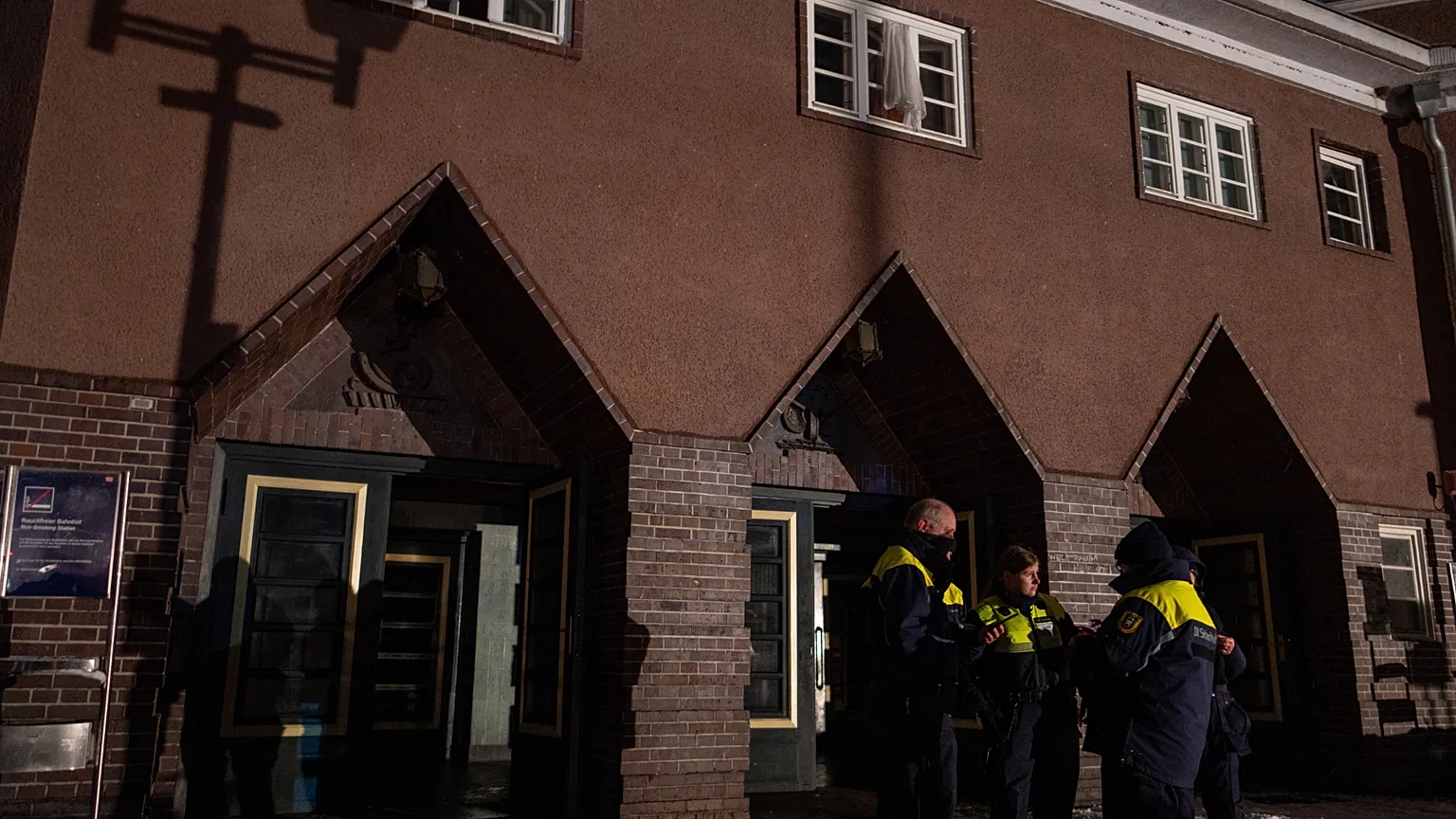
Tens of thousands of households across southwest Berlin faced a sudden loss of electricity, heating, and internet services over the weekend, an outage authorities attribute to a politically motivated attack by far-left extremists. The disruption, which began Saturday morning, left approximately 45,000 homes and 2,200 businesses in darkness and cold following a fire on a cable bridge spanning the Teltow Canal, near the Lichterfelde power plant. While some areas saw power restored relatively quickly, a significant portion of the affected population, estimated at around 35,000 households, could remain without power until Thursday, with repair efforts hampered by ongoing snowy weather and freezing temperatures.
The incident has prompted a police investigation into the fire and the subsequent claims of responsibility. German media outlet rbb obtained a letter reportedly from the anarchist “Volcano Group,” detailing how the fire was initiated and claiming credit for the act. Berlin police have acknowledged the letter’s existence and are working to verify its authenticity. This group is not new to German security forces; intelligence services have tracked the “Volcano Group” since its formation in 2011, with the Berlin Office for the Protection of the Constitution documenting its activities multiple times over the years, including in 2011, 2013, 2018, 2019, and 2024.
Felix Neumann, a security expert from the Konrad Adenauer Foundation, confirmed the group’s affiliation with the left-wing extremist spectrum in an interview with Stern magazine. Analyses of their previous communiqués by domestic intelligence agencies have characterized the “Volcano Group” as anarchist in nature, primarily focusing their actions and rhetoric on issues related to climate change and the broader climate crisis. The exact size and internal structure of the group remain unknown, according to Neumann, who notes a lack of reliable information. Historically, their operations have largely been concentrated in Berlin and Brandenburg, targeting infrastructure such as cable ducts, radio installations, and electricity pylons.
This recent incident marks another instance of significant power disruption in Berlin linked to arson. Last September, a similar attack on an electricity pylon in the Treptow-Köpenick district plunged around 50,000 households and businesses into darkness, with full power restoration taking approximately 60 hours. However, authorities suggest the current outage’s consequences are more severe, particularly given the prolonged repair times anticipated for areas like Nikolassee, Zehlendorf, and Wannsee.
Emergency measures have been put in place to assist those affected by the ongoing power cuts. A spokesperson for the fire brigade confirmed the establishment of an emergency shelter in a sports centre on Hüttenweg in the Zehlendorf district, providing a district care point for residents without electricity or heating. Despite some initial successes in restoring power to about 2,000 households in Lichterfelde on Sunday night, the broader challenge of bringing power back to thousands more amidst the harsh winter conditions remains a critical concern for city officials. The prolonged nature of the outage highlights the vulnerability of essential infrastructure to such targeted acts, raising questions about urban resilience and security measures.