Staff Report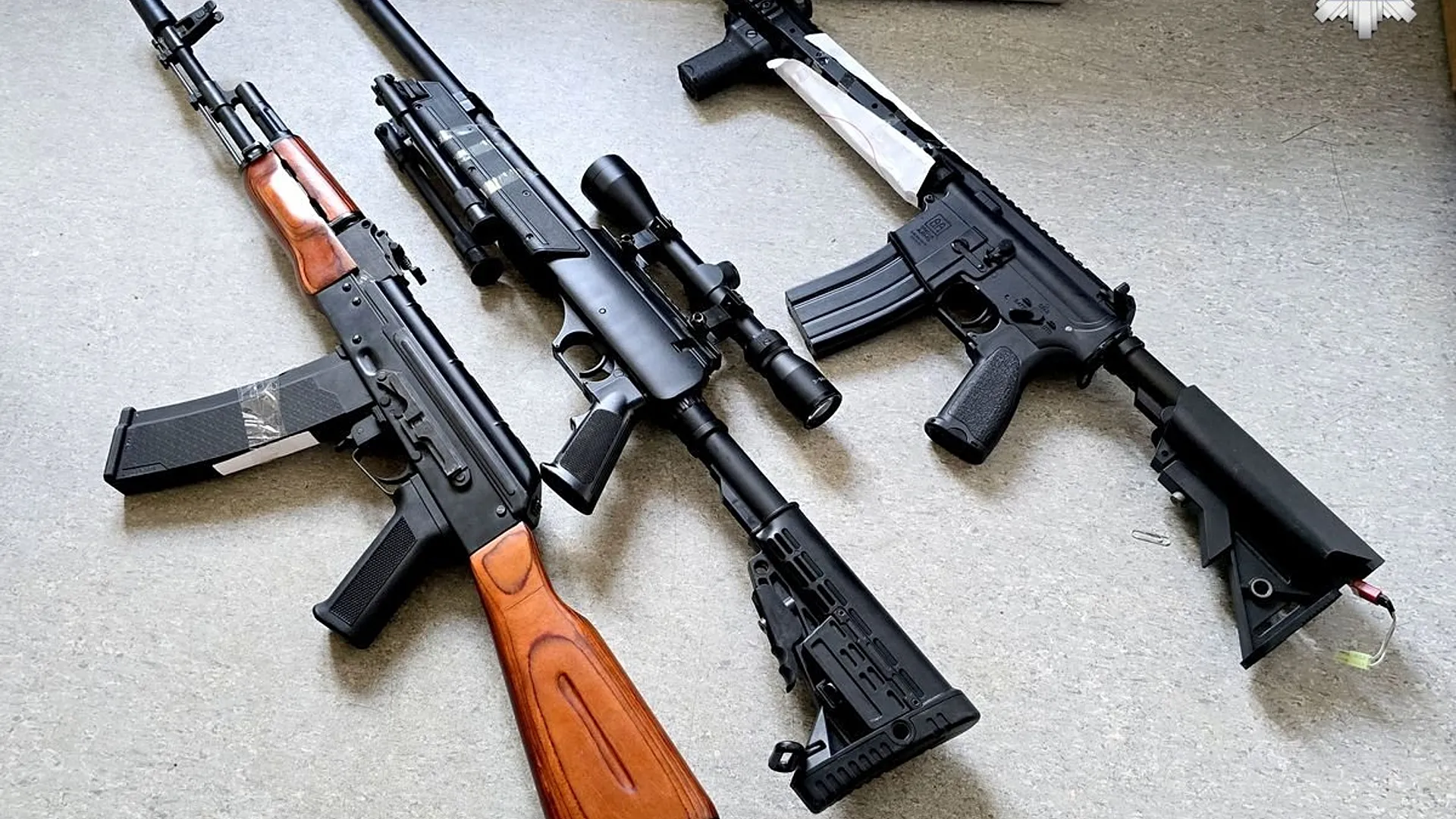
The number of registered civilian firearms in Poland has exceeded one million for the first time, a figure driven by a significant increase in gun permits issued over the past year. Police statistics indicate that 50,700 new permits were granted in 2025, contributing to a total of 411,769 active permits by the end of the year. This marks a substantial rise from 192,819 active permits recorded in 2015, effectively more than doubling the total over a decade.
This surge in ownership is not a gradual trend but rather a sharp acceleration observed since 2022. That year alone saw 37,402 new permits, a marked jump from the 19,939 issued in the preceding year. This period coincides with Russia’s full-scale invasion of Ukraine, an event that Polish shooting ranges reported immediately preceded a sharp rise in visitor numbers. Despite this recent increase, Poland maintains one of the lowest rates of firearm ownership within the European Union, with approximately 2.5 firearms per 100 inhabitants, according to 2017 data. This contrasts sharply with countries like Finland, which leads the bloc with 32.4 weapons per 100 people, followed by Austria and Cyprus.
The majority of new permits in 2025 were for collecting, with 21,071 decisions made in this category. Sporting permits followed at 17,601, while permits for personal protection accounted for 7,254. The growing number of firearms has, however, ignited a discussion regarding the current regulatory framework. Dariusz Loranty, a former Warsaw police superintendent with experience in criminal terrorism and homicide cases, has voiced concerns about the concentration of authority within a single agency. He argues that the police currently act as both checker and decision-maker, effectively legislating for themselves.
Loranty suggests a fundamental shift in the permitting process, advocating for the transfer of formal decision-making power from police to civil administration. Under his proposal, governors would issue permits through administrative procedures, incorporating input from both police and citizen participation. This system would also allow for administrative decisions to be challenged in court, introducing an additional layer of oversight and accountability. While some might attribute the rise in gun ownership to fears of conflict with Russia, Loranty dismisses this as a widespread motivation. He posits that a very small proportion of individuals are driven by such concerns, suggesting instead that the primary rationale is a broader apprehension about increasing crime, specifically citing Georgian criminal groups as a particular concern.
The issue of responsibility and public safety remains central to the debate. Loranty emphasizes that gun ownership inherently fosters a heightened sense of responsibility, noting that Polish law strictly prohibits carrying or possessing weapons under the influence of alcohol. He believes the presence of a firearm encourages sobriety and a different mindset. However, he also advocates for more stringent psychiatric evaluations for permit applicants. He recommends that anyone exhibiting symptoms of depression should be barred from gun ownership, and that examinations should not be superficial, ideally requiring multiple evaluations by psychiatrists in varying situations.
In response to these evolving concerns, Poland 2050, a centrist party within the ruling coalition, introduced draft legislation in October 2025. This proposal mandates regular medical and psychological examinations for all gun permit holders, including hunters. Under the proposed changes, individuals up to the age of 70 would need to present certification every five years to maintain their permits, while those over 70 would be required to do so every two years. Collectors and historical re-enactors, whose weapons are deemed to pose no direct threat, would be exempt from these requirements. The hunting community has expressed opposition to this measure, and a similar initiative targeting only hunters was previously rejected by parliament. Public consultation on the current draft legislation remains open, allowing citizens to submit their opinions on the proposed changes.