Staff Report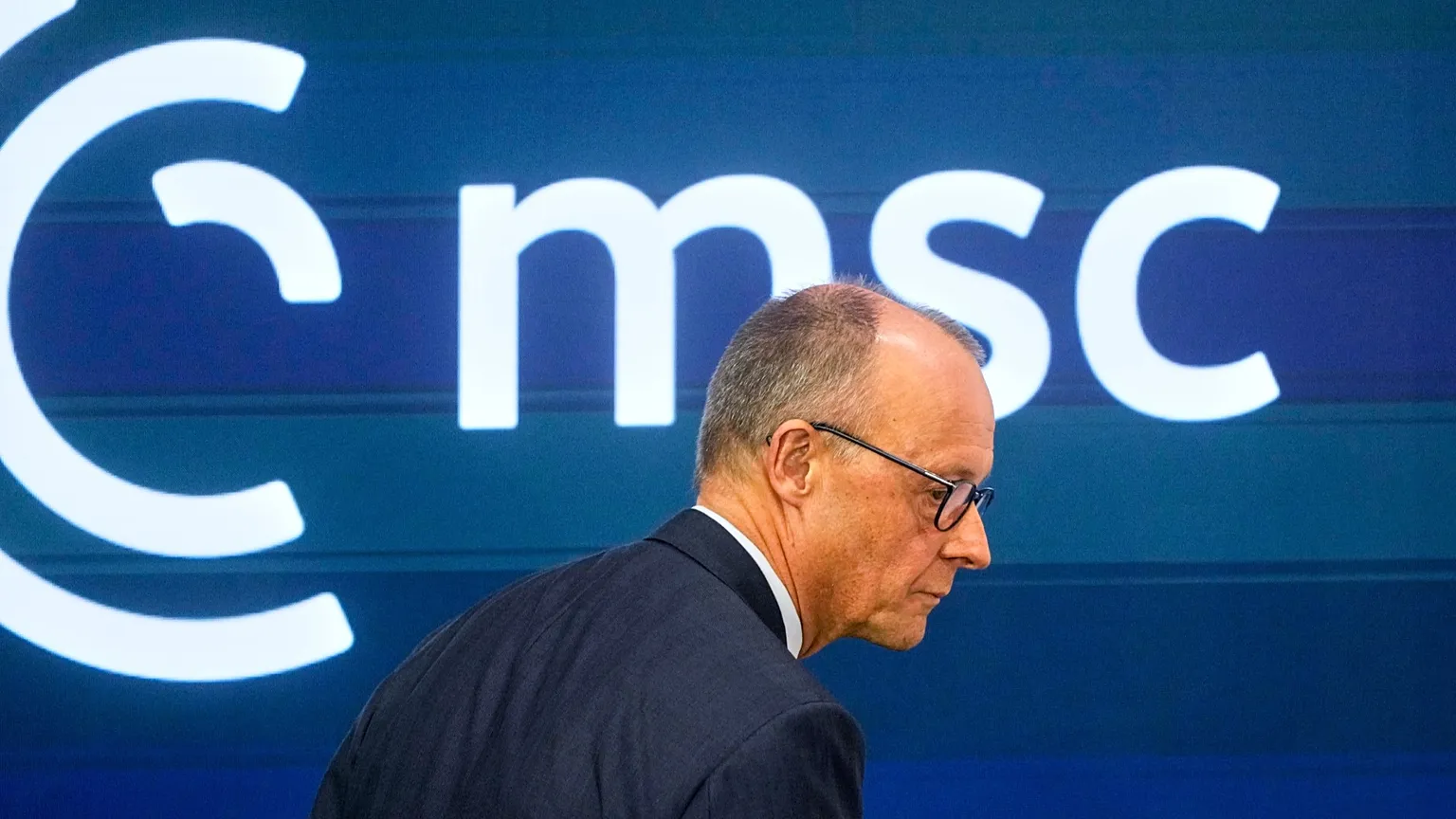
The established international order, which has largely governed global relations for decades, has ceased to exist, according to Friedrich Merz. Speaking at the Munich Security Conference, Merz articulated a stark assessment, suggesting that the very title of the gathering, “a world under destruction,” might not fully capture the profound shift already underway. He emphasized that the rules-based framework, which democratic powers have relied upon to manage conflicts since the end of World War II, is now defunct.
Merz directly addressed the United States, issuing a caution that even a nation of its formidable strength cannot navigate this new era of power politics in isolation. He contended that the “unipolar moment” following the fall of the Berlin Wall, characterized by America’s unchallenged superpower status, has concluded. This transition, he argued, places even the most powerful countries in a more precarious global environment. The return to power politics, in his view, stems not merely from great power rivalry but also from a palpable desire within many democratic states for strong leadership in a globalized world, where these states increasingly confront the limits of their operational capacity.
This evolving landscape, Merz explained, prioritizes quick, often harsh, and unpredictable actions characteristic of great power dynamics over the more measured, rule-of-law approach to international relations. He highlighted what he termed an “inconvenient truth”: the transatlantic relationship, long a cornerstone of Western security, is now subject to doubt. Merz referenced a speech delivered by US Vice President J.D. Vance at the same conference a year prior, where Vance criticized European democracies. While acknowledging Vance’s observation that a divide had indeed emerged between Europe and the United States, Merz firmly distanced himself from Vance’s conclusions regarding European values.
He explicitly stated that the “culture wars of MAGA in the US are not ours.” Merz underscored Europe’s commitment to different principles, including the belief in free trade over tariffs and protectionism, adherence to climate agreements, and participation in organizations like the World Health Organization. These commitments, he asserted, reflect a conviction that global challenges necessitate collective solutions. This divergence, he implied, illustrates a fundamental difference in approach, particularly concerning issues where the Trump administration previously withdrew from multilateral efforts.
A central theme of Merz’s address revolved around the ongoing support for Ukraine in the face of Russia’s full-scale invasion, which approaches its fourth anniversary. He noted that Europe, and Germany specifically, had assumed a leading role in penalizing Moscow and providing aid to Kyiv, particularly since Donald Trump’s return to the White House. Merz posited that the significant losses and costs imposed on Russia by Europe would ultimately be a key factor if Moscow were to agree to peace, framing it as an assertion of European self-reliance.
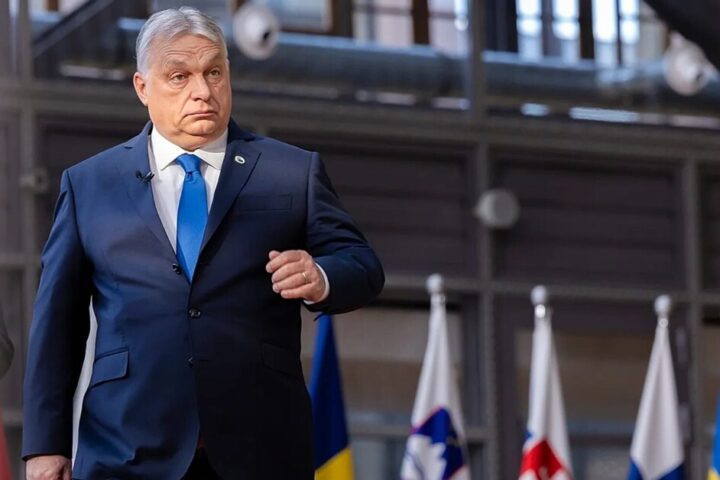
During a subsequent question-and-answer session, Merz reiterated his skepticism regarding Russia’s willingness to negotiate genuinely. He alluded to an unnamed European prime minister, widely understood to be Viktor Orbán of Hungary, who traveled to Moscow without a mandate in 2024. Merz pointed out that this visit yielded no discernible results, and in the following week, Ukraine experienced some of the most intense attacks on civilian infrastructure and homes seen to date. He concluded that serious talks would only become possible once Russia is economically and potentially militarily exhausted, stressing the need for continued pressure to compel Russia to abandon its war in Ukraine.
Merz concluded by issuing a stark warning to Europe: freedom can no longer be considered a given. He contrasted Russia’s estimated GDP of €2 trillion with the European Union’s nearly tenfold larger economy, yet observed that Europe was not ten times stronger. He stressed that Europe possesses immense military, political, economic, and technological potential that remains largely untapped. The critical step, he urged, is a fundamental shift in mindset, acknowledging that in this new era of great power competition, freedom is at stake and necessitates unwavering resolve to preserve it.