Staff Report
The intricate web of global trade has long been celebrated as a triumph of modern logistics, but recent disruptions suggest that the system is far more fragile than previously understood. For the European Union, a continent deeply reliant on the seamless movement of goods across oceans, the existence of narrow maritime passages has become a primary strategic vulnerability. These maritime choke points, ranging from the Suez Canal to the Strait of Hormuz, now act as potential triggers for economic stagnation, holding the power to disrupt supply chains and inflate consumer prices overnight.
Geopolitical instability in the Middle East has already demonstrated how quickly a primary trade artery can be restricted. When the Red Sea corridor becomes a zone of conflict, shipping companies are forced to divert vessels around the Cape of Good Hope. This detour adds thousands of miles to a journey, significantly increasing fuel consumption and labor costs. For European manufacturers who operate on a just-in-time inventory model, these delays are not merely an inconvenience; they are a threat to operational viability. Parts for automobiles and electronics that used to arrive in a predictable cycle are now subject to the whims of regional skirmishes and maritime piracy.
Beyond conflict, environmental factors are emerging as a secondary threat to these critical waterways. The Panama Canal, a vital link for European trade with the west coast of the Americas, has recently faced severe draft restrictions due to historic droughts. As water levels recede, the number of vessels permitted to pass through the locks is slashed, creating a backlog that ripples through the global economy. This intersection of climate change and trade logistics highlights a reality where European economic security is increasingly dependent on weather patterns thousands of miles away from Brussels or Berlin.
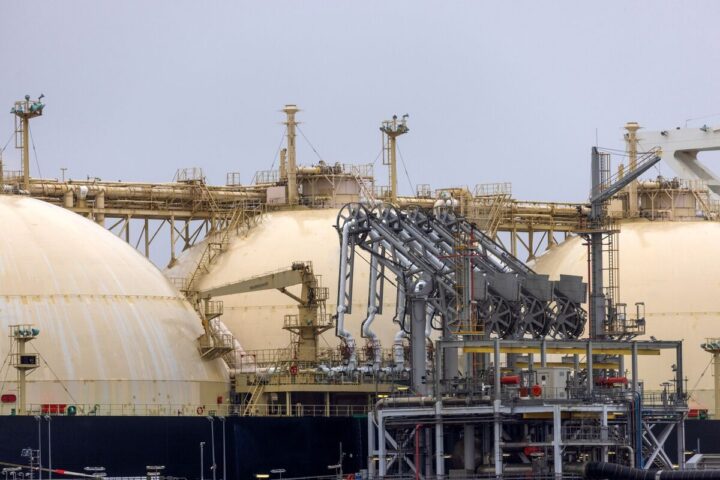
Economic analysts point out that the concentration of trade through these narrow straits creates a natural monopoly on movement. Because there are so few viable alternatives for large-scale maritime transport, the entities or nations that control these passages wield immense leverage. For Europe, which lacks the domestic raw materials to fuel its high-tech industries, the constant flow of energy and rare earth minerals is non-negotiable. Any prolonged blockage at a key transit point could lead to energy rationing or a total halt in production for key industrial sectors, potentially plunging the eurozone into a deep recession.
In response to these mounting risks, some European leaders are advocating for a strategy of near-shoring or friend-shoring. By moving production facilities closer to home or to politically stable allies, the continent could theoretically reduce its dependence on long-haul maritime routes. However, the transition is fraught with challenges. The higher cost of labor within Europe and the lack of existing infrastructure for raw material processing make it difficult to decouple from the current globalized model. For the foreseeable future, the European economy remains tethered to the safety and openness of a few miles of water in distant seas.
To mitigate these dangers, there is a growing call for increased naval cooperation and investment in maritime security. Protecting these trade routes requires a persistent international presence, which places a heavy burden on national budgets. Yet, the cost of inaction is far higher. As the world becomes increasingly multipolar, the competition for control over these strategic transit zones is expected to intensify. Europe must now decide whether it will continue to rely on the goodwill of others to keep its trade lanes open or if it will take a more assertive role in securing the corridors that feed its citizens and power its factories.