Staff Report
The Greek government is signaling a historic shift in its long-standing energy policy as Athens begins serious internal discussions regarding the adoption of nuclear power. For decades, the Mediterranean nation has maintained a strict moratorium on nuclear energy, primarily driven by public anxiety following the Chernobyl disaster and the inherent geological risks of a country situated atop major tectonic fault lines. However, the dual pressures of the global climate crisis and a volatile European energy market are forcing a revaluation of what was once a political taboo.
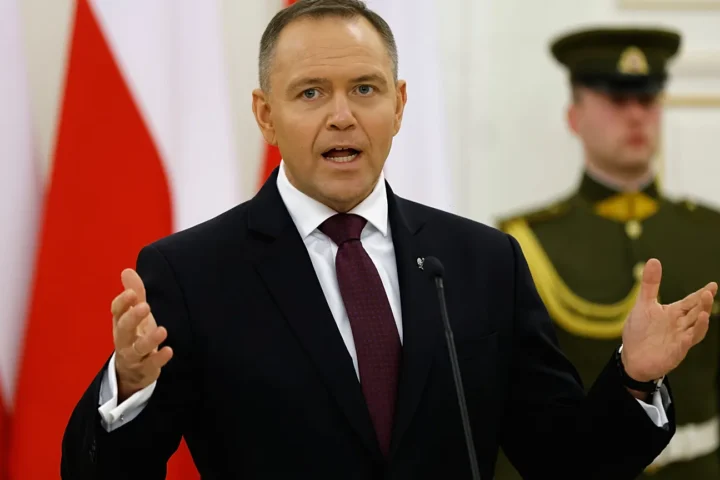
Prime Minister Kyriakos Mitsotakis has recently acknowledged that Europe cannot reach its ambitious decarbonization targets without a stable baseline of energy that renewables alone cannot yet provide. While Greece has made significant strides in wind and solar power, the intermittent nature of these sources has left the national grid vulnerable to price spikes and supply gaps. By exploring nuclear options, specifically the latest generation of modular reactors, Greece aims to diversify its energy portfolio and reduce its heavy reliance on imported natural gas.
Safety remains the paramount concern for both the public and the scientific community. Greece is one of the most seismically active regions in Europe, a fact that has historically ended any conversation about nuclear infrastructure before it could begin. Proponents of the new policy argue that modern technology has fundamentally changed the safety equation. Small Modular Reactors (SMRs) are designed with passive safety systems that can shut down without human intervention or external power, making them significantly more resilient to seismic events than the massive reactors built in the twentieth century.
Beyond safety, the economic argument for nuclear power is gaining traction among Greek industrial leaders. High energy costs have long hampered the competitiveness of Greek manufacturing and tourism sectors. A domestic nuclear program would offer a predictable, long-term price for electricity, insulated from the geopolitical tensions that frequently disrupt gas supplies from the East. Furthermore, as the European Union tightens its carbon credit requirements, the zero-emission profile of nuclear energy becomes an increasingly attractive fiscal strategy for the state.
Regional dynamics are also playing a role in this policy shift. Several of Greece’s neighbors, including Bulgaria and Turkey, are already moving forward with their own nuclear ambitions. Turkey’s Akkuyu plant, currently under construction with Russian assistance, has particularly highlighted the strategic necessity for Greece to maintain energy independence. If Greece can successfully integrate nuclear power into its grid, it could transform from a peripheral energy consumer into a regional hub for clean energy distribution across the Balkans.
Transitioning to a nuclear-capable nation will not happen overnight. The process requires a comprehensive overhaul of the national regulatory framework, the training of a specialized workforce, and a transparent dialogue with a skeptical public. Experts suggest that a partnership with established nuclear powers, such as France or the United States, would be essential to provide the technical expertise and security guarantees needed to launch such a sophisticated industry.
Environmental groups remain divided on the issue. While some acknowledge nuclear energy as a necessary evil to combat global warming, others argue that the focus should remain entirely on expanding battery storage and green hydrogen. They point to the unresolved issue of nuclear waste disposal as a long-term ecological burden that Greece is ill-prepared to manage. Despite these objections, the momentum in Athens appears to be shifting toward a pragmatic middle ground where nuclear power serves as the backbone of a green transition.
As the Greek government moves from theoretical discussions to feasibility studies, the eyes of the international energy community are fixed on the Aegean. If Greece can prove that nuclear energy is viable in a seismically active zone, it could provide a blueprint for other nations facing similar geographic challenges. For now, the move represents a bold gamble by a nation determined to secure its economic future and environmental legacy in an increasingly uncertain world.