Staff Report
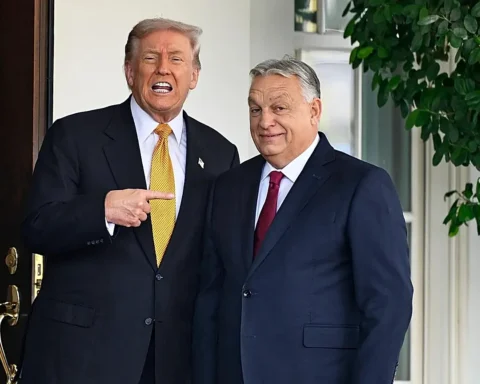
The prospect of a US attempt to seize Greenland, a self-governing Danish territory, has been characterized as an “existential” threat to the NATO military alliance by former Danish European Commissioner Margrethe Vestager. Her remarks on Europe Today underscore a growing apprehension regarding hypothetical actions that could fundamentally destabilize the transatlantic defense pact. Vestager specifically noted that an attack by one NATO country on another for territorial gain would represent the most profound challenge the alliance has ever encountered, a sentiment voiced amidst persistent discussions surrounding US President Donald Trump’s past ambitions concerning the island.
Greenland’s government has unequivocally rejected any notion of a US takeover, stating Monday that such an action would be unacceptable under any circumstances. Officials in Nuuk have affirmed their intention to develop their own defense capabilities within the established NATO framework, even as the territory becomes a focal point in broader geopolitical discussions. Despite these concerns, NATO Secretary-General Mark Rutte, speaking in Zagreb, praised President Trump and downplayed any suggestions of an alliance in crisis, sidestepping the direct implications of the Greenland scenario. This divergence in perspective highlights the delicate diplomatic tightrope being walked by European leaders as they navigate complex relationships with the United States.
Simultaneously, international attention remains fixed on Iran, where the US President is weighing options in response to the regime’s crackdown on widespread protests. Briefings on potential US responses are scheduled, making the coming hours critical for Iran’s immediate future. The White House, while maintaining that diplomacy remains the preferred path, has seen reports from outlets like the Wall Street Journal and Axios suggest a leaning towards military strikes, even as Tehran has reportedly offered last-ditch diplomatic efforts concerning its nuclear program. Adding to the pressure, the US administration announced a 25% tariff on countries engaging in business with Iran, a measure that could significantly impact nations like China.
Escalating tensions have also led to visible shifts in diplomatic posture. Non-essential staff were reportedly evacuated from the French embassy in Tehran amid speculation of an imminent US military action, although the French foreign ministry later clarified that the ambassador and his team remained on site. The European Parliament has taken a firmer stance, banning Iranian diplomats and representatives from its premises. Roberta Metsola, the Parliament’s President, explicitly stated that the institution would not legitimize a regime sustained by “torture, repression and murder.” In response, Iran’s ambassador to the EU indicated a continued commitment to “constructive dialogue” with European Parliament members who prioritize diplomacy rooted in mutual respect. The European Commission, for its part, is formulating “new, more severe” sanctions, potentially including the designation of the Iranian Revolutionary Guard Corps (IRGC) as a terrorist organization, a move that would require unanimous consent from all member states.
Beyond these immediate flashpoints, the European Commission has signaled a notable shift in its approach to Russia. While previously focused on isolating the Kremlin, the Commission now acknowledges that direct talks with Russian President Vladimir Putin will eventually be necessary for peace in Ukraine. Commission spokesperson Paula Pinho stated that “at some point, there will have to be talks also with President Putin,” though she cautioned that no signs yet indicate Putin’s readiness for such discussions. This pivot follows recent calls from French President Emmanuel Macron and Italian Prime Minister Giorgia Meloni for renewed dialogue, suggesting a growing consensus among some European leaders that an exclusive reliance on existing intermediaries may not suffice. The idea of appointing a special envoy to lead these conversations on behalf of all 27 member states has also been floated by Italy, indicating a desire for a unified European diplomatic front despite the ongoing conflict.
Meanwhile, internal European political dynamics continue to unfold. The far-right Patriots for Europe group in the European Parliament, led by Jordan Bardella, is reportedly considering a new vote of no-confidence against Ursula von der Leyen’s Commission. This move, though unlikely to succeed, is a direct response to the planned signature of the EU-Mercosur trade deal, which the Patriots contend will severely harm the European farming industry. Bardella’s own political trajectory is closely linked to an appeal process commencing in a Paris court today, where his mentor, Marine Le Pen, seeks to overturn a five-year ban from running for public office. The outcome of this appeal could pave the way for Le Pen to contest the French presidency next year or solidify Bardella’s position as the party’s leading candidate, profoundly influencing the future direction of French and European politics.