Staff Report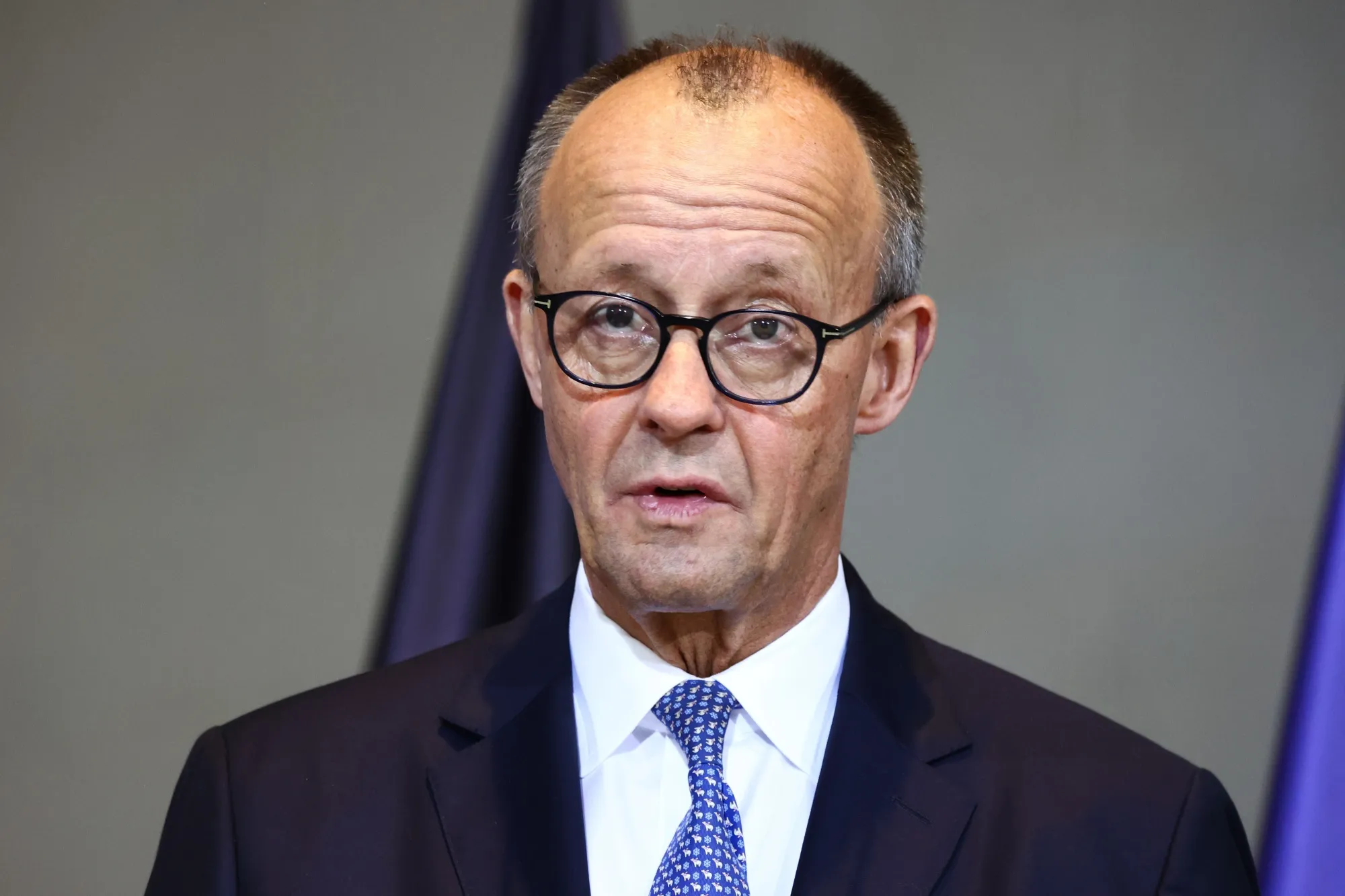
Germany’s business community is issuing increasingly urgent warnings that Europe’s largest economy is slipping into what some executives describe as an economic “free fall,” intensifying political pressure on Christian Democratic leader Friedrich Merz and deepening divisions within the fractious governing alliance. The escalating economic anxiety has ignited a broader debate about Germany’s competitiveness, policy direction, and the cohesion of the ruling coalition—raising questions about whether the country’s political leadership can steer it out of mounting structural and cyclical challenges.
At the center of the storm stands Merz, who faces rising scrutiny from both industry and political allies as the governing alliance with the Social Democrats becomes strained by internal conflict, inconsistent messaging, and mounting voter frustration. Business leaders warn that unless decisive action is taken, Germany risks a prolonged stagnation that could undermine its industrial base and reshape Europe’s economic balance of power.
Economic Anxiety Reaches a Breaking Point
Germany’s economy has been under pressure for years, but corporate leaders say the current moment represents a turning point. The fears stem from several overlapping concerns:
• Slowing industrial output
Manufacturing—long the backbone of Germany’s prosperity—is contracting amid global supply-chain shocks, weakening foreign demand, and high energy costs.
• Declining competitiveness
Executives argue that Germany’s cost structures, regulatory burden, and energy prices are increasingly misaligned with global rivals such as the United States and China.
• Investment flight
More German companies are expanding abroad rather than at home, citing uncertainty about taxation, policy stability, and infrastructure constraints.
• Political paralysis
The coalition’s internal divisions and the perceived lack of a consistent economic strategy have created widespread uncertainty across markets.
The German Chamber of Commerce recently warned that the country’s “economic model is under existential strain,” while key industry associations say the trend could worsen without significant reforms.
Merz Under Pressure: Industry Demands Clarity and Action
Friedrich Merz, who has styled himself as a pro-business reformer, is now caught between competing demands:
- Industry is calling for rapid tax reform, deregulation, and a clear industrial strategy.
- Coalition partners insist on maintaining social protections and climate commitments.
- Budget constraints limit new fiscal stimulus.
- Political divisions complicate long-term planning.
Merz’s critics argue that his messaging has been inconsistent, at times prioritizing fiscal conservatism while simultaneously promising expansive business incentives. Supporters counter that he is constrained by coalition politics, not a lack of economic vision.
Still, business leaders increasingly want stronger, more decisive action—from labor reforms to energy pricing mechanisms to streamlined permitting for major projects.
A Coalition Under Strain: The Alliance With the Social Democrats Is Fraying
The alliance with the Social Democrats (SPD), once seen as pragmatic, has become fraught with tensions over:
1. Budget Policy
Disputes over the constitutional debt brake have caused repeated government standoffs.
2. Industrial Strategy
Internal disagreements persist over how aggressively the state should intervene in the economy—from subsidies to energy price caps.
3. Climate Policy
The transition to renewable energy is slowed by regulatory confusion, grid bottlenecks, and political disagreements.
4. Social Spending vs. Competitiveness
The SPD prioritizes social protections, while business leaders demand competitive reforms.
The result is what critics call “policy drift”—a lack of coordinated, long-term strategy that leaves markets guessing.
Business Leaders Warn of a Structural Crisis, Not a Temporary Slowdown
Executives from Germany’s industrial giants are calling for a coherent economic roadmap, warning that the current challenges cannot be dismissed as temporary turbulence.
Concerns include:
- Energy Prices: Germany now has some of the highest industrial electricity costs in Europe.
- Labor Shortages: Demographic decline is reducing the skilled workforce.
- Digitization Gaps: Germany trails in digital public services and connectivity infrastructure.
- Bureaucratic Burdens: Companies cite delays in permits, environmental reviews, and industrial approvals.
- Global Competition: China dominates manufacturing margins, while the U.S. IRA subsidies attract European investment overseas.
Industry leaders warn that without bold reforms, Germany could enter a decade-long stagnation similar to Japan’s “lost decades.”
Political Risks Intensify as Public Discontent Grows
Public confidence in political leadership is slipping amid rising costs of living, sluggish growth, and frustration over policy inconsistency.
Key political risks include:
- Declining support for mainstream parties
- Rising influence of populist groups on both the left and right
- Doubts about Germany’s capacity to lead the EU economically
- Pressure from states (Länder) demanding federal support for regional industries
Merz faces the additional challenge of maintaining party unity while addressing demands from industry, coalition partners, and voters.
The Stakes for Europe: Germany’s Trajectory Shapes the EU’s Future
Germany remains the economic engine of Europe. A prolonged downturn poses serious implications for:
- Eurozone growth
- EU industrial competitiveness
- Energy-transition funding
- Defensive capabilities and strategic autonomy
- Pan-European investment confidence
European institutions have quietly expressed concern that Germany’s stalled economy could weaken the EU’s overall resilience in an era of geopolitical uncertainty.
What Merz and the Government Could Do Next
Policy experts suggest several potential avenues:
1. Launch a Comprehensive Competitiveness Package
Tax reforms, innovation incentives, and deregulation measures could restore business confidence.
2. Overhaul Energy Policy
A stable, predictable energy-pricing framework is seen as essential for industrial planning.
3. Accelerate Digital Infrastructure and AI Investment
Major gaps in bandwidth, computing capacity, and digital services must be closed.
4. Expand Skilled Labor Programs
Attracting global talent and reforming labor-market rules could ease workforce shortages.
5. Strengthen Coalition Coordination
A unified policy message is crucial to stabilize market expectations.
Whether the political environment allows such ambitious reforms remains unclear.
Conclusion: Germany Stands at a Crossroads—And Merz’s Leadership Is Being Tested
As business leaders warn of economic “free fall,” the political pressure on Friedrich Merz and the governing coalition is intensifying. Germany’s economic challenges are not merely cyclical—they reflect deeper structural issues that demand coordinated, long-term solutions.
The coming months will determine whether the government can regain control of the narrative, restore business confidence, and deliver a clear pathway out of stagnation—or whether Germany’s political and economic crises will deepen in tandem.
For now, one thing is clear: Germany’s economic future—and the stability of its political leadership—hangs in the balance.