Staff Report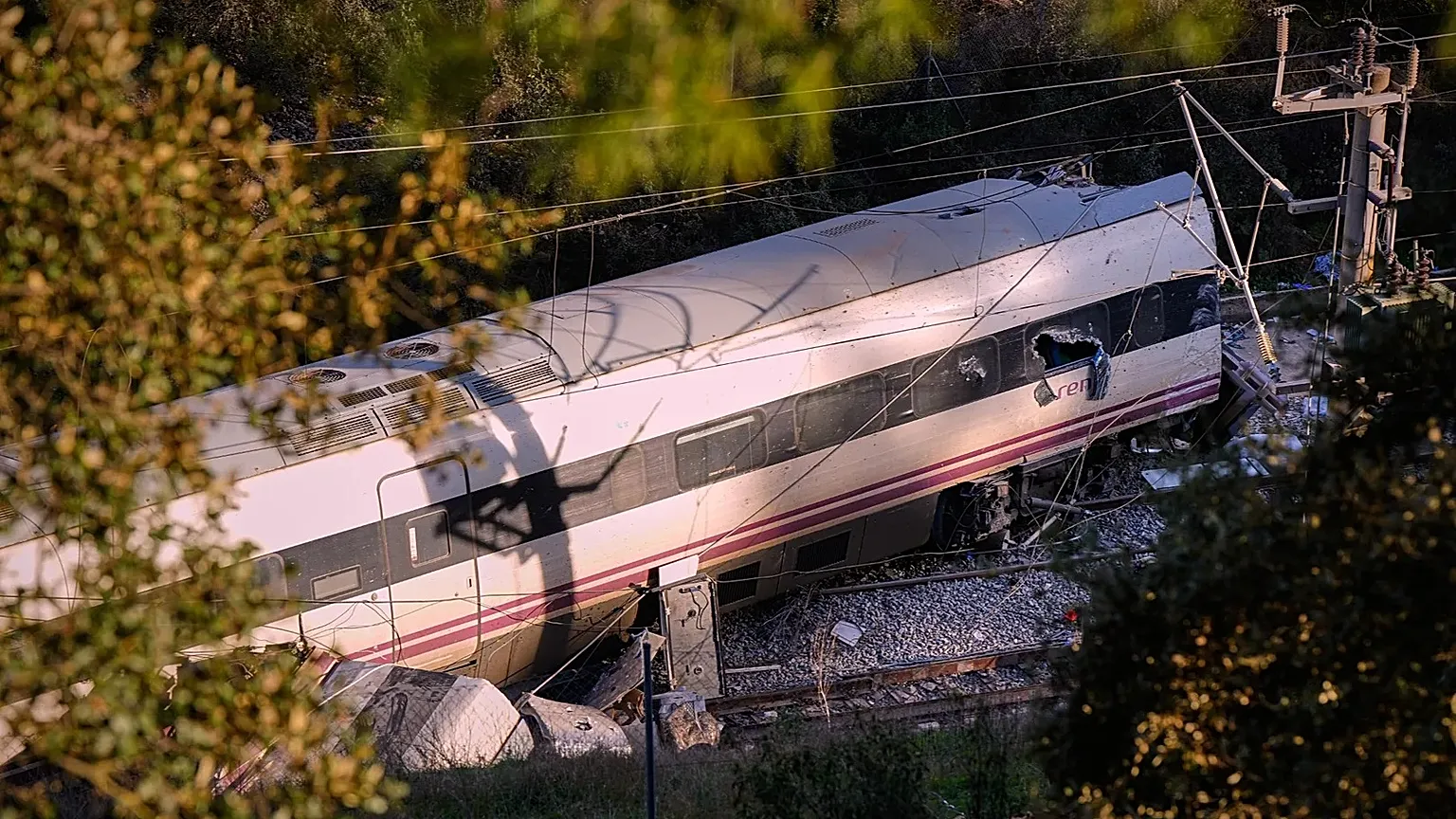
Flags across Spain are flying at half-mast, marking the start of three days of national mourning following Sunday’s devastating train accident in the south. The official death toll reached 40 by late Monday, according to Juan Manuel Moreno, head of Andalucia’s regional government, yet authorities caution that this figure may not be final. Emergency crews continue their grim search through the wreckage near Adamuz, with Interior Minister Fernando Grande-Marlaska indicating that three additional bodies are believed to be trapped within the “twisted mass of metal,” though these have not yet been added to the official count.
The collision occurred at 7:45 pm on Sunday when the rear carriages of a train carrying 289 passengers, en route from Malaga to Madrid, derailed. This catastrophic event led to it striking an oncoming train traveling from Madrid to Huelva, a southern Spanish city, according to rail operator Adif. The impact was particularly severe for the second train, which was carrying nearly 200 passengers. Its first two carriages were knocked entirely off the track, plummeting down a four-meter slope. Moreno noted that some victims’ remains were discovered hundreds of meters from the immediate crash site, underscoring the sheer force of the impact.
Investigations are now underway to determine the precise cause of the incident. Spanish Transport Minister Óscar Puente described the crash as “strange,” given that it took place on a straight section of track and neither train was reportedly speeding. However, Puente revealed late Monday that a broken section of track had been discovered. The critical question for investigators now is whether this damage was a contributing factor to the derailment or a consequence of the crash itself.
In the wake of the tragedy, Prime Minister Pedro Sánchez visited the accident site on Monday, formally declaring the period of national mourning. This declaration mandates the lowering of flags on all public buildings and naval vessels as a mark of respect for the victims. King Felipe and Queen Letizia are also scheduled to visit the scene, offering their condolences and support. Meanwhile, Spain’s Civil Guard has begun collecting DNA samples from family members, a somber but necessary step to identify those who perished and bring some measure of closure to grieving relatives.
Among the many heart-wrenching stories emerging from the disaster, one stands out with particular poignancy: a six-year-old girl is now the sole survivor from her immediate family. The Zamorano Álvarez family, hailing from Punta Umbría and residing in Aljaraque, had been returning home after a weekend trip to Madrid, where they had attended a football match. The young girl was found wandering alone near the accident site by Guardia Civil officers, seemingly unharmed save for a head injury requiring three stitches. She was subsequently discharged from the Reina Sofia Hospital in Cordoba and is now in the care of her grandmother, a stark reminder of the profound and lasting impact this tragedy will have on countless lives. The nation now grapples with its collective grief, seeking answers and supporting those left to navigate an unimaginable loss.