Staff Report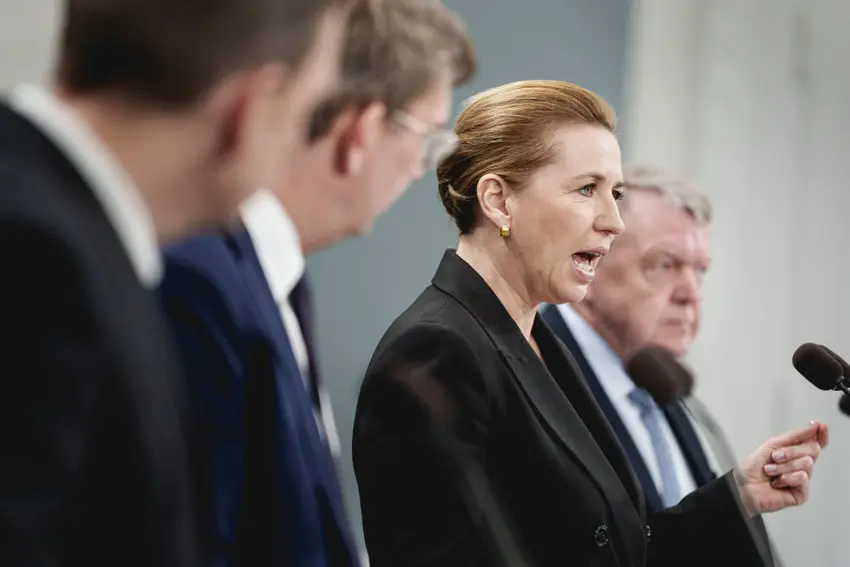
A significant shift in Denmark’s approach to immigration and criminal justice is underway, as the government moves to broaden the scope of deportations for non-Danish citizens. The proposed reforms, slated to take effect from May 1 pending approval, target individuals sentenced to at least one year of imprisonment for serious offenses, including aggravated assault and rape. This initiative marks a further tightening of immigration policies under Prime Minister Mette Frederiksen’s centre-right coalition, which has consistently pursued a “zero refugee” strategy since coming into power in 2019.
Prime Minister Frederiksen addressed the unconventional nature of these legislative amendments, indicating that her government is proactively adjusting laws rather than awaiting rulings from the European Court of Human Rights on deportation cases. This proactive stance echoes a sentiment expressed last May, when Frederiksen, alongside Italian Prime Minister Giorgia Meloni and nine other European leaders, co-signed an open letter advocating for a reinterpretation of the European Convention on Human Rights. Frederiksen articulated her government’s position by stating that a majority of countries party to the convention share Denmark’s desire for revised interpretations, which underpins the current push for stricter measures. She remarked on the perceived intent behind international rules, suggesting that the drafters likely did not envision scenarios where individuals would flee conflict zones only to commit serious crimes in host nations.
The new measures extend beyond deportations, encompassing stricter controls for foreign nationals lacking legal residency. This includes the introduction of ankle monitors for those who do not adhere to reporting requirements, signaling a more assertive stance on monitoring and enforcement. While current Danish regulations do not mandate automatic expulsion, data from the immigration ministry reveals that approximately 70% of foreign nationals incarcerated for a year or more have faced deportation. However, Minister Rasmus Stoklund noted that over the past five years, 315 convicted individuals who met this criteria were not expelled, highlighting a gap the new reforms aim to close.
Denmark’s commitment to reducing asylum admissions has been evident in recent years, reaching a historical low in 2023. By the close of November last year, only 839 asylum requests had been granted, marking only the fourth time since 1983 that fewer than 1,000 claims were accepted within a single year. This consistent downward trend underscores the government’s long-term policy objectives regarding migration.
This national announcement from Denmark arrives as the European Union itself unveils a new five-year migration strategy. The broader EU initiative focuses on strengthening partnerships with non-member countries to facilitate the return of foreign nationals and curb irregular migration into Europe. Denmark’s specific reforms can be seen as a national manifestation of this wider European push, albeit with a distinct emphasis on internal criminal justice and sovereign legislative action. The interplay between national sovereignty and international human rights frameworks remains a central theme as European nations navigate complex migration challenges.