Staff Report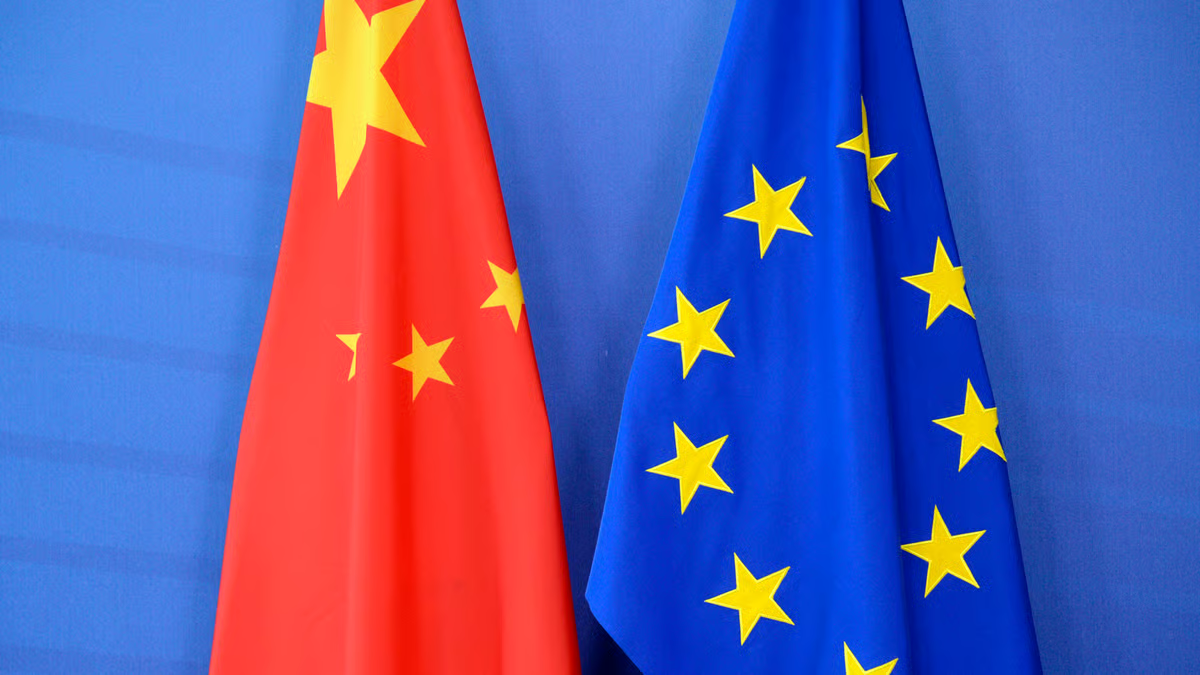
European industry finds itself at a critical juncture, navigating what many are calling a “second China shock” that is reshaping economic landscapes and challenging long-held assumptions. Unlike the initial wave of the early 2000s, characterized primarily by China’s emergence as a manufacturing powerhouse, this new phase presents a more complex set of dynamics. Today, European nations are grappling with an influx of competitively priced Chinese goods, particularly in green technologies, alongside Beijing’s increasing technological sophistication and its strategic industrial policies. This confluence of factors is forcing a fundamental reassessment of Europe’s industrial strategy, its trade relationships, and its geopolitical standing.
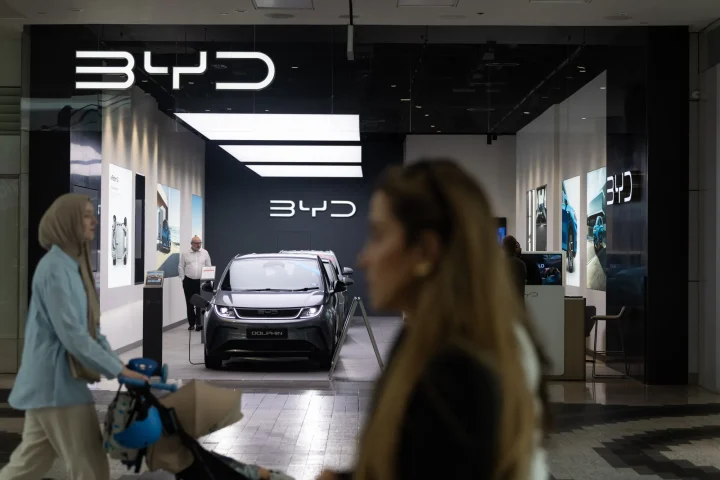
The automotive sector provides a vivid illustration of these pressures. European car manufacturers, traditionally global leaders, are facing significant competition from Chinese electric vehicle (EV) makers. Brands like BYD and Nio are not only offering technologically advanced vehicles but are doing so at price points that often undercut their European counterparts. This isn’t merely a matter of cheaper labor; Chinese companies have benefited from substantial state support, robust domestic supply chains, and a rapid pace of innovation in battery technology. The concern in Brussels and various European capitals is that this competitive disadvantage could lead to deindustrialization, job losses, and a weakening of Europe’s technological sovereignty in a critical future industry.
Beyond automobiles, the impact extends to other green industries crucial for Europe’s energy transition goals. Solar panel manufacturing, for instance, has seen a similar pattern. After an initial period of European dominance, Chinese firms now control a substantial share of the global market, often selling panels at prices that European producers struggle to match without significant subsidies. Wind turbine manufacturing is another area where Chinese companies are making inroads, prompting questions about the long-term viability of European players in these strategically important sectors. The dilemma for Europe is how to balance its ambitious climate targets, which require affordable green technology, with the imperative to protect its own industrial base and foster domestic innovation.
Policymakers in Europe are exploring various avenues to address this challenge. Anti-subsidy investigations, such as the one launched by the European Commission into Chinese EV imports, represent one immediate response aimed at leveling the playing field. However, such measures carry the risk of escalation and potential retaliatory actions from Beijing, further complicating trade relations. There is also a growing push for greater industrial resilience within Europe, focusing on reshoring critical parts of supply chains, investing in research and development, and fostering collaboration among European companies to create scale and efficiency. The European Chips Act, designed to boost semiconductor production, is an example of this strategic autonomy push, though its full impact remains to be seen.
The broader geopolitical implications cannot be overstated. Europe’s economic entanglement with China has grown significantly over the past two decades, making any decoupling or even targeted de-risking a delicate and complex undertaking. The reliance on Chinese components and markets, coupled with China’s growing influence on the global stage, means that Europe’s response to this second shock is not merely an economic decision but a geopolitical one. It involves navigating alliances, upholding international trade rules, and defining Europe’s strategic interests in a multipolar world. The coming years will undoubtedly test Europe’s resolve and its ability to adapt to a rapidly shifting global economic order, potentially redefining its industrial future and its role on the world stage.