Staff Report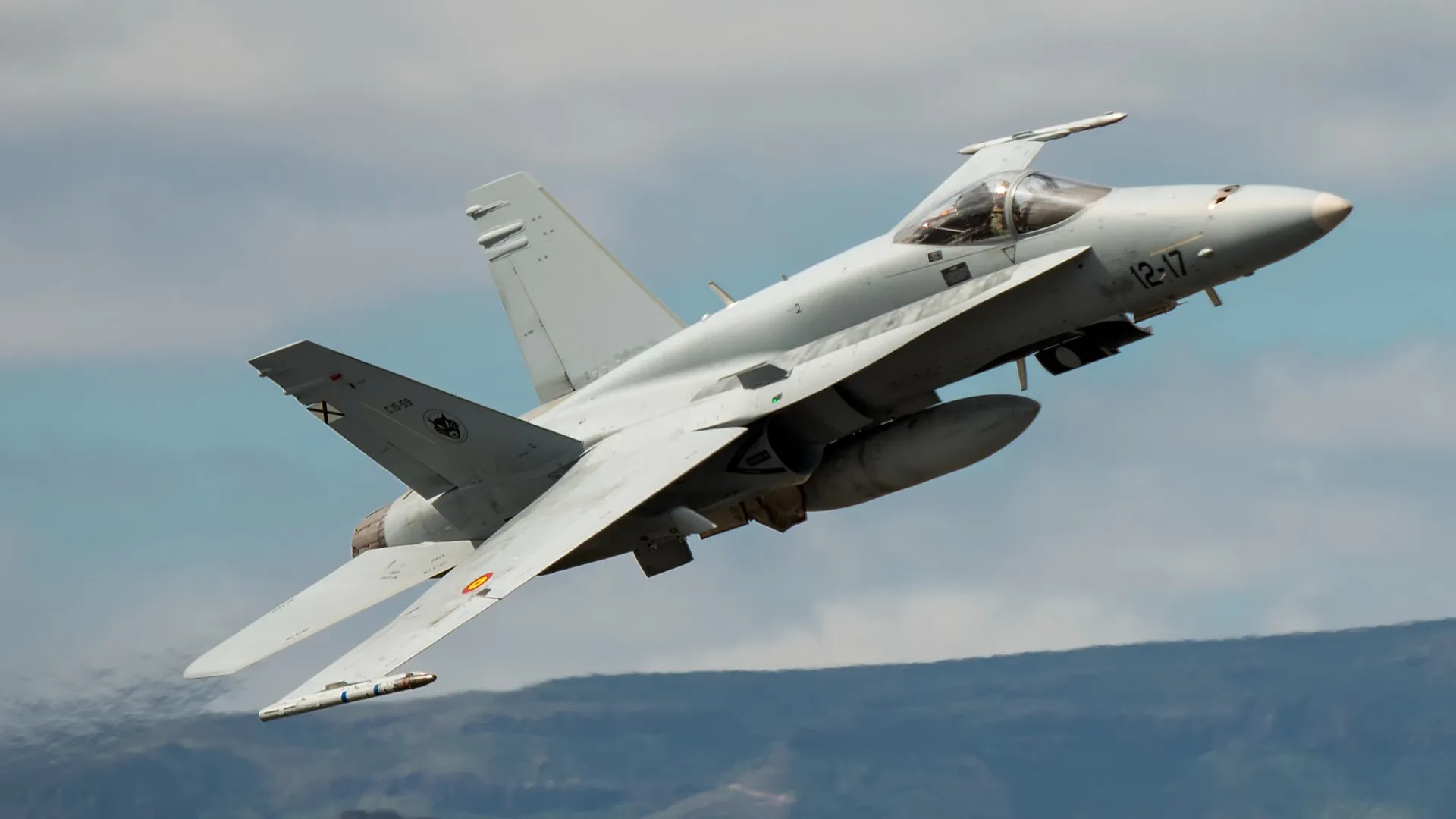
Spanish F-18 fighter jets, already on high alert, were scrambled early Sunday morning to intercept an unidentified drone that had breached Romanian airspace. The incident, which saw the drone destroyed between the towns of Baleni and Cudalbi, close to Romania’s border with Moldova, marks another escalation in a series of aerial incursions plaguing the region. Authorization for the intervention came at 4:44 AM, following the drone’s sighting 24 kilometers north of Galati.
Romania’s Defence Minister, Miruta, swiftly commended both the Spanish pilots and the Romanian military personnel overseeing the command center. His message underscored Romania’s commitment to defending its airspace, emphasizing the tangible security guarantees provided by its allies, rooted in vigilance, rapid response, and collective solidarity among NATO nations. This posture is particularly critical given Romania’s strategic position on the European Union’s defense front line, a role Miruta attributes to the country’s extensive 614-kilometer land border with Ukraine. The origin of the drone has yet to be officially confirmed by Romanian authorities, leaving a critical question unanswered amidst rising regional tensions.
This latest interception unfolded just hours after another night of intense exchanges between Russia and Ukraine. Russian bombardments ignited significant fires across Kyiv, leaving at least two individuals injured, while Moscow reported that it had been targeted by over 600 drones launched from Kyiv, resulting in three wounded on Russian territory. The ongoing conflict continues to spill over, inadvertently or otherwise, into the airspace of neighboring countries, testing the resolve and readiness of allied defenses.
Sunday’s event is far from an isolated occurrence; it adds to a growing list of airspace violations recorded in recent weeks over Romania. Only last Thursday, two Spanish F-18s from the Mihail Kogălniceanu base had to launch after another airborne object was detected near the river border with Ukraine. That drone reportedly spent approximately 12 minutes within Romanian territory before returning to Ukraine, prompting authorities to issue an SMS alert to residents in Tulcea county.
The preceding days brought further alarm. A day after the Tulcea incident, a drone reportedly crashed in Romania, having gone undetected by radar due to its extremely low altitude flight. Concurrently, tensions were also palpable in the Baltic, where allied fighter jets successfully shot down a drone over Latvian territory. Earlier in the month, an unidentified device exploded in Bulgarian airspace near its border with Romania, having entered from Romanian territory. These repeated incidents paint a clear picture of a volatile security environment, where the boundaries of conflict are increasingly blurred.
The most significant precedent for these incursions dates back to May 29, when a Russian drone struck a residential block in Galati, igniting a fire and injuring two people. The Atlantic Alliance, through its Secretary-General Mark Rutte, characterized that incident as an “irresponsible escalation” by Russia, reiterating the organization’s unwavering commitment to defend every inch of allied territory against such threats. The continued vigilance of NATO forces, exemplified by the Spanish F-18s, highlights the alliance’s ongoing efforts to maintain regional stability in the face of persistent challenges.