Staff Report
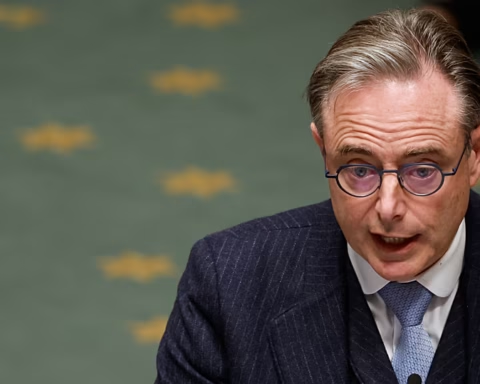
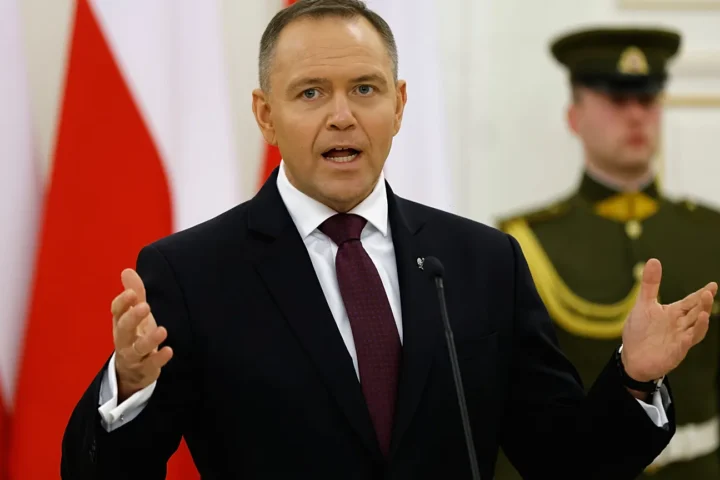
Croatian Prime Minister Andrej Plenkovic has emerged as a vocal defender of the European Union’s collective diplomatic strategy regarding Iran, urging member states to maintain a cohesive front despite growing internal pressures. Speaking at a recent high-level summit, Plenkovic emphasized that the strength of the bloc lies in its ability to project a single, clear voice on the global stage, particularly when navigating the complexities of Middle Eastern geopolitics.
The Prime Minister’s remarks come at a sensitive time for the European Council. While the official stance remains one of cautious engagement and de-escalation, individual nations have begun to express differing views on how to handle Tehran’s recent regional activities and its nuclear ambitions. Some member states have pushed for more aggressive sanctions and a harder rhetorical line, while others advocate for maintaining the thin threads of communication that remain through established diplomatic channels.
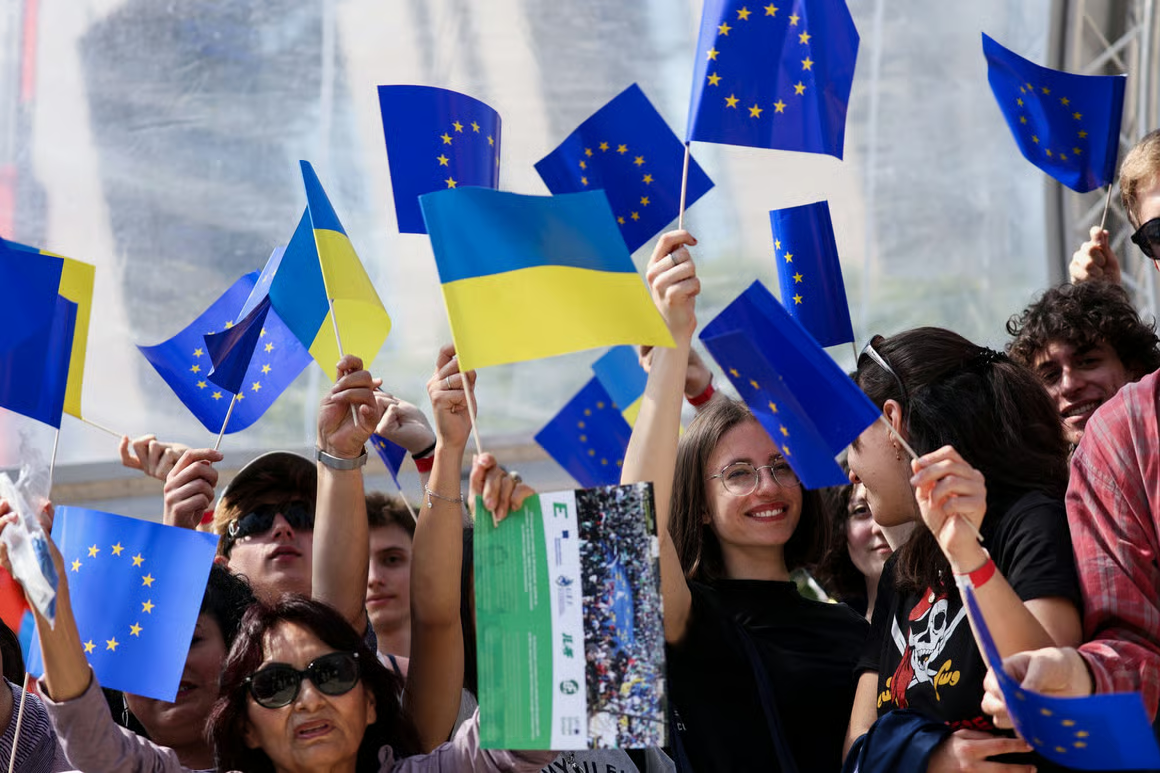
Plenkovic argues that any fragmentation of this policy would only serve to weaken the European Union’s influence. He noted that the current geopolitical climate does not afford the luxury of division. According to the Croatian leader, the unified position is not merely a bureaucratic preference but a strategic necessity. By sticking to a shared script, Europe can ensure that its security interests and commitment to international law are respected by both allies and adversaries alike.
The debate over Iran is reflective of a larger struggle within the EU to define a truly common foreign and security policy. Traditionally, foreign affairs have remained a closely guarded prerogative of individual national governments. However, the escalating volatility in the Middle East has forced a reconsideration of this decentralized approach. Plenkovic pointed out that when the EU acts in unison, it possesses the economic and political weight to move the needle on international issues that no single European nation could influence alone.
Critics of the current unified stance suggest that the pursuit of consensus often leads to a ‘lowest common denominator’ approach, resulting in statements that are too vague to be effective. They argue that the EU needs to be more agile and decisive, even if that means moving away from total unanimity. Plenkovic addressed these concerns by suggesting that clarity and unity are not mutually exclusive. He maintains that a strong, unified message is far more potent than a series of disjointed, conflicting signals that could be exploited by external actors.
Beyond the immediate concerns regarding Iran, Plenkovic’s defense of EU unity serves as a broader endorsement of the institutional framework in Brussels. As Croatia continues to integrate more deeply into the core of European decision-making, its leadership has consistently backed initiatives that strengthen the bloc’s collective sovereignty. This latest stand on Iran is a continuation of that philosophy, positioning Croatia as a bridge-builder among the 27 member states.
As the summit concluded, it became clear that while the cracks in the facade of European unity are visible, the prevailing sentiment among top officials remains centered on cooperation. The challenge for Plenkovic and his counterparts in the coming months will be to translate this desire for unity into concrete action. With the situation in the Middle East remaining highly fluid, the EU’s ability to remain ‘clear and unified’ will be tested as never before. For now, the Croatian Prime Minister remains confident that the collective path is the only viable route forward for a continent seeking to assert its relevance in an increasingly bipolar world.