Staff Report
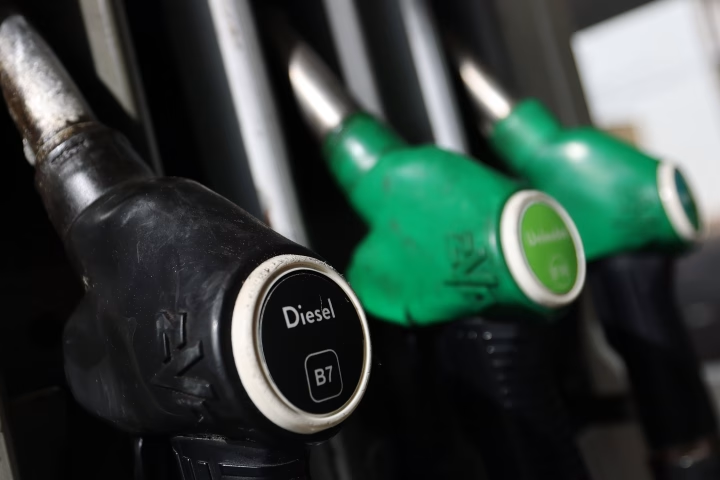
The recent effective closure of the Strait of Hormuz, amidst ongoing conflict, has once again underscored Europe’s precarious energy position, reigniting intense debate in Brussels over the continent’s long-term energy strategy. This geopolitical flashpoint, following closely on the heels of the 2022 energy shocks spurred by the full-scale invasion of Ukraine, has driven home the costly reality of Europe’s reliance on imported energy. While renewable sources now contribute over 45% to Europe’s primary energy output, the overall energy mix remains heavily dependent on foreign oil, petroleum products, and natural gas, accounting for roughly 38% and 21% of consumption respectively. This dependency has translated into some of the world’s highest electricity prices for both households and industries, with Germany, Belgium, and Denmark frequently topping the charts.
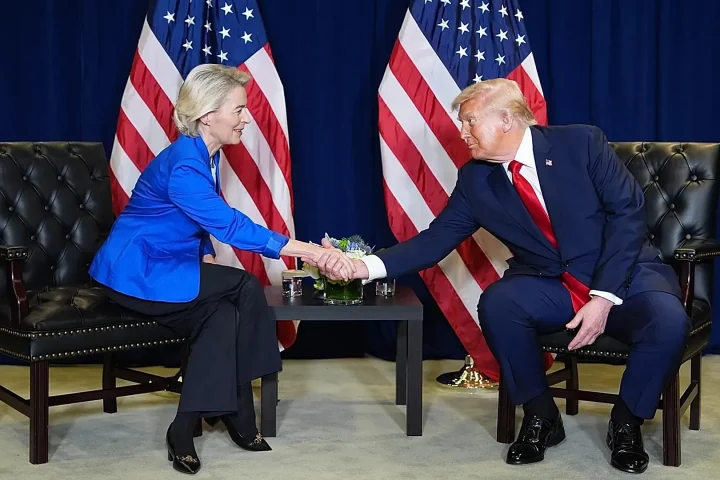
In response to these persistent vulnerabilities, the European Commission this month unveiled a comprehensive suite of nuclear-related initiatives, signaling a significant shift in strategic thinking. Speaking at the Nuclear Energy Summit in Paris on March 10, European Commission President Ursula von der Leyen articulated a stark reappraisal, stating that “this reduction in the share of nuclear was a choice, I believe that it was a strategic mistake for Europe to turn its back on a reliable, affordable source of low-emissions power.” This statement represents a notable pivot for von der Leyen, who was part of the cabinet that previously supported the phase-out. Similarly, Germany’s Chancellor Friedrich Merz has since labeled his country’s decision to close its last nuclear reactors in 2023 a “serious strategic error.” While restarting older plants is not feasible, the focus has now squarely shifted toward new construction and the development of small modular reactors (SMRs).
France, which derives approximately 65% of its electricity from nuclear power and exports surpluses, offers a compelling example of the energy independence achievable through this technology. French President Emmanuel Macron, also speaking at the Paris summit, emphasized nuclear power’s dual role in achieving both energy sovereignty and decarbonization. He further highlighted how France’s robust nuclear fleet provides the foundational capacity necessary to support the burgeoning demands of AI, enabling the establishment of data centers and advanced computing infrastructure. This perspective resonates with Brussels’ growing confidence in SMRs as a flexible, low-carbon solution capable of more rapid deployment than traditional large-scale reactors.
The European Commission’s SMR Strategy, released this month, anticipates the first units could be operational by the early 2030s, potentially scaling to between 17 GW and 53 GW by 2050. These compact, factory-built reactors are seen as particularly well-suited for powering energy-intensive AI data centers, industrial heat applications, hydrogen production, and district heating networks. To accelerate their deployment, the Commission has pledged to cut bureaucratic red tape through streamlined permitting processes and to provide financial guarantees. Eleven EU member states have already endorsed a joint declaration in support of this technology, and international momentum is building, as evidenced by the recent $40 billion project announced by the US and Japan to develop SMRs in Tennessee and Alabama.
Across the continent, member states are re-evaluating their nuclear positions. France is moving forward with six new European Pressurised Reactors (EPRs), with eight more under consideration, alongside its renewable expansion. Belgium is working to extend the operational life of its existing nuclear fleet, and Italy is drafting legislation to overturn its long-standing ban. Even Greece, historically cautious due to seismic concerns, has initiated public debate on advanced reactor designs and SMRs. Countries like Sweden and Finland, which never abandoned nuclear technology, continue to demonstrate how it can underpin high shares of renewables and deliver more stable, competitive electricity prices compared to nations that phased it out. Nuclear energy currently supplies roughly 23% of the EU’s electricity and about 50% of its low-carbon electricity, and projections suggest total EU nuclear capacity could grow from 98 GW in 2025 to between 109 GW and 150 GW by 2050, backed by an estimated €241 billion in new investments.
Despite this renewed enthusiasm, significant hurdles remain. Issues such as waste management, ensuring public acceptance, and establishing harmonized EU-wide regulations are still unresolved. Environmental organizations caution that substantial nuclear investment could divert crucial funds and political focus from the faster rollout of renewable energy sources. Capital costs and lengthy construction timelines continue to deter investors, and deep-seated opposition persists in countries like Germany and Austria. Furthermore, while SMRs hold promise, their commercial viability at scale remains largely unproven, with no construction licenses yet granted within the EU. The bloc is, however, committing €330 million through 2027 to advance fusion research and bolster nuclear technologies toward eventual grid connection. The confluence of geopolitical instability, soaring energy demands driven by advancements like AI, and persistently high energy bills is undoubtedly forcing Europe to critically re-evaluate its energy future, with nuclear power emerging as a central, albeit complex, component of that evolving strategy.