Staff Report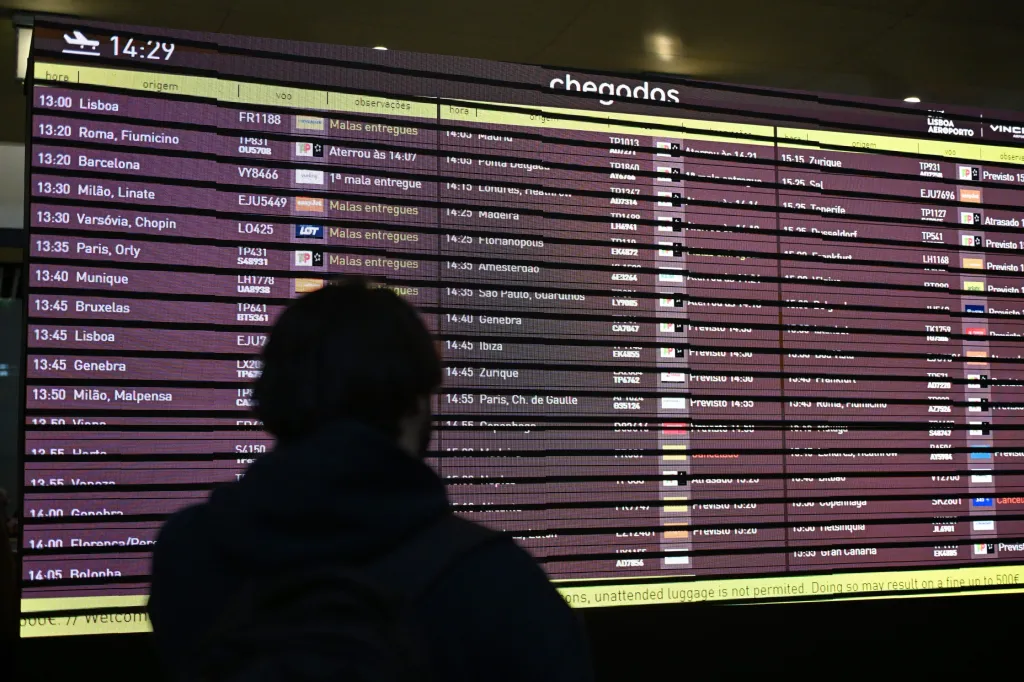
A critical juncture for European air travel appears on the horizon as commercial jet fuel inventories are projected to dip below a crucial 23-day shortage threshold next month. This forecast, detailed in a new Goldman Sachs research report, suggests significant disruptions for summer flights, extending beyond the numerous cancellations already announced. The implications could range from further flight reductions to the potential closure of smaller airports, particularly impacting regions heavily reliant on air tourism.
The 23-day mark does not signify an immediate cessation of fuel supplies, but rather a point where the system becomes acutely vulnerable without constant replenishment. Should the global crude and fuel supply chain continue to tighten, exacerbated by ongoing geopolitical tensions impacting shipping lanes like the Strait of Hormuz, Europe could see its buffer shrink even further. Projections suggest a more severe 20-day limit by July, potentially dropping to 15 days by August, signaling escalating rationing measures. The United Kingdom, with its significant net import dependency, is highlighted as particularly susceptible to such rationing.
Despite these warnings, European refineries have begun adjusting their output to prioritize jet fuel production. Traditionally, refineries allocate a larger proportion of their capacity to gasoline and diesel. Claudio Galimberti, chief economist at Rystad Energy, notes that this strategic shift provides Europe with a temporary reprieve, pushing the most severe consequences for airlines and passengers into July or August. However, he cautions that this is merely delaying an inevitable crisis unless the situation in the Middle East stabilizes. Inventories at the Amsterdam-Rotterdam-Antwerp hub, a key European benchmark, have already plummeted by 50% since late February, a trend Galimberti describes as a “straight line down.”
The ripple effects are already evident. Lufthansa, for instance, has preemptively canceled 20,000 flights through October, and airfare prices have climbed by 20% or more compared to last year. Even if a peace agreement were to materialize soon in the Middle East, the existing supply chain bottlenecks are expected to persist for several more months, meaning the airline industry faces continued challenges before any significant improvement. Patrick Pouyanné, CEO of TotalEnergies, confirmed that European refineries have been instructed to prioritize jet fuel. However, this adjustment typically means a modest increase in jet fuel output, perhaps from 10% to 13% of total production, rather than a dramatic doubling. This limited flexibility, coupled with a reduced number of refineries in Europe compared to previous years, means the continent increasingly relies on imports from the Middle East and Asia-Pacific.
Further complicating the supply situation is a technical constraint within fuel storage tanks. Many tanks utilize floating roofs designed to minimize evaporation and emissions. These roofs cannot descend too low without risking collapse, which poses fire and explosion hazards. Consequently, approximately 15-20% of the stated storage capacity is effectively unusable, meaning actual available fuel supplies are more depleted than headline figures might suggest. This makes coordination from entities like the European Commission, which is working with countries and airlines to manage supplies, all the more critical. Anna-Kaisa Itkonen, a spokeswoman for the commission, emphasized the need for preparedness across all potential scenarios given the prevailing uncertainty.
Beyond Europe, other nations are also grappling with critical supply levels, including South Africa, India, Indonesia, Thailand, Taiwan, Malaysia, and Bangladesh, according to the Goldman Sachs report. Southern European countries are particularly vulnerable due to their higher reliance on petroleum imports from the Middle East, according to Patrick De Haan, head of petroleum analysis at GasBuddy. He advises travelers to opt for direct flights from major airports and consider travel insurance, especially when journeying to areas like Italy, as smaller, secondary airports face a higher risk of disruption. While the U.S. might seem insulated, it is not immune. American Airlines projects a $4 billion increase in fuel expenses by 2026, and Delta forecasts a $2 billion spike for just the second quarter of this year. With jet fuel prices averaging $181 per barrel globally last week, budget carriers are particularly exposed, as demonstrated by Spirit Airlines ceasing operations recently after bailout talks failed. Even with the U.S. being a major oil producer, its interconnectedness with the global market means that regions like the West Coast, with fewer refineries, could still face localized shortages.