 Staff Report
The cost of modern warfare has reached a critical inflection point, a reality starkly illustrated by recent global conflicts. While advanced militaries deploy multi-million dollar interceptor missiles, adversaries are increasingly leveraging mass-produced drones costing mere thousands. This economic imbalance is reshaping strategic calculations, forcing a reevaluation of defense spending and industrial capacity worldwide. The Pentagon’s recent request for an additional $200 billion for the ongoing conflict with Iran underscores this shift, with a significant portion earmarked to replenish precision munitions and stimulate a defense industry struggling to meet demand.
The sheer volume of munitions expended in contemporary conflicts is unprecedented. The U.S. has reportedly conducted over 7,000 strikes against Iranian targets, complemented by a comparable number from Israel, often guided by AI tools that accelerate targeting decisions. Yet, Iran’s retaliatory barrages, facilitated by inexpensive drones, have forced the U.S. and its allies to deplete expensive stockpiles. This dynamic means that missiles, each costing millions, are deployed to neutralize drones that might cost tens of thousands, creating a financially unsustainable defense posture. The initial six days of the conflict with Iran alone reportedly cost the U.S. over $11 billion, though a pivot to less expensive ordnance has since moderated the daily expenditure.
Pentagon leadership maintains that inventories are sufficient, though the precise figures remain classified. However, the high rate of consumption raises concerns, particularly for allies contemplating potential conflicts with major powers like Russia or China. Ramping up production for sophisticated systems takes considerable time. Lockheed Martin, for instance, manufactured 620 PAC-3 interceptors for the Patriot air-defense system last year and aims for 650 this year. Their goal of exceeding 2,000 annually isn’t projected to materialize until 2030, according to Bloomberg. This timeline highlights a significant gap between current production capabilities and the demands of modern, high-intensity warfare.
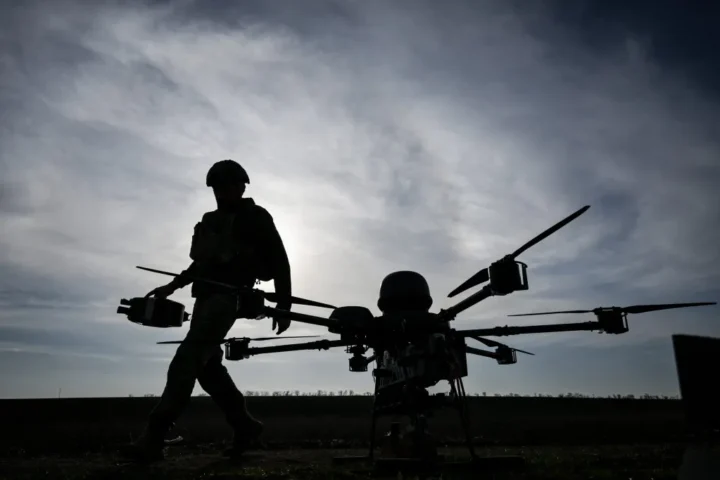
The evolving landscape of military engagement finds a compelling parallel in the ongoing conflict in Ukraine, a nation that has rapidly adapted its defense strategy. Former CIA director and retired Gen. David Petraeus observed that “The future of warfare is Ukraine producing 7 million drones per year right now,” noting their production of 3.5 million drones last year. This output enables the deployment of 9,000 to 10,000 drones daily, fundamentally altering battlefield dynamics. Unmanned systems are now responsible for the majority of casualties, with small first-person view drones targeting individual troops and vehicles. Ukraine’s defense industry has also innovated, developing inexpensive drones, such as the P1-Sun, which costs just over $1,000 and can operate at high altitudes, produced en masse via 3-D printing. These drones are even used to intercept Russian-launched Shaheds, demonstrating a versatile and cost-effective defense.
This shift towards quantity, reminiscent of Joseph Stalin’s adage that “quantity has a quality all its own,” challenges the long-held U.S. military strategy of prioritizing cutting-edge, yet expensive, equipment. The rapid proliferation of cheap commercial drone technology has dramatically altered the equation, necessitating a reevaluation of defense procurement. The Pentagon, recognizing this new reality, has begun incorporating its own variants of inexpensive drones, like the LUCAS, used in recent conflicts. Emil Michael, the undersecretary of defense for research and engineering, indicated plans to mass-produce the LUCAS drone, noting its effectiveness as a “useful tool in the arsenal.”
The integration of artificial intelligence further amplifies the threat posed by drone swarms, making them exceptionally difficult to counter. Petraeus warned that current defenses are not adequately prepared for such an onslaught. He suggested that energy weapons, such as high-powered microwaves capable of neutralizing large numbers of drones simultaneously, might be necessary. The rapid pace of innovation, with software and hardware updates occurring every few weeks in Ukraine, underscores the urgent need for adaptive defense strategies. Gulf nations, facing similar drone threats, have even sought Ukrainian expertise in combating Shahed drones, with President Volodymyr Zelenskyy stating his country’s capacity to produce at least 2,000 effective interceptors daily. This global interest in Ukraine’s approach underscores its pivotal role in shaping the future of military engagement.