Staff Report
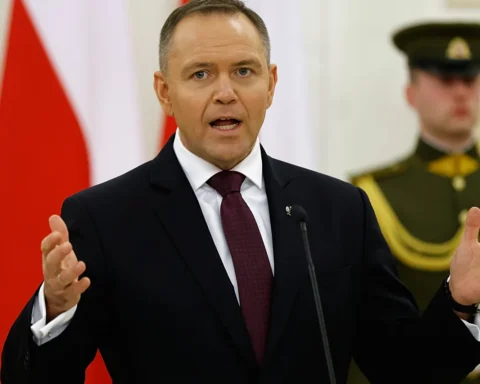
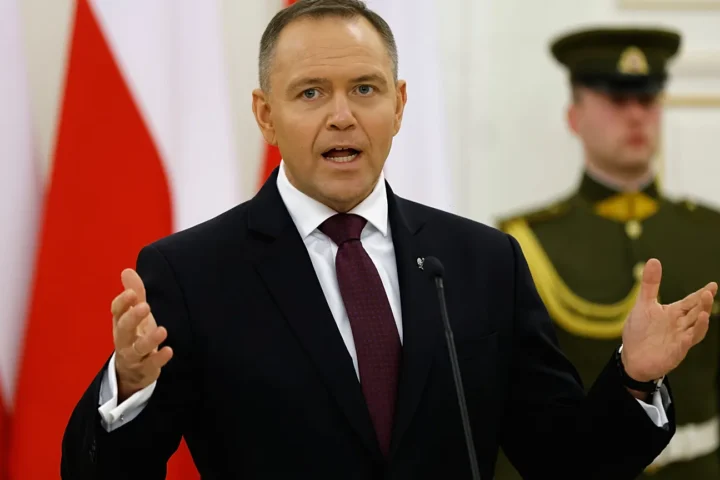
The European Union is facing a renewed internal rift over border management as Finland openly criticizes Spain for its recent decision to grant legal status to hundreds of thousands of undocumented migrants. Finnish Interior Minister Lulu Ranne has voiced sharp disapproval of the move, arguing that large-scale regularization programs undermine the collective security of the Schengen Area and create unintended incentives for illegal crossings.
Spain recently approved a sweeping reform that aims to regularize the status of approximately 300,000 migrants annually over the next three years. The Spanish government, led by Prime Minister Pedro Sánchez, defended the measure as a pragmatic approach to addressing labor shortages and ensuring that those already living and working in the country can contribute to the social security system. However, the move has sent shockwaves through Northern European capitals where migration remains a deeply sensitive political issue.
Minister Ranne expressed concern that Spain’s unilateral decision essentially bypasses the spirit of the EU’s recently negotiated Migration and Asylum Pact. She suggested that when one member state offers a pathway to legal residency on such a massive scale, it acts as a magnet for further irregular migration toward the European continent. From the Finnish perspective, this approach is seen as a direct contradiction to the goal of strengthening external border controls and discouraging human trafficking networks.
Finland has recently adopted a much more restrictive stance on migration, citing national security concerns particularly along its eastern border. The Finnish government argues that the integrity of the European Union depends on a unified and firm policy regarding who is allowed to enter and remain within the bloc. Ranne emphasized that regularizing those who entered the country illegally sends the wrong message to both the public and those considering the journey to Europe.
In Madrid, officials have countered these criticisms by pointing to the economic realities of a shrinking workforce. Many sectors in Spain, including agriculture and hospitality, are heavily dependent on migrant labor. By bringing these workers out of the shadows, the Spanish government hopes to increase tax revenue and reduce the size of the informal economy. Proponents of the Spanish plan argue that it is a compassionate and realistic response to a population that is already integrated into the fabric of Spanish society.
Despite these economic justifications, the diplomatic friction highlights a growing divide between the Mediterranean frontline states and the more conservative members of the North. Finland is not alone in its skepticism; several other EU nations have expressed private concerns that Spain’s policy could lead to secondary movements, where migrants legalized in Spain eventually migrate to other Schengen countries in search of higher wages or different social benefits.
The debate comes at a critical time for the European Union as member states begin the complex process of implementing new asylum rules. The lack of consensus between Helsinki and Madrid suggests that even with new legislation in place, the fundamental disagreement over how to handle migration remains far from resolved. Ranne’s public denunciation serves as a reminder that migration policy is no longer just a domestic issue but a central pillar of European geopolitical stability.
As the EU moves forward, the tension between economic necessity and border security will likely continue to dominate the political landscape. For now, Finland remains firm in its belief that security must come first, while Spain bets on a model of integration to secure its financial future. Whether these two competing visions can coexist within a borderless Europe remains the defining question for the bloc’s leadership in the coming years.