Staff Report
The landscape of European security is undergoing its most significant transformation since the Cold War. As nations across the continent scramble to modernize their military capabilities, a new frontrunner has emerged in the critical arena of air defense. While the American-made Patriot system has long been the gold standard for NATO allies, a homegrown alternative from Germany is now proving that European engineering can meet the demands of modern high-intensity warfare.
The IRIS T SLM system, developed by Diehl Defence, has transitioned from a promising prototype to a battle-hardened asset. For decades, European nations relied heavily on United States technology for long-range and medium-range protection. However, the recent geopolitical shifts have highlighted the strategic necessity of maintaining a sovereign industrial base. Berlin is now positioning its latest missile technology not just as a domestic solution, but as the backbone of a unified European shield.
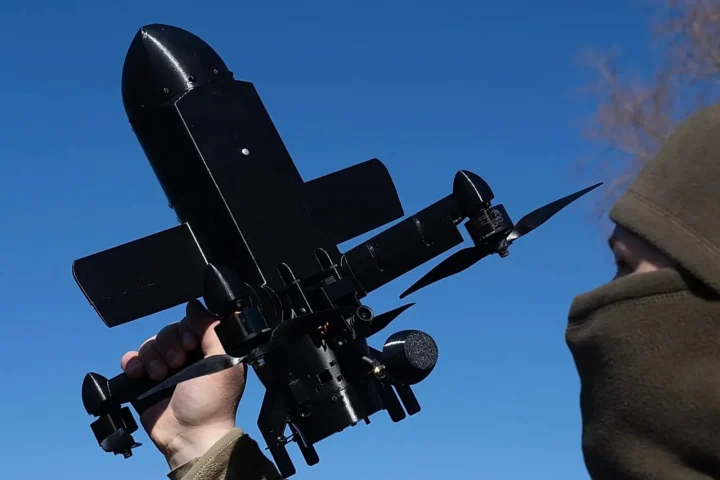
What sets the German system apart is its modular architecture and rapid deployment capabilities. Unlike older systems that require significant logistical footprints, the IRIS T is designed for the agility required on the modern battlefield. Military analysts note that the system has achieved an unprecedented interception rate in recent deployments, successfully neutralizing cruise missiles, drones, and fixed-wing aircraft. This performance has caught the attention of several European neighbors who are wary of over-reliance on non-EU suppliers.
The shift toward German technology also carries significant economic implications. By investing in the European Sky Shield Initiative, spearheaded by Chancellor Olaf Scholz, participating nations are funneling research and development funds back into the local economy. This move strengthens the European defense industrial and technological base, ensuring that high-tech manufacturing jobs and intellectual property remain within the continent. It represents a departure from the traditional procurement model where billions of euros in taxpayer money were sent across the Atlantic.
However, the rise of a European alternative does not necessarily signal the end of the Patriot era. The American system still offers capabilities in ballistic missile defense that are difficult to replicate. Most experts suggest that the future of European air defense will likely be a hybrid model. In this scenario, the German IRIS T would handle medium-range threats and swarm tactics, while the Patriot remains the heavy hitter for high-altitude ballistic threats. This layered approach would provide a more comprehensive defense than any single system could offer alone.
Logistics and interoperability remain the primary hurdles for this transition. For a European system to truly replace or stand alongside American counterparts, it must be fully integrated into the existing NATO command and control structure. Diehl Defence and its partners have made significant strides in ensuring that their software can communicate seamlessly with systems from other member states. This technical synergy is essential for the collective defense principle that underpins the alliance.
As Germany continues to ramp up production, the political dimension of this military advancement becomes clearer. For years, Berlin was criticized for its perceived reluctance to lead in security matters. By delivering a world-class air defense system that is being adopted by allies from the Baltics to the Balkans, Germany is asserting its role as a central pillar of European stability. The success of the IRIS T is a testament to the fact that when European nations align their industrial goals with their security needs, they can produce technology that rivals any global competitor.
The coming decade will likely see an accelerated phase-out of legacy Soviet-era equipment across Eastern Europe, creating a massive vacuum in the market. Whether Germany can scale its production fast enough to fill this void remains to be seen. If successful, the ‘Made in Europe’ label on air defense systems will become a symbol of a continent that is finally taking full responsibility for its own protection.