Staff Report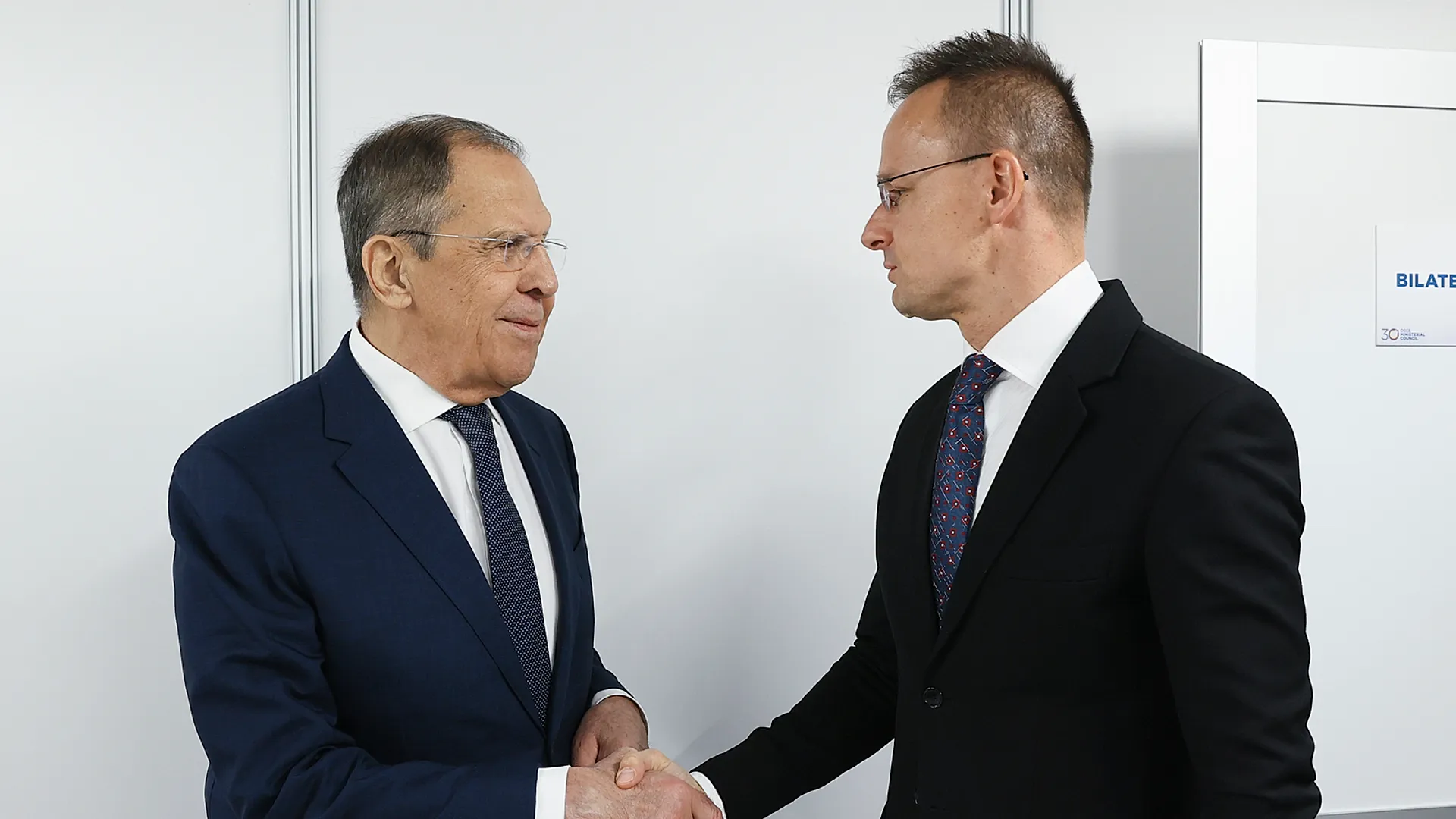
Reports emerging over the weekend have placed Hungary’s foreign minister, Péter Szijjártó, at the center of allegations concerning the relay of sensitive information from European Union ministerial meetings directly to Russian officials. These claims, detailed in a Washington Post investigation, suggest a pattern of communication where Szijjártó allegedly left EU gatherings to brief his Russian counterpart, Sergei Lavrov, on discussions occurring in Brussels. The reports also imply a broader conversation about potential “solutions” during these exchanges. A European security official, cited in the same investigation, went as far as to state that Moscow has effectively been privy to “every single EU meeting for years.”
This development arrives amidst heightened political tensions, particularly as Hungary prepares for its upcoming elections on April 12. The current Hungarian government has already drawn international attention for its stance on various issues, including its reported blocking of a €90 billion EU loan intended for Kyiv, citing an ongoing dispute related to the damaged Druzhba pipeline. Szijjártó has made 16 official visits to Moscow since the conflict in Ukraine escalated in February 2022, a frequency that has raised eyebrows among some European partners.
The allegations have not gone unnoticed elsewhere in Europe. Polish Prime Minister Donald Tusk reacted to the news by stating that such revelations “shouldn’t come as a surprise to anyone,” adding that he has long held suspicions, leading him to speak “only when strictly necessary and say just as much as necessary” in EU settings. Szijjártó, for his part, has dismissed the report as “fake news,” attempting to counter the narrative.
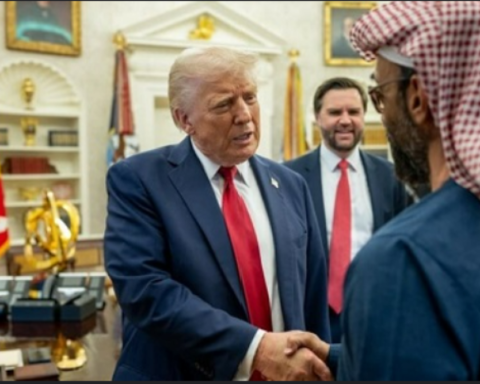
Parallel to these international concerns, the domestic political landscape in Hungary is becoming increasingly volatile. Prime Minister Viktor Orbán, who has recently received a “complete and total endorsement” from former US President Donald Trump, faces a significant challenge in the upcoming elections. He has been trailing opposition leader Péter Magyar of the conservative Tisza party in polls for several months. The campaign has become increasingly acrimonious, making the outcome of the April 12 vote unpredictable.
The broader European political scene is also experiencing shifts, as evidenced by recent election results across the continent. In Slovenia, Prime Minister Robert Golob’s centrist Freedom Movement secured a narrow victory over Janez Janša’s right-wing Slovenian Democratic Party (SDS). The margin was so slim that the result was effectively a tie after final confirmation, with Golob’s party holding 29 seats to the SDS’s 28 in the 90-seat parliament. Janša, known for his alignment with figures like Orbán and Trump, had consistently led opinion polls for over a year before allegations of foreign interference surfaced. These claims involved a Slovenian lobbyist, lawyer, and former minister discussing methods to influence Golob’s government, as well as accusations of Janša enlisting Black Cube, an Israeli intelligence firm, to discredit Golob. While Janša acknowledged contact with Black Cube, he denied any link to the election, and the firm has previously been associated with campaigns against accusers of Harvey Weinstein.
Meanwhile, French voters also participated in municipal runoffs, offering an early glimpse into the nation’s political leanings ahead of a critical presidential election next year. The results presented a varied picture: the Left maintained control of Paris, with Socialist Emmanuel Grégoire securing victory, while the far-right achieved a notable symbolic win in Nice. Mainstream parties demonstrated resilience in several major and mid-sized cities. In Marseille, Socialist incumbent Benoît Payan was re-elected, thwarting the far right’s ambitions for France’s second-largest city. Lyon saw Green mayor Grégory Doucet retain his position after a challenging contest, which included a last-minute merger with the hard-left France Unbowed party. These diverse outcomes highlight a fragmented yet dynamic political environment across Europe, where domestic concerns often intertwine with broader international narratives.