Staff Report
The landscape of modern aerial combat is shifting toward a battle of attrition where cost efficiency dictates victory. As traditional air defense systems struggle to keep pace with the sheer volume of low-cost loitering munitions, Ukraine has emerged as a global laboratory for a new class of military hardware. The rise of Ukrainian drone interceptors represents more than just a tactical adjustment; it is a fundamental reimagining of how nations protect their airspace without bankrupting their defense budgets.
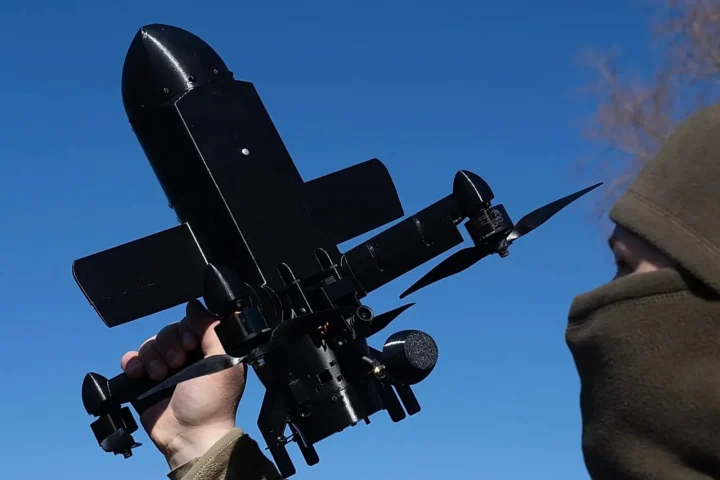
For decades, the standard response to an aerial threat was a multi-million-dollar missile system. While effective against high-altitude jets and ballistic missiles, these systems are economically unsustainable when faced with thousands of small, cheap suicide drones. Ukraine’s solution has been to fight fire with fire, or more accurately, drones with drones. By developing highly maneuverable, first-person view craft designed specifically to ram or net hostile targets, Ukrainian engineers have successfully lowered the cost of an engagement from hundreds of thousands of dollars to just a few hundred.
International defense observers are closely monitoring these developments as the technology proves its worth in active conflict zones. The appeal lies in the rapid scalability of these interceptors. Unlike traditional manufacturing which requires specialized factories and long lead times, many of these drone components are 3D-printed or sourced from commercial supply chains. This allows for rapid iteration based on real-time feedback from the front lines, ensuring the technology evolves as quickly as the threats it is meant to counter.
The global defense market is already beginning to pivot toward these asymmetric solutions. Nations that previously relied on expensive Western interceptors are now looking at Ukrainian models as a blueprint for domestic security. The efficiency of these systems is not just measured in their kill ratio, but in the preservation of high-end anti-aircraft munitions for larger, more dangerous targets. By filtering out the low-level threats with affordable interceptors, military commanders can maintain a more robust and sustainable defense posture.
Beyond the immediate military application, the success of these systems highlights a shift in geopolitical power dynamics. Smaller nations can now field credible defense capabilities that were once the exclusive domain of superpowers. As Ukraine continues to refine its interceptor technology, the lessons learned in the skies over Eastern Europe will undoubtedly influence global military doctrine for the next generation. The era of the expensive missile may not be over, but its dominance is being challenged by a smaller, smarter, and significantly cheaper alternative.