Staff Report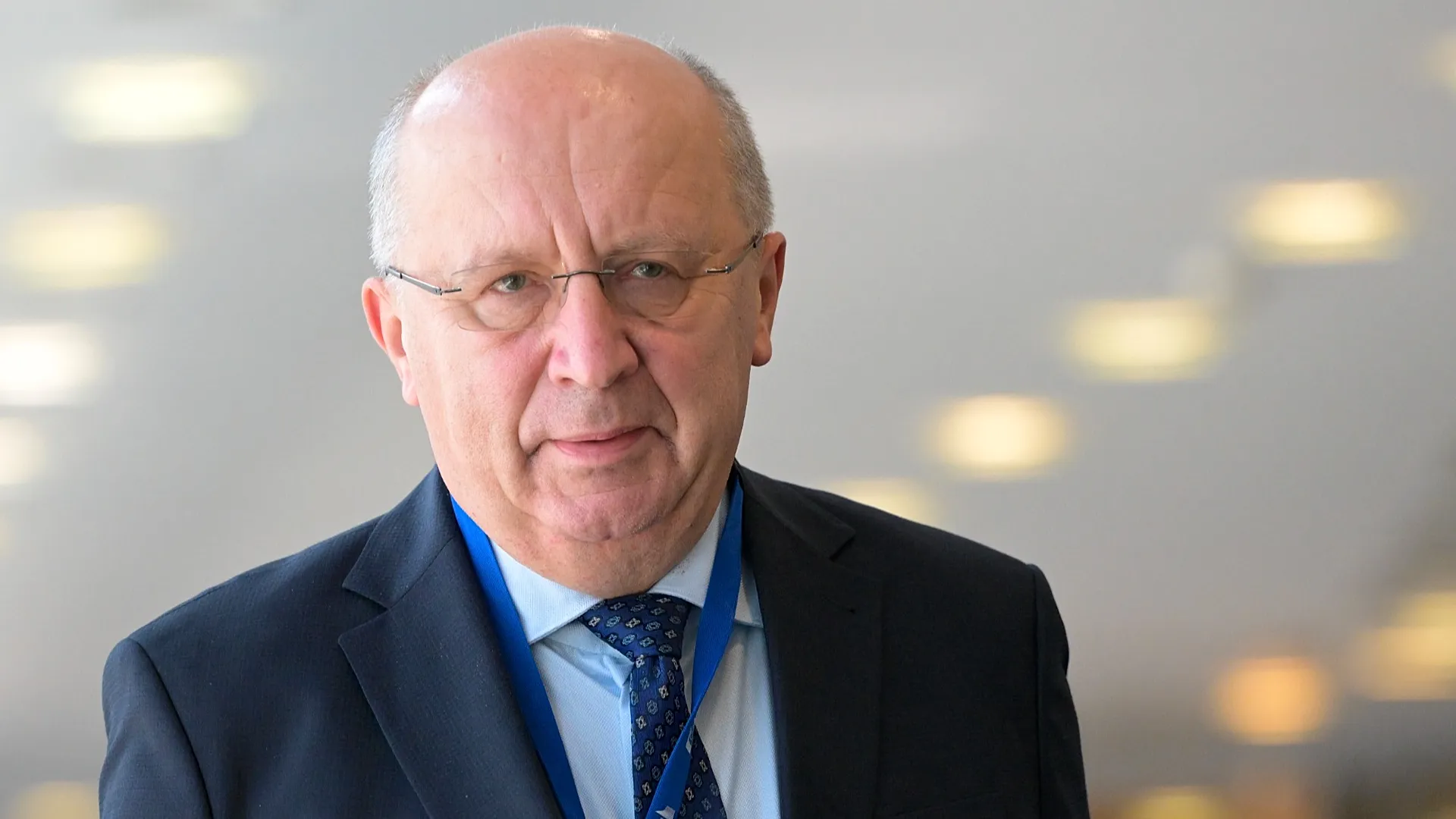
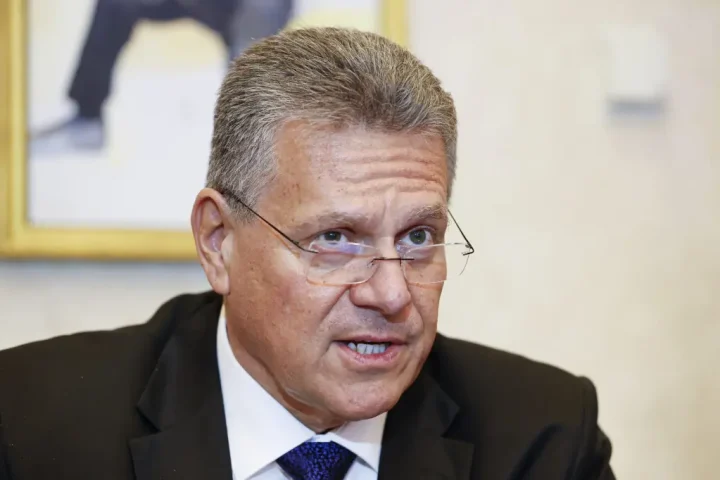
Europe’s geopolitical anxieties are once again on full display. As Russian President Vladimir Putin prepares to host U.S. negotiators in Moscow for exploratory discussions on the war in Ukraine, European officials are scrambling to reassert their relevance. Speaking on Euronews’ morning program Europe Today, former Lithuanian Prime Minister and influential MEP Andrius Kubilius delivered a stark message: Europe needs its own plan for Ukraine—because the continent can no longer rely on others to chart the path toward peace.
His words reflect a growing discomfort within the European Union. While Europe remains Ukraine’s largest financial backer and a key supporter of its defensive capabilities, it finds itself repeatedly sidelined at decisive diplomatic junctures. The possibility that Washington and Moscow might sketch the outlines of a ceasefire, a negotiation framework, or a future settlement without meaningful European input has forced EU leaders to confront an uncomfortable truth: Europe’s geopolitical weight is insufficient for the scale of the crisis it faces.
Kubilius’ warning taps into a deeper debate now reverberating across European capitals—a debate about autonomy, responsibility, and the future of Europe’s security order.
Europe’s Anxiety: A Negotiation Table Without the EU
The announcement that the Kremlin would receive U.S. negotiators triggered unease across the EU. While the Biden administration has emphasized that Washington supports Ukraine’s sovereignty, the mere prospect of bilateral U.S.–Russia dialogue revived unwelcome memories for Europe:
- Cold War-era great-power diplomacy, where Europe was an object—not a participant.
- NATO-era reliance on American leadership for crises on the continent.
- Past diplomatic formats (like Minsk) where European involvement failed to yield lasting results.
The fear in Brussels is that any preliminary Russia–U.S. discussions might create momentum outside the EU’s control—and pressure European governments to accept outcomes shaped elsewhere.
Kubilius’ message is blunt:
“Europe must stop relying on Washington to negotiate its own security. The EU needs its own strategy, its own geopolitical tools, and its own plan for Ukraine.”
This sentiment is increasingly shared among European policymakers who are alarmed by Europe’s limited leverage in peace diplomacy—despite its enormous economic and humanitarian contributions.
Why Kubilius Says Europe Needs Its Own Plan Now
Kubilius, who serves as one of the European Parliament’s strongest advocates for Ukraine, identifies several reasons why Europe must act decisively.
1. U.S. Intentions Are Fluid and Politically Vulnerable
American policy toward Ukraine is increasingly influenced by U.S. domestic politics, election cycles, and strategic recalibrations. Europe cannot risk its security being determined by shifts in Washington or by competing factions in Congress.
2. Putin Prefers Bilateral Deals, Not Multilateral Oversight
By inviting U.S. envoys to Moscow, Putin is signaling that he prefers negotiating with a single major player—not a coalition that includes the EU. This allows Russia to:
- exploit divisions
- press for sanctions relief
- bypass European conditions
- weaken Ukraine’s EU accession trajectory
3. Europe Is Paying the Largest Economic Price
From energy shocks to refugee flows, inflation, defense expenditures, and the restructuring of industrial supply chains, Europe absorbs the bulk of the war’s economic burden. Yet it exercises less influence than its stake would justify.
4. The War Is Redefining Europe’s Long-Term Security
The architecture of post-Cold War Europe has collapsed. The EU must shape the new order—otherwise, others will shape it on Europe’s behalf.
5. Ukraine’s Future Is a European Responsibility
Ukraine’s integration into the EU and its long-term reconstruction cannot depend on American mediation. The political, economic, and social consequences will land primarily in Europe.
For Kubilius, the conclusion is unequivocal: Europe needs agency. And agency requires a plan.
What Europe’s “Own Plan” Should Look Like
Kubilius and other European strategists outline several pillars for a European-led approach.
1. A Unified European Security Doctrine for Ukraine
Europe must articulate a common position on:
- security guarantees
- long-term military assistance
- defense-industrial support
- postwar border arrangements
- NATO coordination
Without a unified doctrine, EU member states risk fragmentation—something Moscow has repeatedly exploited.
2. A European Peace Framework That Sets Clear Conditions
Rather than reacting to U.S.–Russia dialogue, Europe should present:
- non-negotiable principles (territorial integrity, sovereignty)
- economic leverage points (sanctions, reconstruction aid)
- red lines on any proposed territorial concessions
- conditions for ceasefire monitoring
- pathways for Ukraine’s EU accession
This would give Europe a coherent baseline from which to negotiate.
3. A Dramatic Scaling-Up of Europe’s Defense Capacity
Kubilius argues that Europe needs to boost its defense production dramatically. Ukraine’s survival depends on ammunition, drones, air-defense systems, and armored vehicles—most of which must now come from European factories.
4. A Long-Term Marshall Plan for Ukraine
Europe cannot wait until after a ceasefire to prepare reconstruction. It must create:
- financing platforms
- governance frameworks
- anti-corruption safeguards
- investment incentives
- infrastructure modernization plans
Ukraine’s recovery is a multi-decade project—and it begins now.
5. A Political Narrative That Recognizes Ukraine as Integral to Europe
Kubilius emphasizes that Ukraine is not an external country needing charity; it is a future EU member whose security is inseparable from Europe’s own.
Why Europe Keeps Getting Sidelined
Despite its economic strength and political union, Europe faces structural weaknesses in moments of crisis.
1. Lack of a Single Voice
27 member states often produce 27 foreign policies. Consensus is slow and easily blocked.
2. Limited Hard Power
Europe outsources its security to NATO—and by extension, the United States.
3. Historical Dependence on U.S. Leadership
Even when Europe wants autonomy, institutional habits pull it back toward reliance.
4. Russian Diplomacy Targets European Divisions
Moscow has long specialized in bilateral relationships, avoiding collective EU positions.
5. Slow Industrial Mobilization
Compared to the U.S. defense base, Europe’s defense industry remains fragmented and underfunded.
These factors combine to reduce Europe’s influence at negotiation tables—even those concerning conflicts on its own continent.
The Symbolism of Washington–Moscow Talks
The image of U.S. negotiators traveling to Moscow while Europeans watch from the sidelines is not merely diplomatic choreography—it is a symbolic reminder of Europe’s geopolitical underweight.
Kubilius warns that unless Europe acts now, it risks becoming a spectator rather than an architect of its own security future.
The stakes are enormous:
- Ukraine’s territorial sovereignty
- Europe’s eastern borders
- the future of NATO
- EU credibility
- stability across the continent
If Europe fails to consolidate its political and military strength, Kubilius argues, the 21st century could witness the return of great-power spheres of influence on European soil.
A European Awakening—or Another Missed Opportunity?
The EU is at a geopolitical crossroads. It can:
Option A: Build its own policy, its own defense capacity, and its own negotiating platform
—gaining the ability to meaningfully shape Ukraine’s future.
Option B: Wait for Washington and Moscow to define the boundaries of the next stage of the conflict
—reacting after the fact, as it has in past crises.
Kubilius’ warning is a call for the EU to choose the first path.
Conclusion: Europe Must Decide What Kind of Power It Wants to Be
The ongoing war in Ukraine has already transformed Europe, but the next phase—peace negotiations—may define it even more profoundly.
Kubilius’ message is simple but urgent:
Europe can no longer afford to be geopolitically passive.
If the EU wants a secure, stable continent, it must take ownership of the roadmap for Ukraine’s peace—and not simply react to U.S.–Russia diplomacy.
The future of Ukraine, and the strategic identity of Europe itself, now hinges on whether the EU is prepared to act like a geopolitical power—strong, unified, and capable of leading.
The next steps Europe takes will shape the continent for generations.