Staff Report
The diplomatic rift within the European Union has deepened this week as Lithuania’s leadership issued a blunt rebuttal to recent allegations made by the Hungarian government concerning regional energy infrastructure. Prime Minister Ingrida Simonyte characterized Budapest’s assertions regarding the safety and operational integrity of energy pipelines passing through Ukraine as baseless, marking a significant escalation in the ongoing verbal sparring between the two nations.
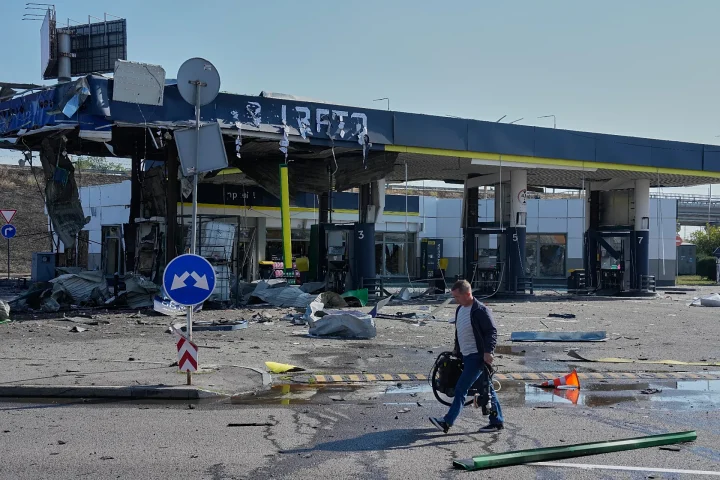
Hungary has recently intensified its rhetoric regarding its energy security, suggesting that the transit of resources through war-torn Ukraine is being deliberately compromised or mismanaged. Officials in Budapest have frequently pointed to these concerns as a primary justification for maintaining close energy ties with Moscow, a stance that has increasingly isolated the country from its Baltic and Eastern European neighbors. However, the Lithuanian government views these claims not as legitimate security warnings, but as a calculated political narrative designed to stall unified European action.
Speaking at a press briefing, Prime Minister Simonyte did not mince words when addressing the specific allegations coming from the Hungarian administration. She argued that the narrative being pushed by Viktor Orban’s government lacks any factual foundation and serves only to undermine the collective security efforts of the European Union. According to the Prime Minister, the infrastructure in question continues to function within the expected parameters of a conflict zone, and the suggestion of a deliberate conspiracy to cut off Hungarian supply is entirely without merit.
Lithuania has emerged as one of the most vocal critics of Hungary’s continued reliance on Russian fossil fuels. Since the full-scale invasion of Ukraine began, Vilnius has moved aggressively to decouple its economy from Russian energy, investing heavily in liquefied natural gas terminals and renewable infrastructure. From the Lithuanian perspective, Hungary’s insistence on the vulnerability of the Ukrainian pipeline serves as a convenient excuse to avoid the difficult but necessary transition away from Kremlin-controlled resources.
Energy analysts suggest that the technical reality of the Druzhba pipeline and other transit routes is far more stable than Budapest suggests. Despite the intensity of the kinetic conflict, Ukraine has maintained its contractual obligations for transit, understanding that the flow of energy is a critical component of European economic stability. By labeling the Hungarian claims as nonsense, Simonyte is highlighting a growing consensus among Northern European states that energy policy is being used by some member states as a tool for political leverage rather than a matter of genuine logistics.
This dispute comes at a delicate time for the European Council. As member states attempt to coordinate a tenth round of sanctions and further energy price caps, the lack of internal cohesion remains a significant hurdle. Hungary’s veto power and its frequent use of energy security arguments have often slowed the implementation of broader EU strategies. The bluntness of the Lithuanian response suggests that the patience of other member states is wearing thin.
The broader implications of this diplomatic clash extend beyond mere rhetoric. It signals a fundamental disagreement on the nature of the threat facing the continent. For Lithuania, the primary threat is the continued financial flow to the Russian war machine via energy payments. For Hungary, the threat is portrayed as the potential loss of cheap, reliable fuel through traditional routes. By dismissing the Hungarian concerns so publicly, Lithuania is attempting to strip away the perceived legitimacy of Budapest’s position before the next round of high-level ministerial meetings in Brussels.
As the winter season approaches, the focus on pipeline integrity will only intensify. Whether Hungary will provide concrete evidence to back its security claims remains to be seen, but for now, the Baltic states are standing firm in their assessment that the current narrative from Budapest is little more than a distraction from the larger geopolitical goal of European energy independence.