Staff Report
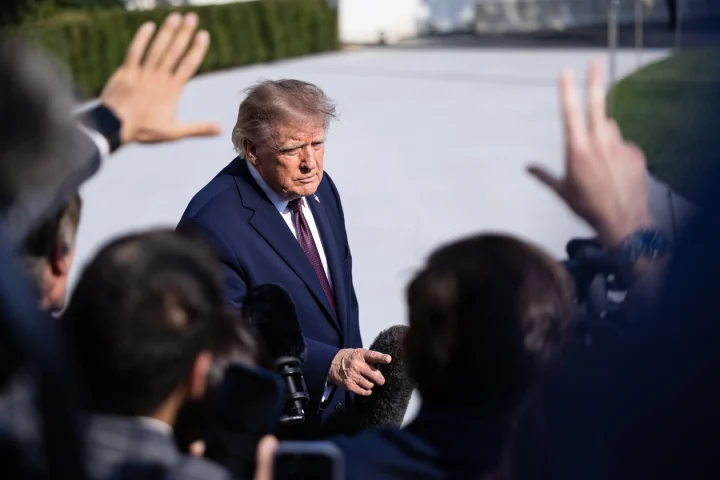
President Donald Trump maintained a complex stance on Monday regarding the ongoing conflict with Iran, asserting a lack of urgency to end the hostilities while simultaneously expressing confidence that negotiations would proceed swiftly. This perspective emerged as a 14-day ceasefire approached its Wednesday expiration, with Trump oscillating between optimism for a rapid agreement and stark warnings of intensified conflict should a deal not materialize. He continued to anticipate dispatching his negotiating team, led by Vice President JD Vance, to Islamabad, Pakistan, for a second round of discussions, despite Iran’s insistence that it would only participate if the United States softened its demands.
Mohammed Bagher Qalibaf, Iran’s chief negotiator and parliament speaker, publicly accused the United States of seeking Iran’s capitulation. Qalibaf indicated that Iran was preparing to unveil new strategies on the battlefield, stating in a post on X that negotiations under duress were unacceptable. Trump, for his part, used his Truth Social platform to reiterate his position, declaring he felt “no pressure whatsoever” but assuring that a resolution would occur “relatively quickly!” Meanwhile, Pakistani officials have proceeded with preparations for further talks, even as the fragile ceasefire faced renewed strain over the weekend due to clashes near the Strait of Hormuz.
The President told Bloomberg News that a renewal of the existing ceasefire was “highly unlikely.” Tensions escalated following a U.S. Navy action on Sunday, where a vessel attempting to circumvent the blockade of Iranian ports was attacked and seized. This incident followed Iran’s actions on Saturday, when it fired upon ships and halted traffic in the Strait, retracting its earlier commitment to allow certain vessels to pass, citing U.S. non-compliance with the ceasefire terms. Iranian Foreign Minister Abbas Araghchi characterized the U.S. actions as “incompatible with the claim of diplomacy,” but offered no clear indication of Iran’s plans post-ceasefire or its willingness to re-engage in negotiations.
Over the weekend, Iran acknowledged receiving new proposals from the U.S., yet suggested a significant disparity remained between the two sides. Previous negotiations faltered over issues including Iran’s nuclear enrichment program, its regional proxies, and control of the Strait of Hormuz. Since the conflict began on February 28 with U.S. and Israeli attacks, Iran has severely restricted traffic through the Strait, a critical waterway for approximately one-fifth of global oil trade. The U.S. has simultaneously enforced a blockade of Iranian ports, with the Sunday seizure marking the first such interception under this blockade. Iran’s joint military command denounced the boarding as an act of piracy and a violation of the ceasefire, while Trump affirmed the blockade would remain “in full force” until a deal is reached.
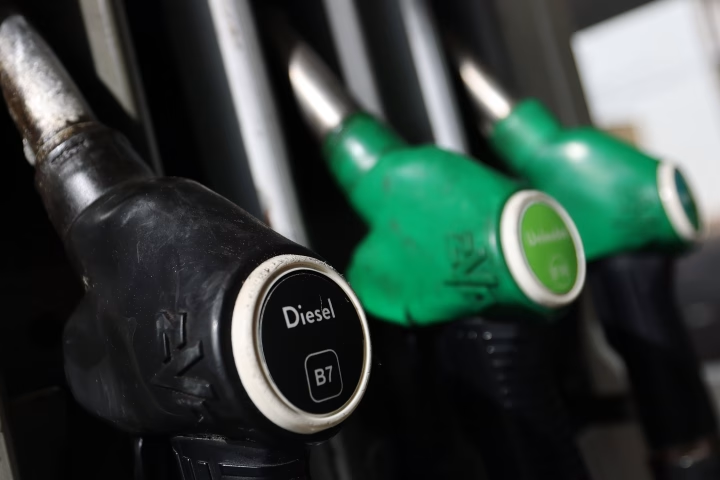
Domestically, President Trump addressed critics who urged a swift resolution to the war, now over seven weeks old. He expressed frustration at those suggesting a settlement while Iran was, in his view, in a “perfect position, including being militarily defeated.” The President also sought to reassure investors as U.S. stocks experienced a slight dip on Monday, following the chaotic weekend in the Persian Gulf. He publicly disagreed with Energy Secretary Chris Wright’s projection that gas prices might not return to the $3 per gallon range until late this year or next, contending that prices would “come roaring down if it ends,” should Iran agree to terms.
The broader regional landscape also saw diplomatic movements, with historic talks between Israel and Lebanon slated to resume Thursday in Washington. These discussions, aimed at disarming Hezbollah and securing a peace agreement, follow a 10-day ceasefire initiated last Friday in Lebanon, where fighting between Israeli forces and Iranian-backed Hezbollah militants had resulted in over 2,290 casualties. Even during this ceasefire, Israeli airstrikes on Monday resulted in the deaths of Hezbollah militants, while Hezbollah claimed responsibility for detonating explosives in an Israeli convoy within Lebanon on Sunday. The conflict has had a devastating human cost, with official Iranian media reporting at least 3,375 deaths in Iran, including 383 children, since the war began. Additionally, 23 people have died in Israel, and over a dozen in Gulf Arab states, alongside 15 Israeli soldiers in Lebanon and 13 U.S. service members across the region. The disruption to the Strait of Hormuz has sent oil prices soaring, with Brent crude reaching over $95 a barrel, significantly higher than the approximately $70 before the war, contributing to one of the worst global energy crises in decades.