Staff Report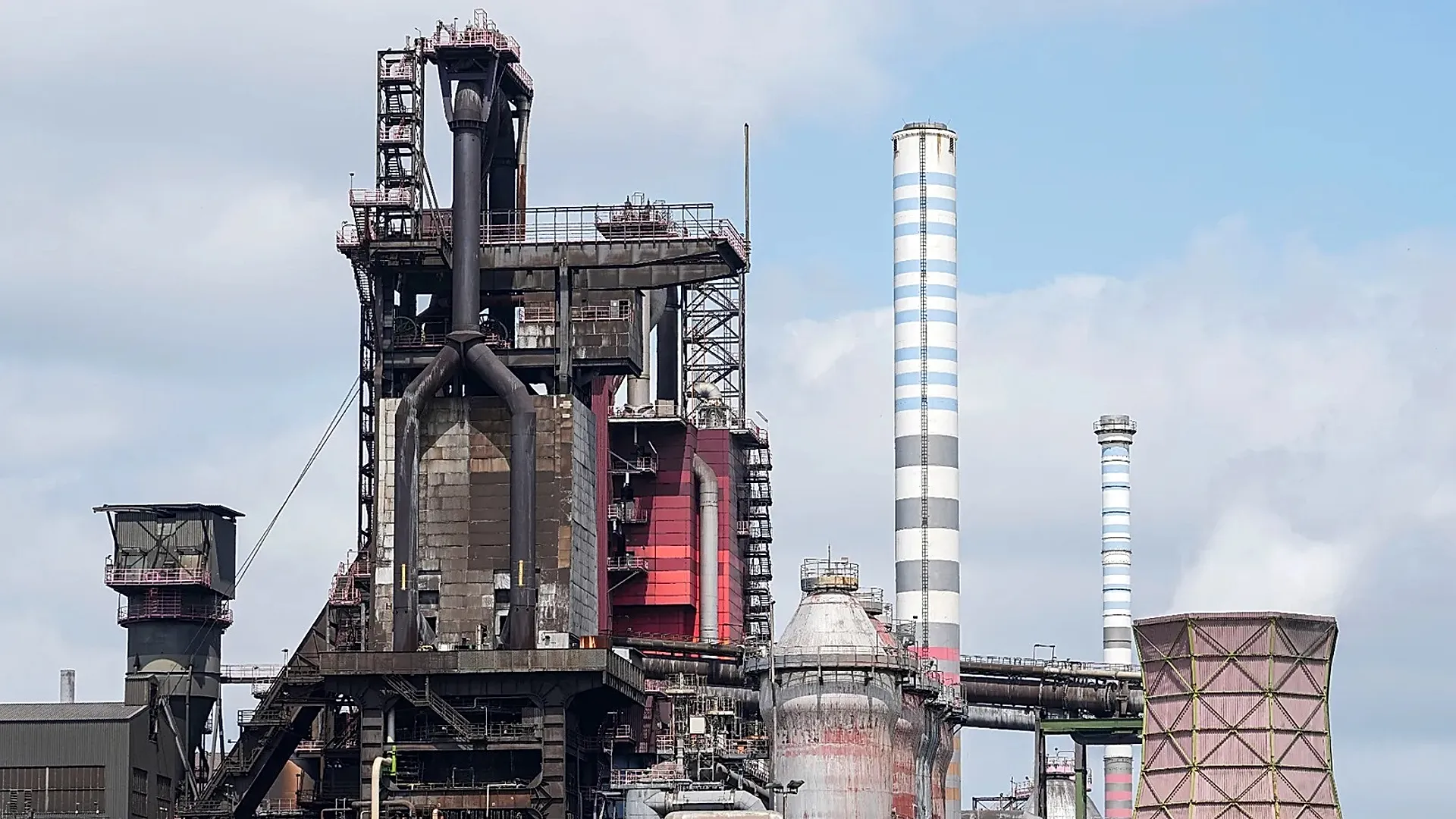
Industrial leaders and government officials across Europe are voicing substantial concerns regarding the European Union’s carbon market, particularly as the bloc moves to significantly tighten emission regulations. A recent gathering of industry ministers in Brussels brought these anxieties to the forefront, with six member states explicitly warning that the escalating costs associated with carbon pricing could compel key industries to relocate production outside the EU, seeking regions with less stringent environmental oversight. This potential exodus, often termed carbon leakage, would undermine the very goals of the EU’s climate policy while simultaneously impacting economic stability within the Union.
Bulgaria, the Czech Republic, Greece, Poland, Romania, and Slovakia have collectively highlighted the precarious position of their heavy industries. Steelmakers, cement plants, aluminum smelters, and chemical producers in these nations are reportedly caught in a squeeze, grappling with a confluence of soaring energy costs, persistent geopolitical instability, and the intensifying carbon rules under the EU Emissions Trading System (ETS). The core of this contention lies in the impending revisions to the allocation of free carbon allowances. The European Commission announced plans on May 11 to dramatically reduce these free allowances for the 2026-2030 period, with some sectors facing cuts of up to 50% compared to the preceding decade. This prospect has been met with considerable disappointment among the affected ministers.
Before the ministerial assembly, the six concerned countries formalized their reservations in a document, asserting that the EU’s current trajectory demands a pace of decarbonization that outstrips available technological solutions. Their argument posits that many heavy industries remain reliant on fossil-fuel heat, primarily because scalable and commercially viable alternatives are either nascent or simply do not yet exist. This perspective gained further traction with support from Italy and Austria, both of whom had previously advocated for a suspension of the ETS, a call that amplified following the recent escalation of conflict in the Middle East and its subsequent impact on European energy prices.
Adolfo Urso, Italy’s Minister for Industry, articulated the gravity of the situation for Italian industries, stating that conditions were already untenable even before the latest geopolitical turmoil. He urged the Commission to take decisive action in light of the evolving global landscape. Similarly, Wolfgang Hattmannsdorfer, Austria’s Federal Economy and Energy Minister, underscored the immense financial burden facing steel producers, who anticipate investments of between €1 billion and €2 billion in decarbonization efforts over the next five years. Hattmannsdorfer emphasized the necessity of extending free ETS certificates, arguing that the existing system is increasingly creating a competitive disadvantage for European industry.
Rather than outright rejecting climate policy, the ministers advocating for caution are proposing a more gradual and pragmatic transition. Their suggestions include a temporary freeze of benchmark values at their current levels and a re-evaluation of the methodology used for allocations. They contend that the revised methodology should more accurately reflect actual production capacities and realistic energy mixes available to these sectors. In response to these significant concerns, Industry Commissioner Stephane Séjourné indicated the Commission’s willingness to consider tailoring free allocations to specific industrial sectors as part of the upcoming ETS revision. He acknowledged the need for an “adapted methodology” that is more flexible and responsive to the realities faced by various sectors, aiming to prevent similar predicaments in the future. Séjourné also pointed to a substantial €30 billion in funds, generated from 400 million ETS quotas, which are earmarked to support investments in industrial decarbonization, signaling a potential pathway for compromise and continued climate action amidst economic realities.