Staff Report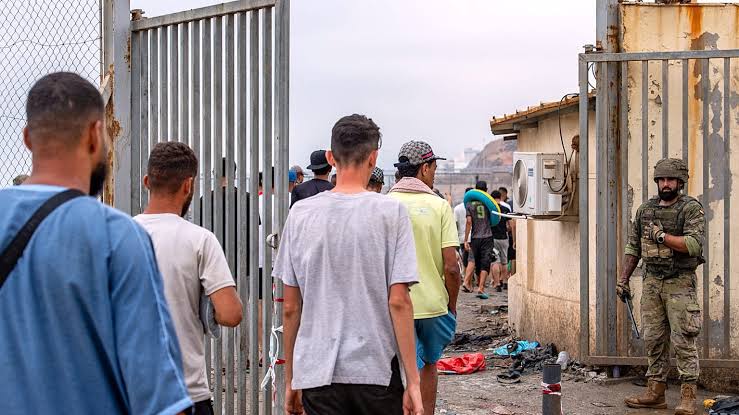
The city of Ceuta, a Spanish enclave bordering Morocco, is slowly attempting to reclaim a semblance of normalcy following an unprecedented influx of migrants. While local authorities have begun the arduous task of restoring order, the sheer scale of the recent crossings continues to cast a long shadow over the community. Along the breakwater, a critical point of entry for many, new protective barriers are being installed, a stark physical reminder of the efforts to prevent a recurrence of the mass arrivals that overwhelmed the city just days ago.
Despite these immediate measures, the aftermath remains palpable throughout Ceuta. Migrants are still visible on the streets, a testament to the thousands who arrived. Authorities acknowledge that an unknown number have also found temporary refuge with friends and relatives, further complicating efforts to fully assess the situation. Residents recall the suddenness and intensity of the event with vivid clarity. One local, reflecting on the moment the crowds appeared, described the experience as “frightening,” admitting to genuine fear until the arrival of the Armed Forces helped to re-establish some control. This sentiment underscores the profound disruption experienced by the city’s inhabitants.
For many businesses in Ceuta, operations have resumed, though not without apprehension. The Ceuta Business Confederation noted that commercial activity has restarted “with caution.” For over 24 hours during the height of the crisis, most shops remained shuttered as residents sheltered in their homes. This lockdown led to shortages of essential goods, including fresh bread, highlighting the fragility of supply chains in such an unforeseen event. The disruption extended beyond commerce, impacting the city’s cultural calendar. Normally, this period would be alive with celebrations honoring the Virgin of Africa, Ceuta’s Patron Saint. However, these festivities have been canceled, a decision that speaks volumes about the gravity of the situation and the city’s ongoing recovery efforts.
Among those still navigating the streets of Ceuta is a young migrant who shared his personal motivations for making the perilous journey. He spoke of seeking a new life, driven by the poverty his family faces. His current reality involves sleeping on the streets, describing life as “really hard.” This individual indicated that this was not his first attempt to reach Ceuta and expressed no immediate intention of departing, a perspective likely shared by many others who remain in the enclave. Their presence adds another layer of complexity to the city’s recovery, as authorities balance humanitarian concerns with the need to manage irregular migration.
The prevailing mood in Ceuta is a complex tapestry of emotions. Fear and uncertainty are clearly present, alongside a degree of anger regarding the circumstances that led to the crisis. Yet, amidst these challenging emotions, there is also an undercurrent of compassion. As the city grapples with the fallout from one of the largest irregular border crossings in its history, the immediate focus remains on restoring a sense of stability. However, the long-term implications for Ceuta, its residents, and the many migrants who now find themselves within its borders, are still unfolding, demanding sustained attention and nuanced solutions.