 Staff Report
Elon Musk said Tesla will phase out production of the Cybertruck, the angular electric pickup he once called the company's best product ever. In a post on X, Musk said the vehicle will stop rolling off the line at Gigafactory Texas around the middle of next year so the factory can shift capacity to the autonomous Cybercab.
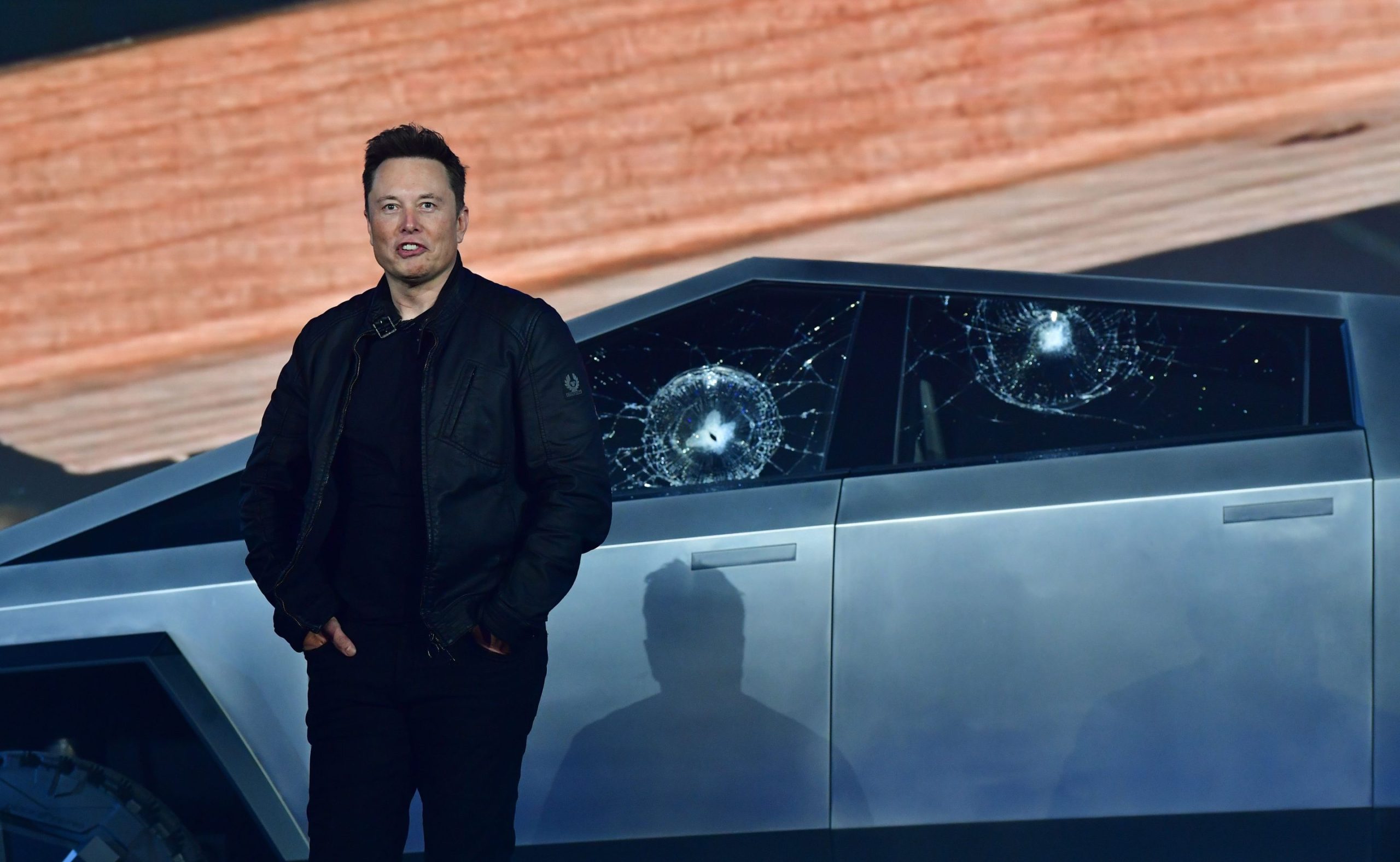
The announcement closes a chapter that began seven years ago with a theatrical launch at Tesla's design studio in Hawthorne, California. That 2019 event featured pyrotechnics and a live demonstration of the truck's armor glass that ended with Tesla's lead designer cracking two windows with a steel ball. At the time, Musk told investors the Cybertruck was Tesla's best product ever.
Sales never matched the hype
The Cybertruck attracted attention and buyers, but it never achieved the mass appeal of Tesla's Model Y or Model 3. Production delays pushed its launch from a promised 2021 to 2023, and output remained well below the 250,000 to 500,000 vehicles Musk once said Tesla would eventually build each year.
According to Kelley Blue Book, Tesla sold 38,965 Cybertrucks in the United States in 2024 and just 20,237 in 2025, a drop of 48%. Cox Automotive estimated Tesla sold only 7,263 in the first half of 2026, putting the truck on track for another annual decline. Tesla does not report Cybertruck sales separately in its financial filings.
Prices climbed far above the original promise
Pricing also limited adoption. When Musk unveiled the Cybertruck in 2019, Tesla advertised a starting price of $39,900. By the time deliveries began in 2023, the advertised entry version cost $60,990. This month Tesla raised prices again and stopped taking orders for the cheapest Dual Motor AWD model. The least expensive Cybertruck now available starts at $92,490, up from $84,990 in August.
Tesla had tried to broaden demand with a rear-wheel-drive version launched in 2025, but it removed that model from the lineup within months. The Cybertruck has also been hit with 11 recalls since customer deliveries began in late 2023, according to Reuters.
The pivot to autonomous vehicles
With Cybertruck sales shrinking, Musk is turning investor attention toward the Cybercab, a two-seat autonomous vehicle without a steering wheel or pedals. He unveiled the robotaxi in 2024, and the first Cybercabs began operating in Austin, Texas, in September. Tesla also runs robotaxi services using the Model Y in Houston, Dallas, Fort Worth, Miami, Orlando, and Tampa, with more cities planned.
The shift comes as traditional EV sales have softened since President Donald Trump ended the federal EV tax credit last year. Tesla still sells more electric vehicles than any other company in the United States, but it now needs to persuade investors that autonomy, not just EV volume, will drive future growth.
Regulatory and competitive hurdles
The Cybercab push is not without obstacles. Federal auto safety regulators opened an investigation in September into whether Tesla properly certified that the Cybercab meets federal vehicle safety standards. Tesla submitted responses to the National Highway Traffic Safety Administration at the end of October but asked that they remain sealed as confidential business information. NHTSA has not yet ruled on that request, according to Electrek.
Tesla is also entering the robotaxi market behind established rivals. Alphabet's Waymo already operates in 15 U.S. cities and said earlier this year that it provides about 500,000 rides per week.
What happens to current owners
Musk's post leaves existing Cybertruck owners with open questions. Tesla has not said how long it will continue selling remaining inventory or supplying replacement parts. Winding down production does not mean the company will stop supporting vehicles already on the road, but the timeline for parts and service remains unclear.
Even as production ends, Musk sounded optimistic about the truck's legacy. Responding to a user who called the announcement the end of an era, he wrote: True, but the Cybertruck fleet will be around for a long time.