Staff Report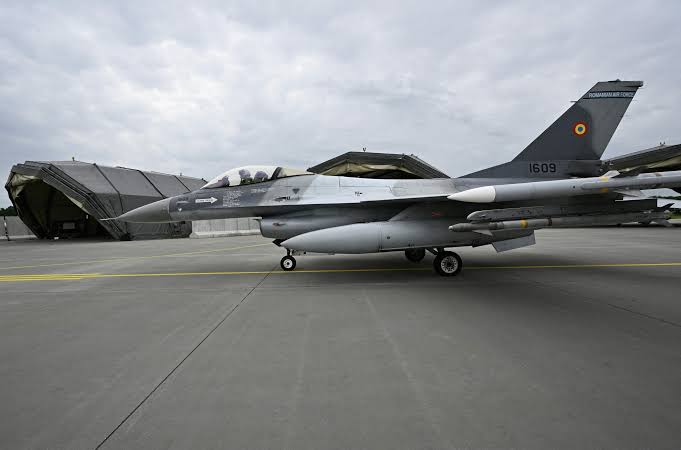
Fighter jets operating under NATO’s Baltic Air Policing mission intercepted and shot down a foreign drone over Latvian airspace last Friday, marking a significant escalation in the ongoing security challenges along the alliance’s eastern flank. The incident, which occurred over the Balvi region in eastern Latvia, saw the country’s military deploy additional air defense units to its borders, anticipating further incursions. Latvian authorities attributed the drone’s entry to Russian electromagnetic warfare, a tactic increasingly observed as Moscow’s aggression in Ukraine continues.
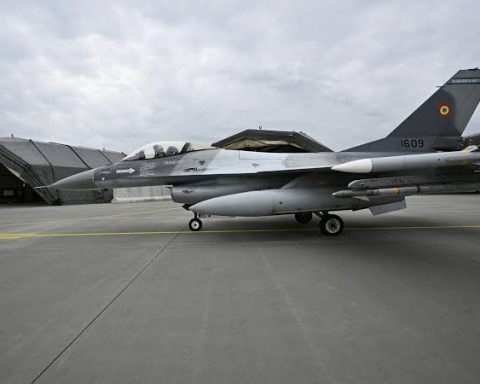
This latest event is not an isolated one but rather part of a discernible pattern of drone-related incidents impacting NATO members. The alliance has witnessed mounting incursions into its airspace, particularly in countries bordering Russia and Ukraine. Just last July, Romanian fighter jets downed three drones in a mere three-day span, with at least one identified as a Shahed-type, commonly employed by Russian forces in Ukraine. Beyond aerial interceptions, the Black Sea has also become a focal point for such activity. Romanian military divers recently destroyed two Gerbera-type drones near the Neptun Deep gas project, a proactive measure to safeguard critical infrastructure and shipping lanes.
The nature of these incursions suggests a broader strategy, often involving electronic warfare. In June, a Ukrainian sea drone, reportedly veering off course due to Russian electronic interference, exploded in the Romanian port of Constanta. Similarly, an explosion near a compressor station of the Trans-Balkan gas pipeline in Bulgaria last week further underscored the vulnerability of energy infrastructure to these unmanned aerial systems. These incidents collectively paint a picture of heightened risk and deliberate provocation, testing the resolve and defensive capabilities of NATO members.
NATO allies convened to address these escalating incidents, issuing a strong statement of “full solidarity with and support for the affected Allies.” The alliance placed full responsibility squarely on Russia for these “dangerous and unacceptable” airspace violations, characterizing them as evidence of Moscow’s “increasing tolerance for risk.” This unified stance reinforces NATO’s commitment to deter and defend against any form of aggression, a principle that has guided its operations since its inception. The Baltic Air Policing mission itself, initially launched in 2004 and expanded in 2014 following Russia’s annexation of Crimea, exemplifies this commitment, with allies rotating deployments to air bases in Šiauliai, Lithuania, and Ämari, Estonia.
The host nations, Latvia, Lithuania, and Estonia, provide essential air command and control infrastructure and personnel for this mission, which remains crucial for monitoring and securing the region’s skies. The continued threat of foreign drones, influenced by the conflict in Ukraine, ensures that vigilance along the eastern borders will remain at an elevated state. As long as the conflict persists, the potential for similar incidents to recur, whether through accidental drift or deliberate probing, remains a significant concern for regional stability and NATO’s collective security.