 Staff Report
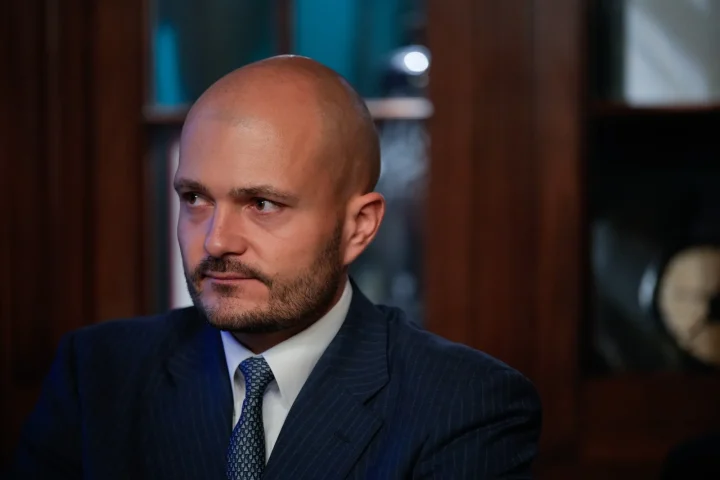
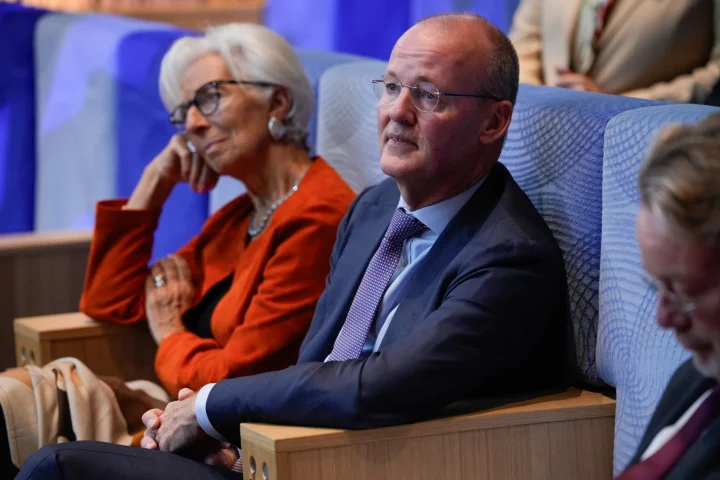
The contest to lead the European Central Bank is taking shape. With Christine Lagarde scheduled to leave the presidency in February, euro-area governments have put forward two experienced central bankers as the leading candidates to replace her: Klaas Knot of the Netherlands and Pablo Hernandez de Cos of Spain.
Kyriakos Pierrakakis, the head of the Eurogroup of euro-area finance ministers, said last Friday that both countries had formally nominated their former central-bank chiefs before the deadline. De Cos currently leads the Bank for International Settlements in Basel, while Knot stepped down last year after a long tenure at De Nederlandsche Bank.
A wider reshuffle is on the table
The presidency is only one of several top jobs up for grabs. The ECB’s six-member Executive Board is facing one of its biggest turnovers since the institution was created more than 25 years ago. Board member Isabel Schnabel is set to leave early in January 2027, and chief economist Philip Lane’s term ends in May.
Greek Prime Minister Kyriakos Mitsotakis has described the whole process as a “grand bargain” that will reshape the bank’s leadership. If Knot were chosen as president, the changes could go even further. His fellow Dutchman Frank Elderson, who currently sits on the board, might also have to step aside to avoid having two nationals from the same country in key roles.
Political bargaining begins
Although euro-area finance ministers are assessing the candidates now, the final decision belongs to European Union leaders. The next key moments are an informal summit on November 13 and a special meeting scheduled for November 26 and 27.
The outcome will depend heavily on an understanding between German Chancellor Friedrich Merz and French President Emmanuel Macron, the leaders of the currency bloc’s two largest economies. Both countries want to keep a seat on the ECB board, and Spain is also pushing for representation after Vice President Luis de Guindos retired earlier this year.
France appears well prepared to claim Lane’s position, with possible candidates including Bank of France deputy governor Agnes Benassy-Quere and former OECD official Laurence Boone. Germany’s coalition has yet to settle on a candidate to replace Schnabel, though former IMF official Tobias Adrian and Bundesbank vice-president Sabine Mauderer are among the names being discussed.
Economic challenges frame the choice
The leadership transition comes at a difficult moment. Inflation in the euro area is running at roughly double the ECB’s 2% target, and investors are nervous about fiscal stress in France. Whoever takes over will inherit the task of finishing the inflation fight while supporting an economy that is growing only modestly.
In an interview with the Swiss newspaper Tages-Anzeiger published on Saturday, de Cos said policymakers need to remain vigilant about inflation risks. He noted that second-round effects from an energy price surge linked to the Iran conflict have not yet appeared, but he also expressed concern about high debt levels in some economies at a time when borrowing costs are likely to rise further.
Continuity or change
Both Knot and de Cos are seen as credible technocrats who would preserve the ECB's independence and credibility. Knot has a reputation for clear communication and a firm stance on price stability. De Cos brings experience from the Bank for International Settlements and a deep understanding of financial stability risks.
The choice between them may ultimately turn on geography and political balance rather than sharp policy differences. The Netherlands and Spain are both major euro-area economies that have never held the ECB presidency, making either candidate a historic first. A surprise contender could still emerge once the political bargaining intensifies, just as Lagarde herself did when she was nominated in 2019.
What comes next
European leaders are expected to use the coming weeks to sound out candidates and build consensus. The final appointment will set the tone for ECB policy at a time when the bank must navigate inflation, fiscal pressures, and geopolitical uncertainty.
For investors and businesses, the message is that the succession is moving from speculation toward decision. The next ECB president will take office with less room for error than Lagarde had when she arrived, and the choices made this month will shape European monetary policy for years to come.