Staff Report
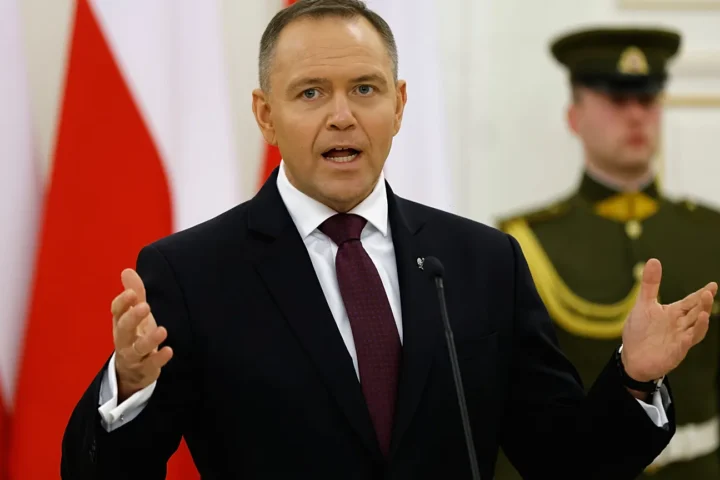
A significant shift in the European economic landscape has reached a symbolic milestone as Poland officially overtakes Spain in terms of gross domestic product per capita. This development marks a historic moment for the Central European nation, which has spent decades working to close the prosperity gap with its Western neighbors following the collapse of the Soviet bloc. Prime Minister Donald Tusk addressed the nation to confirm that the Polish economy has reached a level of development that places it firmly within the ranks of the European elite.
The data, which measures purchasing power parity, suggests that the average Polish citizen now enjoys a higher standard of living and greater economic output than their Spanish counterparts. This transition is not merely a statistical anomaly but the result of sustained industrial growth, a robust labor market, and aggressive foreign investment strategies that have transformed Poland into a manufacturing and logistics powerhouse. For years, the country was viewed primarily as a source of affordable labor, but it has rapidly transitioned into a high-tech hub and a center for financial services.
Speaking at a press conference in Warsaw, Tusk highlighted the resilience of the Polish private sector. He noted that while much of Southern Europe has struggled with sluggish growth and high unemployment rates among the youth, Poland has maintained a trajectory of steady expansion. The Prime Minister emphasized that this achievement is a testament to the hard work of millions of Poles and the strategic alignment of the national economy with the broader European market. He asserted that Poland is no longer an emerging market trying to catch up, but a core member of the continent’s economic engine.
The comparison with Spain is particularly poignant given that Spain was once the gold standard for post-authoritarian economic success. When Poland joined the European Union in 2004, the income gap between the two nations was vast. The fact that the gap has not only closed but reversed in two decades illustrates the differing speeds of modernization across the continent. Spain continues to grapple with structural issues in its tourism-dependent economy and high levels of public debt, whereas Poland has diversified its economic base and maintained a more flexible fiscal policy.
Economists point to several factors that fueled this rise. Poland has benefited significantly from the reshoring of supply chains, as European companies seek to move production closer to home. Additionally, a highly educated workforce and a significant influx of professional talent have bolstered productivity. While inflation and energy costs remain challenges for the current administration, the underlying fundamentals of the Polish economy remain strong enough to weather the current global volatility.
However, the Tusk administration faces the challenge of ensuring that this newfound wealth is distributed evenly across the country. While major cities like Warsaw, Krakow, and Wroclaw are thriving, rural areas still lag behind in terms of infrastructure and access to services. The government has signaled its intention to use this moment of economic strength to invest further in defense, green energy, and digital transformation to ensure that Poland does not fall into a middle-income trap.
As Poland enters this new era of economic status, its influence within Brussels is also expected to grow. With a larger share of the European GDP, Warsaw will likely demand a more prominent voice in policy decisions regarding the single market, defense spending, and regional security. The era of Poland as a junior partner in the European project appears to have come to an end, replaced by a confident nation that has proven its ability to compete with and surpass the traditional powers of the West.