 Staff Report
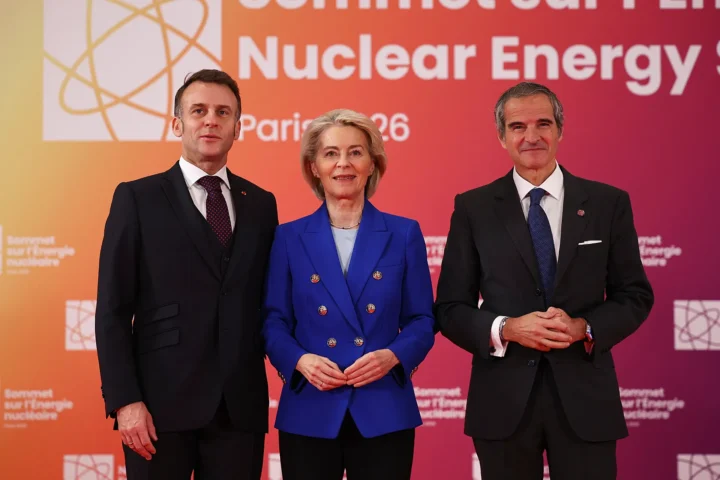
The intensifying conflict in the Middle East has placed a harsh spotlight on the European Commission and its president, Ursula von der Leyen. As Iran and Israel move closer to an all-out regional war, the European Union finds itself navigating a precarious geopolitical landscape that challenges its internal cohesion and its global standing. The situation has reignited a long-standing debate within Brussels regarding how much authority the Commission should actually wield over matters of international diplomacy and defense.
Since taking office, Von der Leyen has championed the idea of a geopolitical Commission. This vision sought to move the executive branch beyond its traditional role as a regulatory body and into the realm of high-stakes global strategy. However, the current crisis involving Iran has exposed the friction inherent in this ambition. While the Commission President has been quick to issue statements and align closely with Washington, several member states have expressed unease. These capitals argue that foreign policy remains the sovereign prerogative of national governments rather than a centralized authority in Brussels.
The friction is not merely bureaucratic but deeply ideological. Different European nations hold varying historical ties and strategic interests in the Middle East. While some countries advocate for a hardline approach toward Tehran, others emphasize the need for diplomatic de-escalation to prevent a total collapse of regional stability. When Von der Leyen takes a decisive stance, she often finds herself at odds with the more cautious approach favored by the EU’s High Representative for Foreign Affairs, Josep Borrell. This duality has occasionally led to a fragmented European message on the world stage.
Critics argue that the Commission’s expanding role has bypassed the traditional consensus-building mechanisms that define European integration. In the early days of the current conflict, the lack of a unified front was palpable. Some diplomats privately suggest that the Commission President’s instinct to act as a singular voice for Europe can backfire when the twenty-seven member states are not in full agreement. This tension is particularly acute now, as the risk of a broader war involving Iran threatens to disrupt energy markets and trigger new waves of migration toward European shores.
Supporters of Von der Leyen, however, contend that a stronger Commission is exactly what Europe needs in an era of great power competition. They argue that the slow, deliberative process of reaching consensus among nearly thirty countries is ill-suited for the rapid pace of modern warfare and geopolitical shifts. From this perspective, Von der Leyen is simply filling a power vacuum that has existed for decades, providing the executive leadership necessary to make Europe a relevant actor alongside the United States and China.
As the situation in the Middle East evolves, the scrutiny on the Commission is unlikely to fade. The coming months will serve as a definitive test of whether the Brussels executive can sustain its expanded influence or if member states will move to reclaim their dominance over the foreign policy agenda. The outcome will determine the future structure of the European Union and its ability to act as a coherent power in an increasingly volatile world. For now, the eyes of the international community remain fixed on how Von der Leyen balances her bold vision with the complex realities of European diplomacy.