Staff Report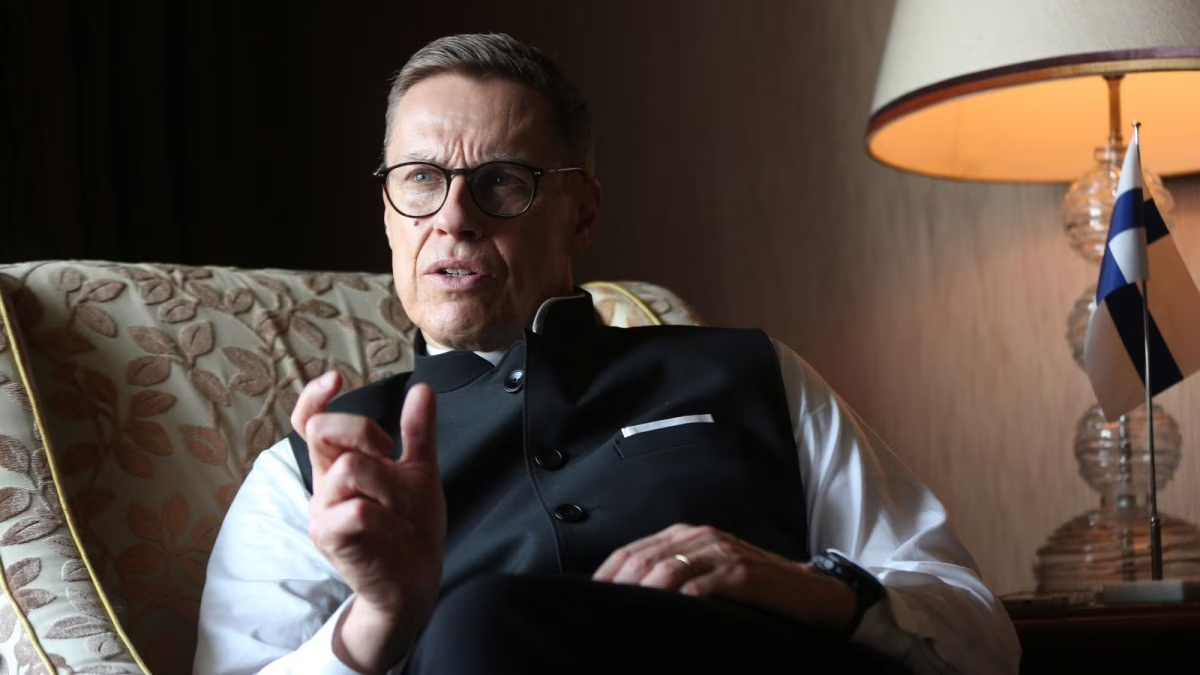
President Alexander Stubb of Finland recently articulated a perspective on the ongoing tensions involving Iran, suggesting a lack of clear resolution in sight. His comments emerge amidst a backdrop of persistent regional instability, which has seen various global actors grappling with how to de-escalate or manage the complex interplay of geopolitical interests in the Middle East. Stubb’s assessment underscores a widespread concern among international observers regarding the protracted nature of these conflicts and the difficulty in forecasting their eventual trajectory.
The Finnish leader’s remarks came during discussions focused on international security and diplomacy, where the precarious situation in the Persian Gulf and broader Middle East frequently dominates the agenda. He highlighted the intricate web of grievances, historical animosities, and external influences that contribute to the enduring volatility. This sentiment resonates with many foreign policy analysts who often point to the multifaceted origins of these disputes, which extend far beyond any single event or actor. The involvement of numerous state and non-state entities, each with their own objectives, further complicates any straightforward path toward a definitive “end game.”
Finland, a nation known for its pragmatic approach to foreign policy and its historical role in mediation efforts, often offers a nuanced view on global challenges. Stubb’s observation is not an isolated one but rather reflects a growing consensus among European leaders who are closely monitoring developments in the region. The potential for escalation, whether deliberate or accidental, remains a significant worry, particularly given the strategic importance of the Middle East to global energy markets and international trade routes. The ripple effects of any major conflict there would inevitably be felt across the world.
Discussions around the Iran conflict frequently touch upon the nuclear program, regional proxy conflicts, and the broader geopolitical competition between major powers. Each of these components presents its own set of challenges for diplomats attempting to forge a sustainable peace. The absence of a unified international approach, coupled with differing national interests among key players, often leads to a cycle of reactions rather than proactive solutions. This dynamic contributes to the perception that a definitive conclusion remains elusive, with periods of heightened tension often followed by uneasy lulls, only for new flashpoints to emerge.
President Stubb’s candid appraisal serves as a reminder of the enduring nature of certain geopolitical struggles and the limitations of conventional diplomatic tools in addressing deeply entrenched issues. His comments invite a more profound reflection on the strategies currently employed by the international community and whether alternative frameworks might be necessary to navigate such complex and seemingly intractable situations. The search for stability in the Middle East, particularly concerning Iran, appears to be less about finding a conclusive end and more about managing an ongoing, evolving challenge with no easy answers on the horizon.