Staff Report
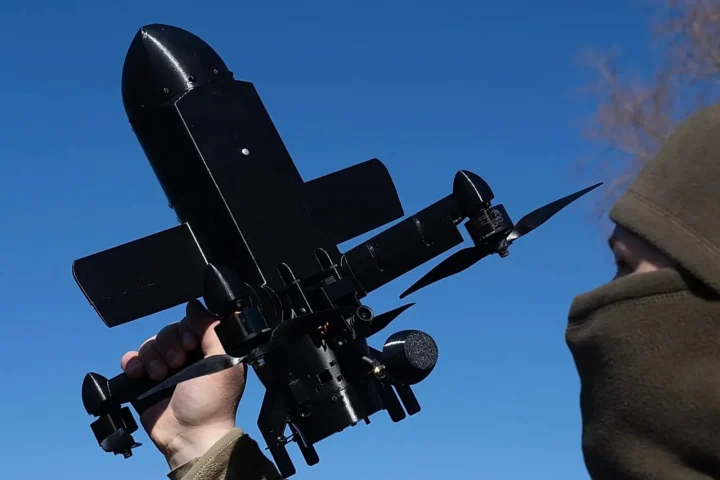
The landscape of modern warfare has shifted dramatically with the proliferation of inexpensive unmanned aerial vehicles. In response to this evolving threat, a new tactical solution from Germany known as the DroneHammer is gaining international attention for its ability to provide effective defense without the astronomical price tag associated with traditional missile systems. This development marks a significant turning point for ground forces who have increasingly found themselves vulnerable to kamikaze drones and surveillance platforms.
Developed by engineering teams focused on kinetic interception, the DroneHammer operates on a principle of simplicity and reliability. Unlike sophisticated laser systems that require immense power or electronic jamming units that can be circumvented by autonomous flight paths, this German innovation relies on physical disruption. By focusing on the cost per engagement, the manufacturers have addressed the primary imbalance in modern drone warfare where a thousand dollar drone often requires a million dollar interceptor to neutralize it.
Security analysts have noted that the DroneHammer specifically targets the gap in short range air defense. As conflicts in Eastern Europe and the Middle East have demonstrated, the sheer volume of small scale aerial threats can quickly deplete an army’s high end munitions. The DroneHammer allows commanders to preserve their expensive surface to air missiles for larger aircraft and cruise missiles while using this new tool to swat away the persistent nuisance of smaller quadcopters and fixed wing loitering munitions.
The deployment of this technology comes at a time when NATO members are frantically reassessing their domestic defense manufacturing capabilities. Germany has been at the forefront of this industrial pivot, seeking to provide hardware that is not only technologically advanced but also mass producible. The DroneHammer is designed for rapid assembly and can be integrated into various mobile platforms, making it a versatile asset for protecting moving convoys or static infrastructure like power plants and command centers.
Critically, the system does not rely on complex radar signatures alone. It utilizes a combination of visual sensors and automated tracking to lock onto targets that might otherwise be missed by traditional electronic warfare suites. Once a threat is identified, the response is near instantaneous. This speed of engagement is vital when dealing with FPV drones that can travel at high velocities and change direction in a heartbeat.
While the technical specifications remain partially classified for security reasons, the underlying philosophy is clear. Defense must become more economical to remain sustainable. The German approach focuses on the reality that the side which can afford to keep its skies clear for the longest period usually holds the strategic advantage. By lowering the financial barrier to effective air defense, the DroneHammer empowers smaller nations and diverse military units to protect their personnel with greater confidence.
As the system enters its next phase of field testing and potential deployment with European partners, the broader defense industry is watching closely. There is a growing consensus that the era of relying solely on exquisite and expensive weaponry is ending. The arrival of the DroneHammer suggests that the future of the battlefield will be defined by those who can innovate most efficiently at the tactical level. This German solution provides a blueprint for how modern militaries can adapt to the drone age without breaking their national budgets.