Staff Report
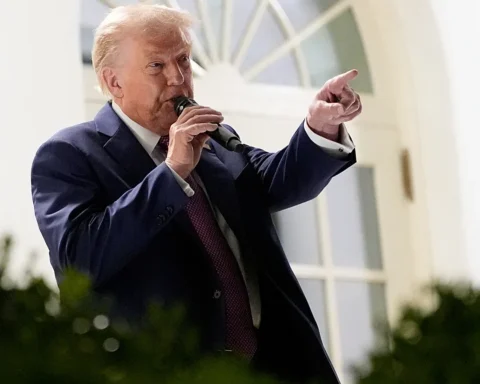
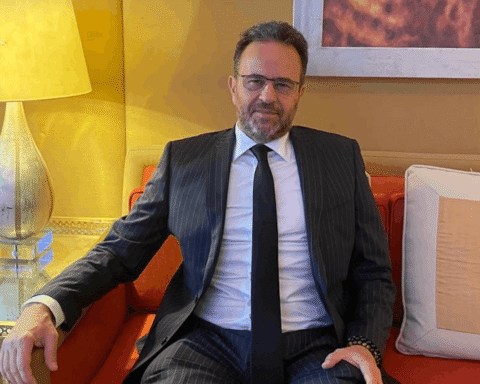
In a significant departure from the cautious rhetoric typically heard from European leadership, NATO Secretary General Mark Rutte has offered a robust public defense of Donald Trump’s potential impact on the military alliance. Speaking to reporters during a high-profile diplomatic summit, the newly appointed chief of the North Atlantic Treaty Organization argued that the former American president’s demanding approach to defense spending actually fortified the bloc rather than weakening it.
Rutte’s comments come at a pivotal moment for international relations as the United States prepares for an upcoming election that has left many European capitals on edge. Throughout his first term, Trump frequently criticized NATO members for failing to meet their financial obligations, at one point suggesting that the United States might not defend allies who did not pay their fair share. While those comments sparked panic in many foreign ministries at the time, Rutte now views that pressure as a necessary catalyst for change.
The Secretary General pointed out that during the Trump administration, there was a measurable shift in how European nations viewed their own security responsibilities. By forcing a blunt conversation about the two percent of GDP spending target, Trump effectively ended the era of complacency that had persisted since the end of the Cold War. Rutte suggested that this increased investment has left the alliance in a much more resilient position to handle modern threats, particularly in the wake of escalating tensions in Eastern Europe.
There is a strategic element to Rutte’s pragmatism. As the former Prime Minister of the Netherlands, he earned a reputation as a ‘Trump whisperer’ who could navigate the former president’s unpredictable negotiation style. By framing the Trump legacy as one of strength and revitalization, Rutte is attempting to bridge the gap between Washington’s potential future leadership and the bureaucratic machinery of Brussels. He emphasized that the alliance remains the cornerstone of global stability, regardless of who occupies the Oval Office.
However, the Secretary General’s optimistic outlook is not shared by everyone in the European Union. Many diplomats still harbor deep-seated concerns regarding the reliability of American security guarantees under a nationalist administration. Critics argue that while defense spending has indeed increased, the rhetorical damage to the principle of collective defense could be harder to repair. They point to recent campaign trail remarks where Trump suggested he would encourage certain geopolitical actors to do whatever they wanted to delinquent allies.
Despite these internal debates, Rutte maintained that the fundamental interests of the United States are inextricably linked to a strong Europe. He argued that Trump understands the competitive advantage provided by a network of thirty-one allies, a unique asset that neither China nor Russia can replicate. According to Rutte, the focus should not be on the friction caused by individual personalities but on the tangible results of an alliance that is now spending more on hardware, personnel, and technological innovation than at any point in the last three decades.
As the summit concluded, the message from the NATO chief was clear: the alliance is prepared to work with any American leader. By specifically highlighting the benefits of the Trump era, Rutte is signaling that NATO is no longer a passive organization waiting for American instructions, but a proactive partnership that has been hardened by the criticism of its most powerful member. Whether this rhetorical olive branch will ensure a smooth relationship in the event of a Republican victory remains to be seen, but for now, Mark Rutte is betting on a narrative of strength through accountability.