Staff Report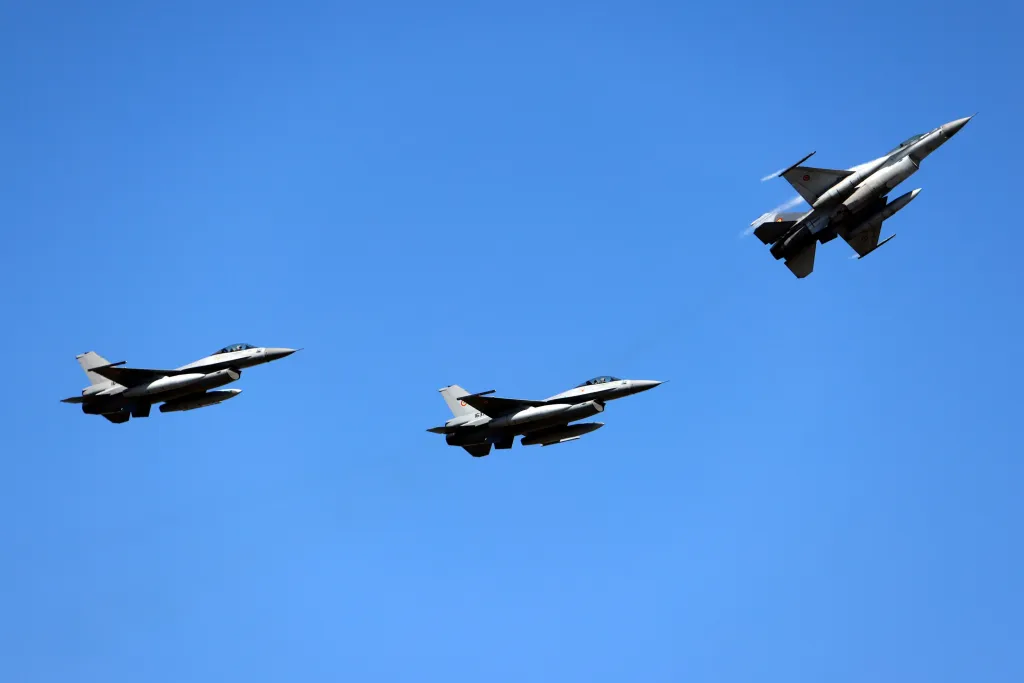
Two Romanian F-16 fighter jets scrambled from the Fetești airbase last Sunday, under NATO’s operational command, to intercept and ultimately shoot down a suspected Russian drone over the Black Sea. This incident marks the third such incursion within a three-day period and the fourth recent violation of NATO airspace involving a drone over Romanian territory. The repeated intrusions underscore the persistent challenges to regional security as the conflict in Ukraine continues to unfold.
Romanian President Nicusor Dan confirmed the downing, stating that the drone was shot down at 10:13 AM over Romania’s territorial waters in the Sulina–Chilia area. Investigations into previous incidents have indicated that at least one of the intercepted drones appears to be a “Shahed type,” a model frequently employed by the Russian Federation in its ongoing conflict with Ukraine. This pattern of incursions has prompted strong reactions from both Romanian authorities and NATO allies, highlighting the perceived escalation of risks to the alliance’s eastern flank.
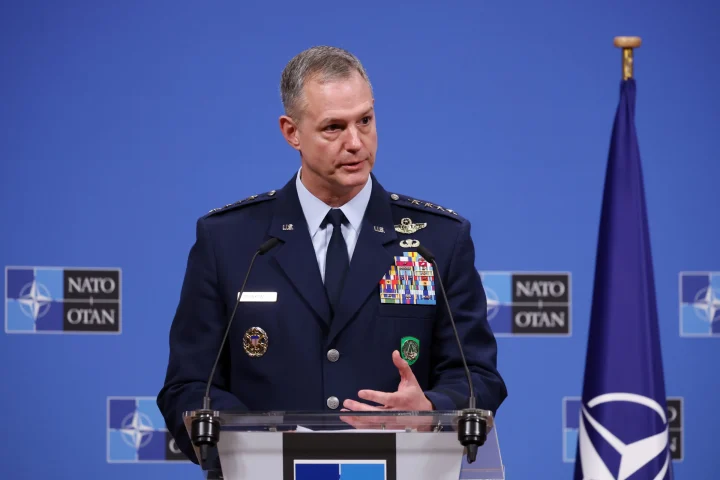
Colonel Martin O’Donnell, a spokesperson for NATO’s Supreme Headquarters Allied Powers Europe (SHAPE), noted that this latest interception adds to a series of four recent drone downings by Romania in coordination with the alliance. Beyond the recent events over the Black Sea, Romanian jets also shot down a drone over Estonia in May. Romanian pilots and aircraft are presently based in Lithuania, providing broad strike capabilities as part of NATO’s collective force posture in the region. O’Donnell reiterated NATO’s readiness, stating, “As we continue to prove, NATO is constantly on the watch and prepared to defend itself from any threat.” This statement reflects the alliance’s commitment to maintaining vigilance and defensive capabilities along its borders.
The defensive measures being deployed include advanced counter-drone technologies. Romania has acquired the MEROPS counter-drone system, designed to deploy relatively inexpensive, three-foot-long drones to neutralize incoming threats such such as Shahed variants. This acquisition is part of a broader effort across NATO members to harden their long eastern border against the growing threat posed by unmanned aerial vehicles. The strategic importance of these systems is magnified by past incidents, such as a Russian drone going astray in May and striking an apartment building in eastern Romania, injuring two people and raising concerns about the conflict spilling over into NATO territory.
President Dan articulated the gravity of the situation, describing the continued violations of Romanian, NATO, and European Union airspace as “inadmissible and intolerable.” He emphasized that such actions are unacceptable and are being treated with the utmost seriousness in collaboration with allied nations. Belgium, a fellow NATO and EU ally, echoed these sentiments, with Foreign Minister Maxime Prévot stating that Sunday’s incursion served as a “stark reminder of the ongoing threat Russia’s war poses to European security.” Belgium has approximately 300 troops stationed in Romania as part of NATO’s eastern flank force, further underscoring the collective response to regional instability.
The repeated drone incidents, involving both Russian and Ukrainian aerial vehicles, impacting Romania and other NATO members, have become a consistent feature since Russia’s full-scale invasion of Ukraine in February 2022. These events necessitate a continuous reassessment of defensive strategies and underscore the intricate challenges faced by nations bordering the active conflict zone. The alliance’s coordinated responses aim to deter further incursions while maintaining a robust defensive posture in an increasingly complex security environment.