Staff Report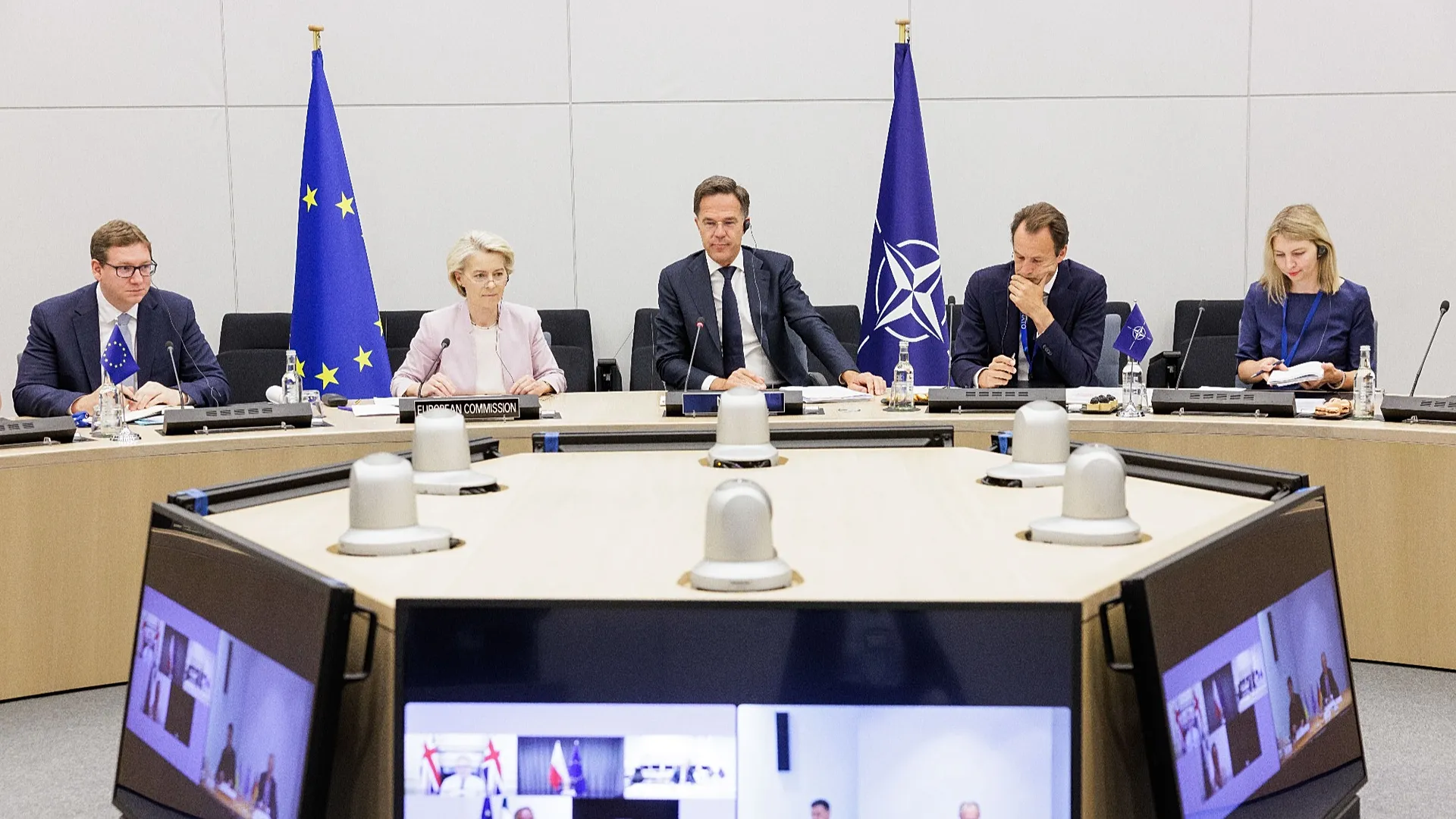
European Commission President Ursula von der Leyen declared full solidarity with Germany this week, signaling a firm European stance following Berlin’s formal attribution of a high-profile drone incident to Russia. The move escalates tensions, prompting discussions among key European and NATO leaders about potential new sanctions and strengthened defenses against hybrid threats. The incident, involving drones near military supply aircraft at Leipzig/Halle Airport, has quickly become a focal point for renewed discussions on European security and deterrence.
Von der Leyen’s commitment to a united front was clear, as she announced plans to discuss the matter with NATO Secretary-General Mark Rutte and prepare additional sanctions with foreign ministers at an upcoming meeting. “We will keep the EU united despite these escalating and serious acts,” she stated, emphasizing that “hybrid attacks will not go without a clear response.” This bilateral meeting, described as being arranged on “short notice” by European Commission Chief Spokesperson Paula Pinho, underscores the urgency with which European leadership is approaching the situation. The discussions are expected to center on deepening coordination against the increasingly prevalent hybrid threats targeting the continent.
Germany’s Interior Minister Alexander Dobrindt formally presented the government’s conclusion on Monday, asserting that Russia was responsible for the hybrid attack in Leipzig on August 4. He noted that “the means to carry out the act” were familiar from previous Russian hybrid operations in Ukraine. In response, Germany has ordered the closure of the Russian consulate in Bonn and the Russian House in Berlin, with Foreign Affairs Minister Johann Wadephul characterizing Russia’s actions as part of a “long series of attempts at destabilisation, disinformation, threats, sabotage and aggression directed at Europe.” The Russian embassy in Germany, for its part, has denied Berlin’s claims and warned of “consequences” for the new sanctions.
The specific incident in question involved a drone found in the security zone of Leipzig/Halle Airport near a Ukrainian cargo aircraft used for military transport. A subsequent drone collision with another aircraft prevented its landing, highlighting the disruptive potential of such actions. This comes amidst a broader pattern of reported incursions and incidents across Europe. Romanian and Estonian officials both reported drone incursions on Tuesday, while improvised explosive devices were discovered near a German coal-fired power plant on the same day. Estonian Defence Minister Hanno Pevkur articulated a growing concern, suggesting that Russia is “testing always this threshold” and that Europe must prepare for more such incidents.
The response from other European leaders has echoed the sentiments from Brussels and Berlin. NATO Secretary-General Mark Rutte affirmed the alliance’s full solidarity with Germany, stating that “the evidence is clear” regarding Russia’s culpability. He reiterated NATO’s commitment to strengthening its ability to “deter and defend all Allies against any threat—including malign actions like those seen in Leipzig and elsewhere across the Alliance.” French President Emmanuel Macron and Italian Prime Minister Giorgia Meloni also expressed their solidarity, with Macron pledging French support for new European sanctions and Meloni underscoring that “hybrid actions against any one of us are a matter of concern for all of us, and will be met with a united response.” These collective statements underscore a growing resolve to counter what EU foreign policy chief Kaja Kallas described as Russia’s increasing “kinetic hybrid incidents” aimed at dissuading support for Ukraine.