Staff Report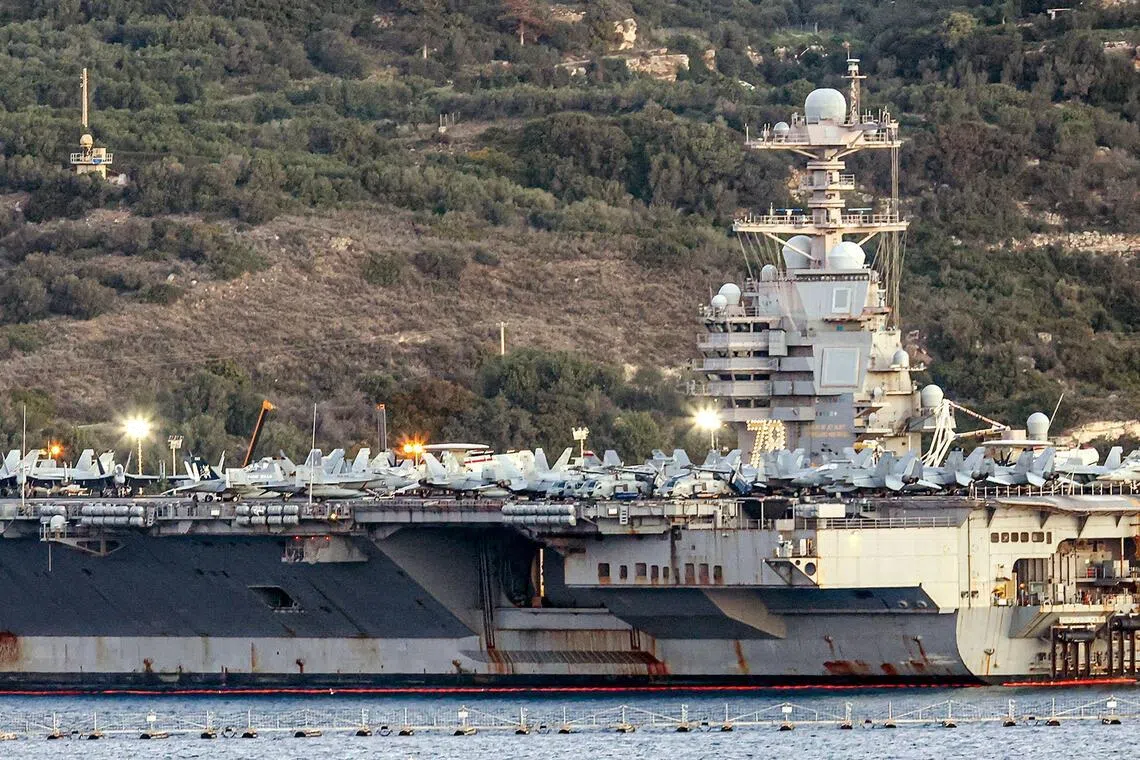
The USS Gerald R Ford, the largest aircraft carrier in the world, recently docked at the US naval base in Souda Bay, Crete, marking a significant development in the ongoing military buildup in the Middle East. Its arrival, alongside the destroyer USS Mahan, signifies a notable increase in American naval presence in a region already experiencing elevated tensions between Washington and Tehran. The vessels are reportedly scheduled for a four-day stay for refueling before proceeding to their operational area.
This deployment comes at a time when the Trump administration is exerting considerable pressure on Iran, demanding concessions regarding its nuclear program and an end to its crackdown on dissent. Reports from human rights organizations and insiders suggest a grim toll of up to 30,000 deaths from the suppression of protestors in Iran. The United States has amassed one of its most substantial military presences in the Middle East in decades, a clear indicator of its strategic resolve. Both nations have openly acknowledged their preparedness for potential conflict should diplomatic efforts falter, with a new round of nuclear talks slated for Thursday in Geneva.
The Islamic Republic itself faces unprecedented domestic and international challenges. Last year saw a concentrated period of Israeli and US strikes targeting Iranian nuclear facilities and key military personnel, spanning 12 days. This external pressure has been compounded by severe internal unrest, including widespread protests in December fueled by hyperinflation, which were met with violent suppression. These events collectively underscore the volatile environment into which the USS Gerald R Ford is now deploying.
US Naval Support Activity Souda Bay, situated on the Greek island of Crete, serves as a crucial strategic hub, housing approximately 1,000 personnel, comprising active-duty military, US civilian employees, and local staff. Neither the Greek defense ministry nor the US embassy in Athens offered official comments regarding the Ford’s arrival. The carrier itself is a formidable asset, capable of deploying over 75 military aircraft, including advanced platforms such as the F/A-18 Super Hornet and the E-2 Hawkeye.
The current US naval footprint in the Middle East already includes the aircraft carrier USS Abraham Lincoln, nine destroyers, and three littoral combat ships. The presence of two US aircraft carriers in the region simultaneously is a rare occurrence, last observed in June of the previous year when the US participated in strikes on three Iranian nuclear sites during Israel’s 12-day conflict with Iran. Each of these massive warships carries dozens of warplanes and thousands of sailors, representing an immense projection of power.
President Trump’s decision during his first term to withdraw from the 2015 nuclear deal, which had placed restrictions on Iran’s atomic activities in exchange for sanctions relief, initiated the current trajectory of heightened tensions. Following this withdrawal, Tehran began escalating its uranium enrichment levels, reaching up to 60%. While Iran consistently maintains its nuclear program is exclusively for peaceful purposes, this level of enrichment approaches the 90% typically required for weapons-grade material, raising international concerns. The arrival of the USS Gerald R Ford thus underscores a period of significant strategic recalibration and heightened vigilance in the Middle East.