 Staff Report
The European Union is currently navigating one of its most turbulent geopolitical eras since its inception, yet the leadership in Brussels appears to be reading from different scripts. As global conflicts intensify and traditional alliances face unprecedented strain, European Council President António Costa and Commission President Ursula von der Leyen have begun to signal fundamentally different visions for how the bloc should project its power on the world stage. This growing friction comes at a time when member states are desperate for a unified voice to counter economic pressure from the East and security threats from the North.
Ursula von der Leyen has increasingly leaned into a more assertive, geopolitical Commission. Her rhetoric often mirrors that of a traditional superpower, emphasizing strategic autonomy and the need for Europe to develop its own robust military industrial complex. She has been a vocal proponent of a hardline stance against systemic rivals, advocating for trade barriers and de-risking strategies that align closely with Washington’s current foreign policy trajectory. For von der Leyen, the world is a theater of systemic competition where Europe must choose a side and build the muscle to defend its interests.
In contrast, António Costa has adopted a more traditional, diplomatic tone that prioritizes the EU’s role as a mediator and a bridge-builder. Drawing on his experience as the former Prime Minister of Portugal—a nation with deep historical ties across the Global South—Costa seems more inclined to favor a multilateral approach. He has cautioned against the total polarization of international relations, suggesting that Europe’s greatest strength lies in its ability to facilitate dialogue rather than merely participating in an arms race or a trade war. This divergence is not merely a matter of personality but reflects a deeper ideological split within the European project regarding its ultimate identity.
This internal dissonance has significant practical consequences for European diplomacy. When the two most powerful figures in the EU speak with different emphasis on issues ranging from the war in Ukraine to the burgeoning trade disputes with China, it creates a vacuum that other global powers are quick to exploit. Outsiders often find themselves wondering who truly speaks for Europe, leading to a fragmented diplomatic front that weakens the bloc’s overall leverage. While von der Leyen pushes for a more muscular and interventionist stance, Costa’s preference for nuance and consensus-building represents the more cautious, old-school European school of thought.
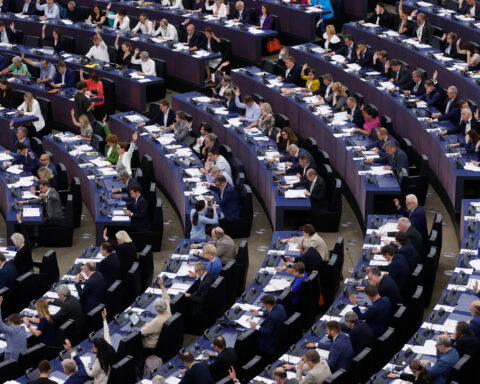
Furthermore, the timing of this leadership tension is particularly precarious. With the United States entering a period of potential political volatility and the ongoing economic stagnation within the Eurozone, the EU cannot afford a leadership stalemate. The struggle to find a coherent voice is also felt in the halls of the European Parliament, where lawmakers are divided between those who want a federalized defense strategy and those who fear that such a move would alienate key economic partners. The lack of a singular, clear narrative makes it difficult for Europe to set the agenda in international forums like the G7 or the United Nations.
As the transition into the new legislative cycle continues, the relationship between the Council and the Commission will be the defining factor in Europe’s global relevance. If Costa and von der Leyen cannot find a middle ground, the European Union risks becoming a secondary actor in a world increasingly defined by raw power politics. The challenge lies in harmonizing the need for strategic strength with the historical commitment to diplomacy. Only by reconciling these two diverging tones can Europe hope to influence the outcome of the global crises that currently threaten its stability and economic prosperity.