Staff Report
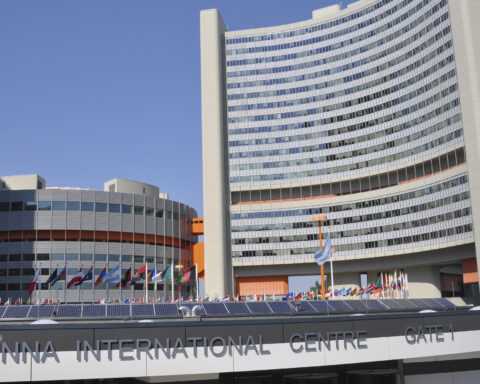
Vienna has formally rejected a series of requests from the United States military to utilize Austrian airspace for transit operations, citing a strict adherence to the country’s foundational principle of neutrality. The decision marks a significant diplomatic moment as European security dynamics continue to shift in the wake of regional conflicts and evolving NATO alliances. Austrian officials clarified that allowing foreign military assets to overfly the territory for combat-related logistics would contravene the constitutional laws that have governed the nation since the mid-twentieth century.
The refusal comes at a time when the United States is seeking to streamline its logistical corridors across Europe to support various strategic initiatives. While many neighboring nations have opened their skies to American and NATO transport vessels, Austria remains one of the few holdouts, maintaining a delicate balancing act between its European Union membership and its status as a non-aligned state. This policy of neutrality is not merely a political preference but is deeply embedded in the state treaty that restored Austrian sovereignty after World War II.
Defense analysts suggest that the Austrian government is under increasing pressure from international partners to modernize its stance on collective security. However, the domestic political landscape in Vienna remains fiercely protective of the neutral status, which many citizens view as a vital component of the national identity. Public opinion polls consistently show that a vast majority of the population favors staying out of military entanglements, fearing that providing transit rights could make the country a target or draw it into broader geopolitical rivalries.
The United States Department of State has not issued a formal protest regarding the decision, acknowledging the sovereign right of nations to manage their own territorial airspace. Nevertheless, the logistical hurdle forces American planners to reroute flights through alternative corridors in Germany, Italy, or the Czech Republic. These detours, while manageable, add complexity and cost to military movements that are often time-sensitive. The situation highlights the ongoing friction between the practical needs of global superpowers and the legal frameworks of smaller European entities.
Inside the Austrian Parliament, the debate over neutrality is becoming more nuanced. While the current administration has held firm on the overflight ban, some opposition figures argue that the definition of neutrality must evolve to reflect the realities of modern warfare and cyber threats. They suggest that being a silent partner is no longer feasible in an era where security challenges do not respect international borders. Conversely, proponents of the status quo argue that Austria’s role as a neutral mediator is more valuable to the world than its potential as a transit hub for foreign militaries.
This recent friction serves as a reminder that the geopolitical map of Europe is not a monolith. Despite the high level of cooperation seen across the continent in recent years, historical legal obligations continue to dictate the limits of military integration. As the United States continues to rotate forces and equipment through the European theater, it must navigate a patchwork of regulations that vary significantly from one border to the next. For now, the skies over Austria will remain closed to any foreign military mission that does not meet the narrow criteria for humanitarian or disaster relief efforts.
As the international community watches, Vienna appears committed to its path. The decision to block American military flights is a clear signal that Austria intends to preserve its unique position as a bridge between East and West, even if that means occasionally frustrating its closest democratic allies. The long-term implications for trans-Atlantic relations remain to be seen, but the immediate message is one of sovereignty and the enduring power of historical precedent.