Staff Report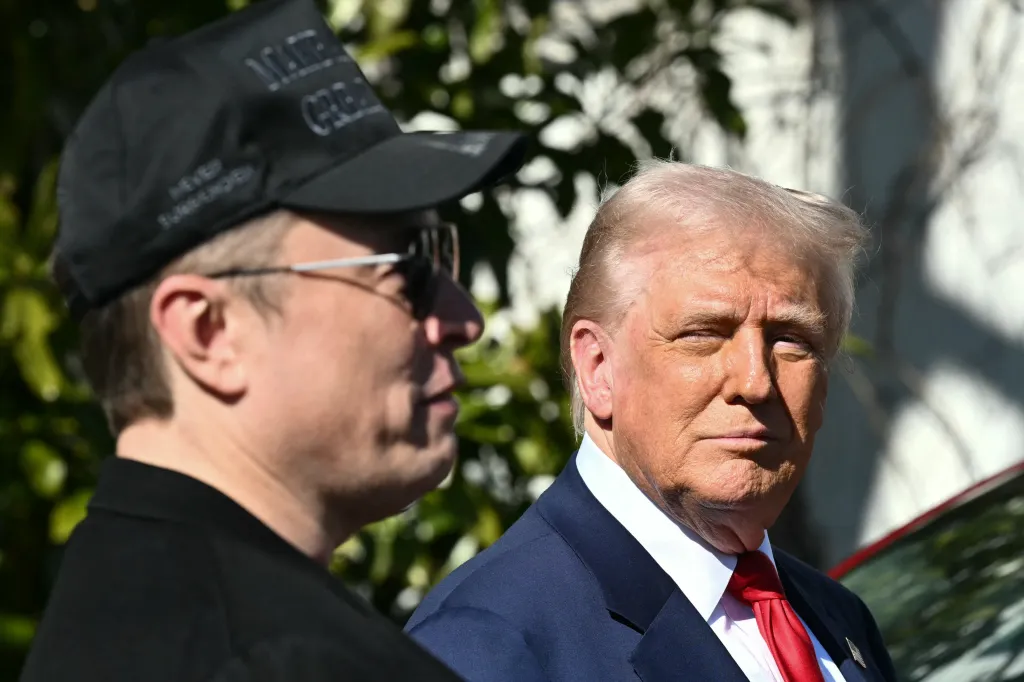
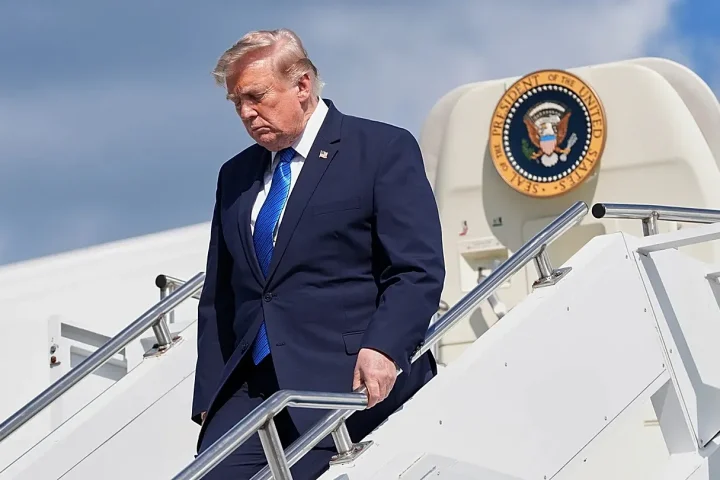
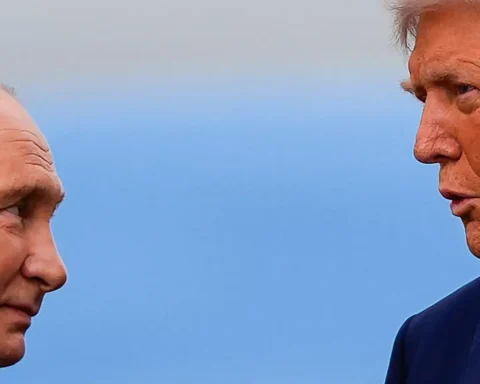
President Donald Trump’s upcoming visit to Beijing, marked by a notable shift in tone, aims to navigate a complex relationship with China that has seen escalating tensions over the past year. Just over twelve months ago, the White House introduced its “Liberation Day” tariffs, igniting a tit-for-tat trade dispute. However, recent communications from the President suggest a desire to de-escalate, with Trump expressing on Truth Social his anticipation for the trip to China, describing it as an “amazing country” led by President Xi, whom he considers “respected by all.” He further predicted “great things” for both nations. This marks a public softening after months of strained exchanges, where China accused the U.S. of “double standards” and dismissed fears of a trade war, while Trump claimed China had “totally violated” prior agreements.
The administration’s initial assertion that trade partners would absorb tariff costs, rather than U.S. consumers, appears to have met with a different reality in China. The Asian economic powerhouse has seemingly reoriented its trade focus. Chinese government figures for April indicated a 14.1% year-on-year surge in exports. This growth, according to reports from The Observatory of Economic Complexity (OEC), was not primarily fueled by demand from the United States. Instead, February 2026 saw export growth largely driven by increased demand from Hong Kong, Germany, and South Korea. This strategic diversification by Beijing could imply a potentially weaker negotiating position for the U.S. than in previous engagements, given China’s reduced reliance on American markets.
Despite this evolving trade landscape, the White House contingent arriving in Beijing will include a formidable lineup of American business leaders, signaling a unified front of U.S. commercial interests. Among those confirmed to accompany the President are Apple CEO Tim Cook and Tesla CEO Elon Musk, according to a White House official. The delegation will also feature prominent figures such as BlackRock CEO Larry Fink, Boeing CEO Kelly Ortberg, Goldman Sachs CEO David Solomon, and Blackstone’s Stephen Schwarzman. Other notable attendees include Cargill’s Brian Sikes, Citigroup’s Jane Fraser, Coherent’s Jim Anderson, GE Aerospace’s H. Lawrence Culp Jr., Illumina’s Jacob Thaysen, Mastercard’s Michael Miebach, Meta Platforms executive Dina Powell McCormick, Micron Technology’s Sanjay Mehrotra, Qualcomm’s Cristiano Amon, and Visa’s Ryan McInerney.
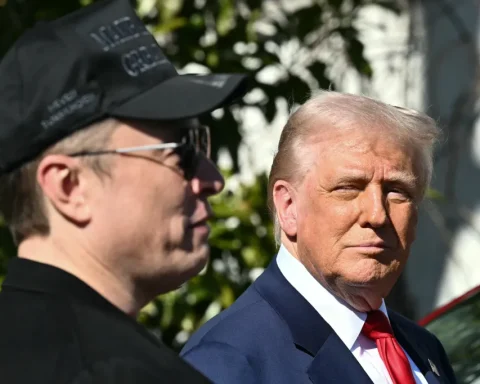
The presence of Elon Musk in particular draws attention, marking a potential return to a political orbit he had largely exited. Musk played a significant role in Trump’s previous election campaign, even being appointed to lead the Department of Government Efficiency (DOGE) following a re-election. However, this involvement reportedly led to boycotts and targeting of Tesla by consumers. The relationship further frayed as Musk became critical of Trump’s policies, prompting threats from the White House to terminate contracts with his various businesses. While the full extent of any reconciliation remains unclear, despite a shared appearance in Saudi Arabia last November, Trump seemingly desires the considerable influence and star power of the world’s wealthiest individual by his side for these critical discussions in Beijing, and Musk appears willing to participate.
The inclusion of such a high-profile business delegation underscores a multifaceted approach to the complex U.S.-China relationship. It suggests an intention to leverage the economic might and global reach of these corporations in discussions that span not only trade but potentially broader geopolitical considerations. The shift from confrontational rhetoric to a more conciliatory tone, coupled with the impressive roster of American business leaders, indicates a strategic move by the Trump administration to re-engage with China from a position of perceived strength, even as China’s economic independence from the U.S. market continues to grow.