Staff Report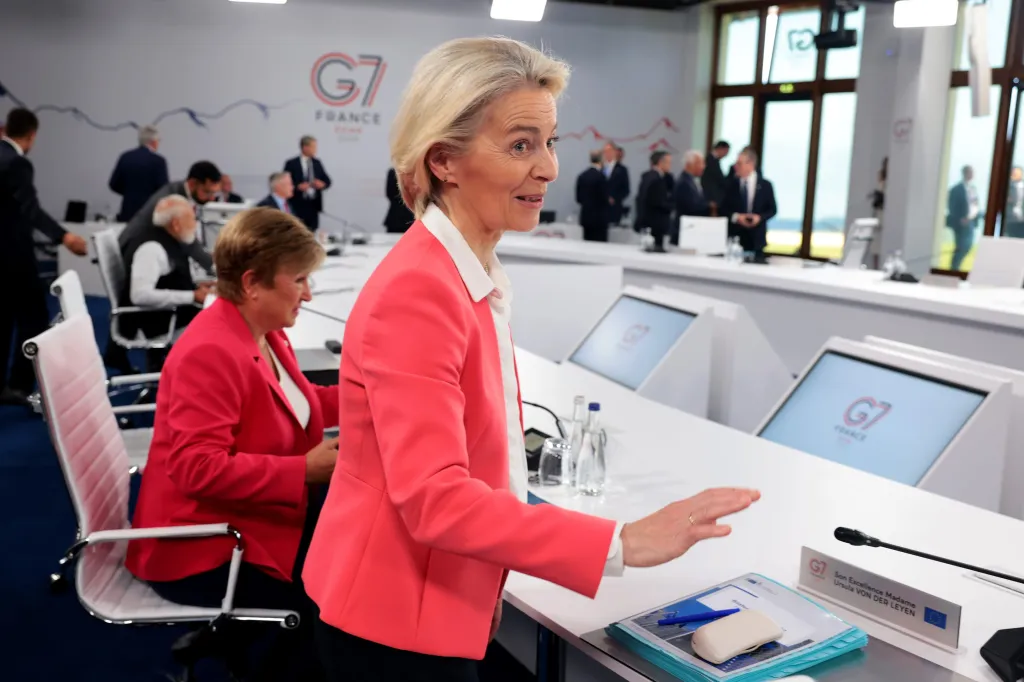
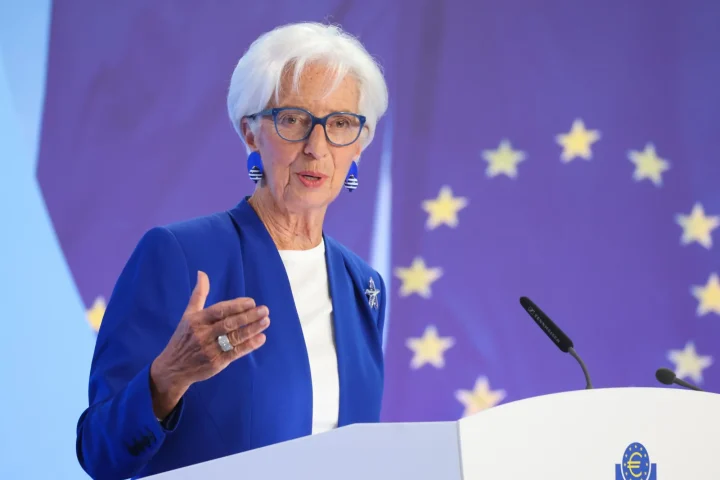
The financial fallout from the ongoing conflict in the Middle East has profoundly impacted Europe, with the continent incurring an additional 25 billion euros, or approximately $29 billion, in oil and gas import costs during the initial 54 days of the Iran war. This substantial expenditure has reignited urgent discussions within the European Union regarding its energy security and the imperative to establish diversified trade and energy pathways, particularly those that bypass volatile regions like the Strait of Hormuz. European Commission President Ursula von der Leyen has been vocal about this necessity, highlighting the vulnerability exposed by geopolitical tensions and the looming threat of long-term jet fuel shortages.
One significant initiative gaining renewed traction is the India-Middle East-Europe Economic Corridor, often referred to as IMEC. Von der Leyen recently addressed G7 leaders, emphasizing the creation of more resilient alternative export routes, singling out IMEC as a prime example of such strategic infrastructure. This corridor is envisioned as a critical component in bolstering Europe’s economic resilience, diversifying its supply chains, and enhancing its energy independence, especially as Russia continues its aggressive stance and the United States re-evaluates its strategic alliances. While the EU has formally supported IMEC through a memorandum of understanding, only a fraction of its 27 member states are official signatories. Nevertheless, a high-ranking EU diplomat, speaking anonymously due to the confidential nature of ongoing discussions, confirmed strong political commitment behind the scenes. The immediate focus, according to this diplomat, is on translating the vision into tangible implementation across its three core pillars: transport and trade, energy connectivity, and digital infrastructure, potentially involving new pipelines and transmission cables.
The IMEC project enjoys the endorsement of Israel, with Prime Minister Benjamin Netanyahu having discussed its revolutionary potential with Indian Prime Minister Narendra Modi last year. However, the full realization of IMEC hinges significantly on the normalization of relations between Israel and Saudi Arabia, a key player in the corridor. Lianne Pollak-David, co-founder of the Israel-based Coalition for Regional Security, underscored the critical role of U.S. leadership in facilitating this diplomatic breakthrough. Saudi Arabia, for its part, has consistently maintained that normalization with Israel is contingent upon a clear pathway to Palestinian statehood, a condition that Netanyahu has opposed. The recent escalation of the Iran war and its impact on Gulf Arab nations introduces an additional layer of complexity to Saudi Arabia’s calculus, with officials declining to comment on their current stance regarding IMEC.
Beyond IMEC, Europe is actively exploring other avenues to secure its energy future. European Council President Antonio Costa, alongside Von der Leyen, indicated at an April EU leaders’ meeting a readiness to collaborate with Gulf countries on new energy infrastructure designed to circumvent conflict zones. The existing East-West Pipeline, which traverses Saudi Arabia from its eastern oil fields to the Red Sea, serves as a testament to the value of such alternatives; following the outbreak of the Iran war, Aramco significantly increased its transport capacity to a maximum of 7 million barrels of oil per day. French Foreign Ministry spokesperson Pascal Confavreux also noted that G7 leaders are discussing financing and constructing infrastructure, including terrestrial segments, that would bypass the Strait of Hormuz. Specifics on EU-backed projects remain limited, but an EU official indicated that the bloc would encourage European companies to invest in renewable energy initiatives in the Gulf to meet European energy demands.
The integration of the EU with collaborative projects in Gulf countries is expected to be a gradual process, according to Gabriel Mitchell, an analyst with the German Marshall Fund think tank. He suggests that oil and gas pipelines, given their shorter construction timelines, are the most probable near-term projects, alongside subsidies for repairs at Gulf facilities targeted during the conflict. Mitchell also noted that any new projects would need to align with the EU’s green policies, implying that pipelines, for instance, would likely incorporate “dual-use” capabilities for transporting both gas and potentially hydrogen in the future. Another promising endeavor is the Great Seas Interconnector (GSI), an EU-backed electricity cable designed to connect the power grids of continental Europe with Cyprus and eventually Israel. Although currently facing bureaucratic hurdles related to financing, the GSI holds substantial potential not only for ending the energy isolation of Cyprus and Israel but also as a future energy link to India, potentially integrating into the broader IMEC framework. Gallia Lindenstrauss, a senior fellow at the Israel-based Institute for National Security Studies, hailed GSI as a pragmatic solution for modern energy needs, facilitating the transition to green energies and providing a flexible platform for energy security and grid backup. The United States is also actively fostering closer energy ties in the Eastern Mediterranean, with U.S. Secretary of Energy Chris Wright recently highlighting the region’s growing importance for global energy development and inaugurating the Eastern Mediterranean Energy Center at Rice University to boost cooperation.