Staff Report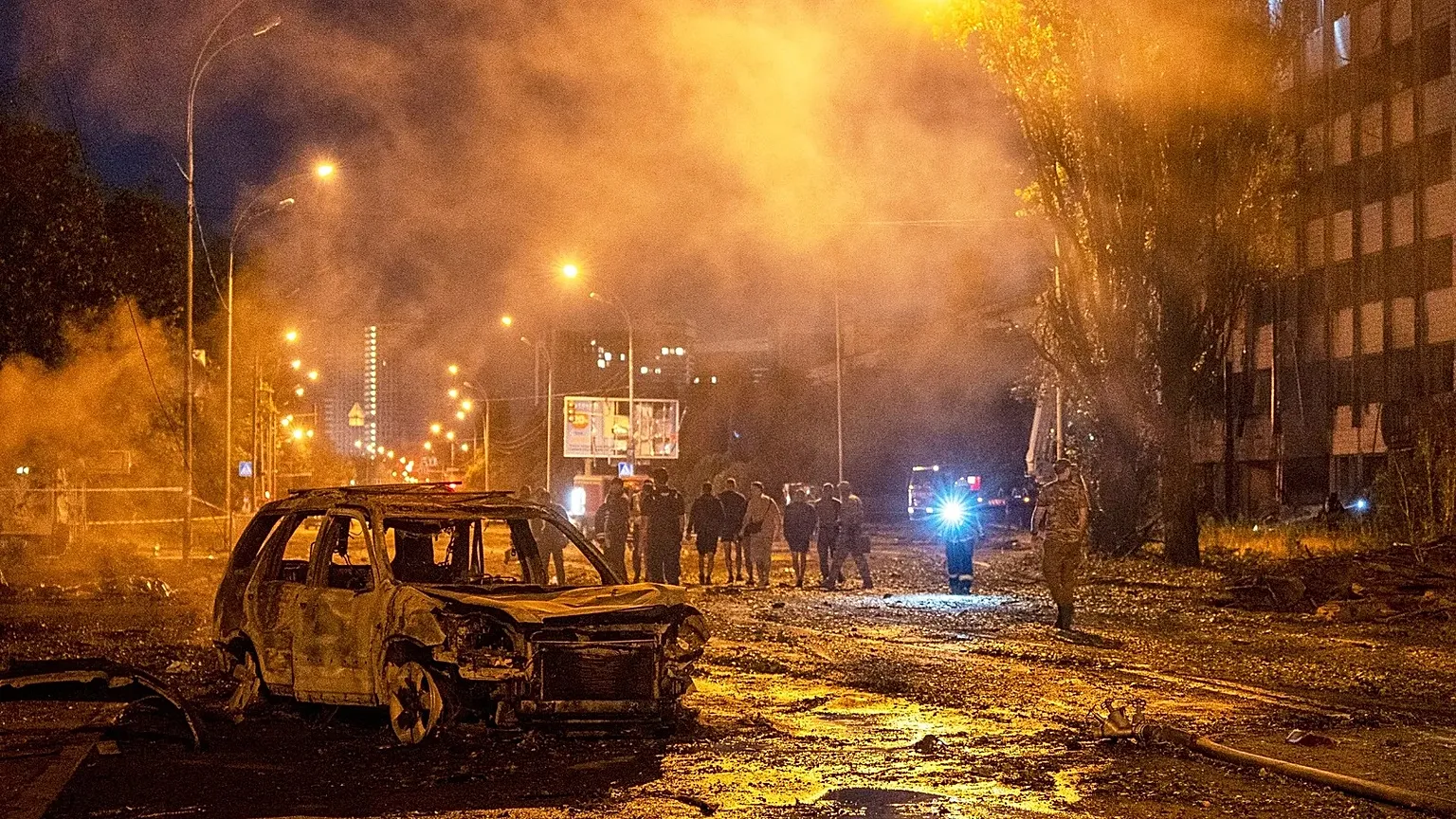
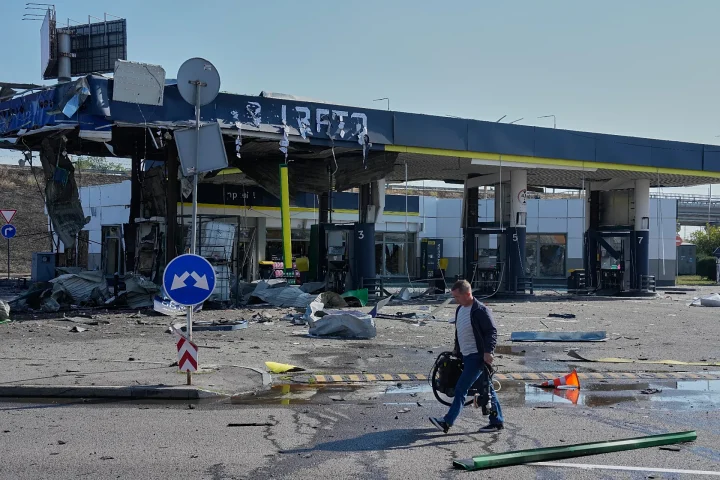
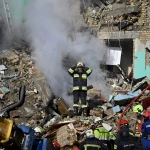
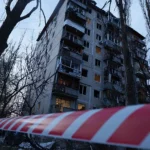
The remnants of a shattered ambulance, twisted metal, and scattered debris marked the scene across Kyiv following a severe overnight assault. At least nine individuals lost their lives, and over thirty sustained injuries as Russian forces launched a barrage of ballistic missiles at the Ukrainian capital. City mayor Vitali Klitschko described the night as “horrific,” detailing damage to both residential and non-residential structures and widespread fires erupting across five distinct districts.
Among the specific targets hit was Kyivmedspetstrans, a municipal organization responsible for operating ambulances and specialized emergency medical transport. This facility reportedly suffered two direct impacts. Klitschko confirmed that four of its buildings were partially destroyed, and five ambulances were completely incinerated, highlighting the direct impact on critical emergency services. Emergency and rescue teams continue their operations in the affected areas, sifting through the destruction and aiding those impacted.
Ukrainian President Volodymyr Zelenskyy provided a broader picture of the overnight attacks, stating that Russia launched 35 missiles, including 27 ballistic missiles, and 185 attack drones across Ukraine. While Kyiv bore the brunt of the assault, other regions including Dnipro, Sumy, Kharkiv, and Poltava also experienced strikes. Zelenskyy’s post on X, accompanied by video footage depicting the aftermath, underscored the extensive nature of the offensive. Critically, he noted that local air defenses managed to intercept only one of the incoming missiles, prompting renewed pleas for additional Patriot interceptors.
Zelenskyy’s urgent call for more advanced air defense capabilities, particularly Patriot systems, stems from the perceived encouragement Russia gains from the current shortage of such interceptors. He emphasized that these capabilities are not for hypothetical future scenarios but are desperately needed “here and now, to contain and stop the Russian war in Ukraine.” This appeal gains additional context from recent statements by former US President Donald Trump, who appeared to backtrack on an earlier promise to allow Ukraine to build its own Patriot missiles. During a cabinet meeting, Trump expressed reservations about sharing such advanced technology, citing concerns that recipients “can some day turn on you.” This contrasts with a previous meeting with Zelenskyy at the 2026 NATO summit in Ankara, where Trump had reportedly indicated Washington would provide Ukraine with a license to manufacture Patriot missiles, adding, “We’ll show them how to do it.” The Patriot missile system is recognized globally for its advanced air defense capabilities, capable of intercepting ballistic missiles within a range of approximately 15 to 20 kilometers.
Amidst these missile strikes, Ukraine also mounted its own counter-operations. In the Black Sea, Ukrainian naval drones successfully targeted and sank the Russian-flagged vessel Yanina. Alexey Likhachev, the head of Rosatom, the Russian state nuclear operator and owner of the ship, confirmed the sinking, though he stated all crew members were rescued and the vessel was carrying civilian goods. Zelenskyy, however, characterized the Yanina as a “sanctioned Russian container ship.” Furthermore, Ukraine’s Security Service targeted three Russian oil refineries in Bashkortostan overnight, continuing Kyiv’s campaign against Russia’s energy infrastructure. These simultaneous actions highlight the ongoing, multi-front nature of the conflict, with both sides employing a range of tactics from long-range missile strikes to naval drone attacks and infrastructure targeting.