Staff Report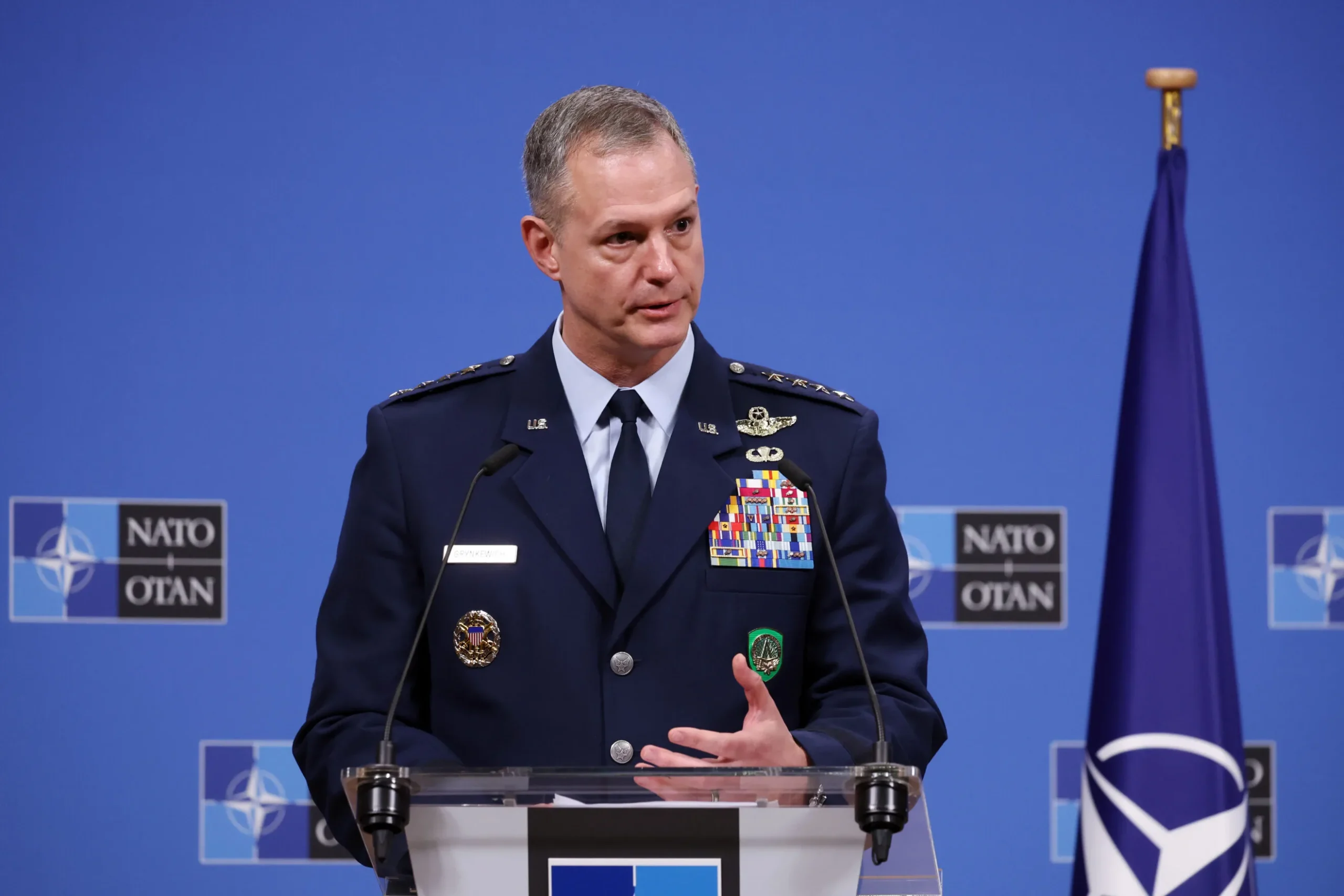
Omar Havana/Getty Images
NATO’s top military commander said Tuesday he isn’t expecting additional U.S. troop withdrawals from Europe any time soon, even as alliance members privately press him to fill the gap left by Donald Trump’s decision to pull thousands of American soldiers from the continent.
“The deployments that we have so far are all that’s been announced — it’s all that I’m expecting in the near term,” said Gen. Alexus Grynkewich, NATO’s Supreme Allied Commander Europe, responding to a question in Brussels. He added that a further “redeployment of U.S. forces over time as [European] allies build their capacity” should be expected, but described that as an “ongoing process” likely to take “several years.”
The current drawdown traces back to two separate U.S. announcements. Trump said earlier this month he would pull at least 5,000 soldiers out of Germany after growing frustrated with German Chancellor Friedrich Merz’s criticism of the war in Iran. Days later, Defense Secretary Pete Hegseth blindsided Poland by canceling an upcoming rotational deployment of 4,000 troops. According to two NATO diplomats and a person familiar with the matter, the alliance’s 32 members have since tasked Grynkewich with finding European replacements for the departing soldiers and equipment.
One decision in particular has unsettled allies: the withdrawal of a specialized long-range missile unit from Germany. “We’re not able to replace the capabilities if they’re withdrawn,” one senior NATO diplomat said, adding they expected Grynkewich to “do everything possible to mitigate any gaps.” Grynkewich himself said he has been in “constant contact” with allies to work through options for how capabilities might be arrayed along the eastern flank.
The Pentagon hasn't publicly detailed its reasoning, and Polish officials have traveled to Washington seeking clarity. Polish Defense Minister Władysław Kosiniak-Kamysz spoke with Hegseth on Tuesday and said afterward on X that "no decision has been made to reduce U.S. military capabilities in Poland," describing the moves as "in no way directed against our strategic partnership" while the Pentagon works up "a new plan for the deployment of its forces across Europe."
In practice, the two announcements are part of a single drawdown aimed at reducing troop numbers in Germany, according to two people familiar with the matter. The 4,000-strong 2nd Armored Brigade Combat Team, 1st Cavalry Division, will no longer complete its planned nine-month rotation to Poland, with some troops potentially replaced later by units currently stationed in Germany; the missile unit's cancellation accounts for the remaining 1,000 troops in Trump's original 5,000-soldier figure. "There will be 5,000 troops coming out of Europe," Grynkewich confirmed, stressing that "this decision does not impact the executability of our regional plans."
Still, the drawdown carries real costs for the alliance. Jennifer Kavanagh, director of military analysis at the Defense Priorities think tank, noted that while the cuts affect just 3% of American troops stationed in Europe, they "could affect U.S. deployments to the Baltic states as well," since the U.S. contingent in Poland feeds troops into that region. Replacing the departing soldiers could happen "within a year at most," she said, but the brigade's "heavy assets such as tanks and Stryker vehicles ... will be harder to replace in the near term with identical capabilities," while substituting the German missile unit's capability could take as long as five years. Whether that replacement gets worked out through NATO's next four-year defense planning cycle or on a faster track remains an open question, with allies also able to raise it at NATO's biannual Force Generation conferences. As one senior diplomat put it: "It's quite blurred."