 Staff Report
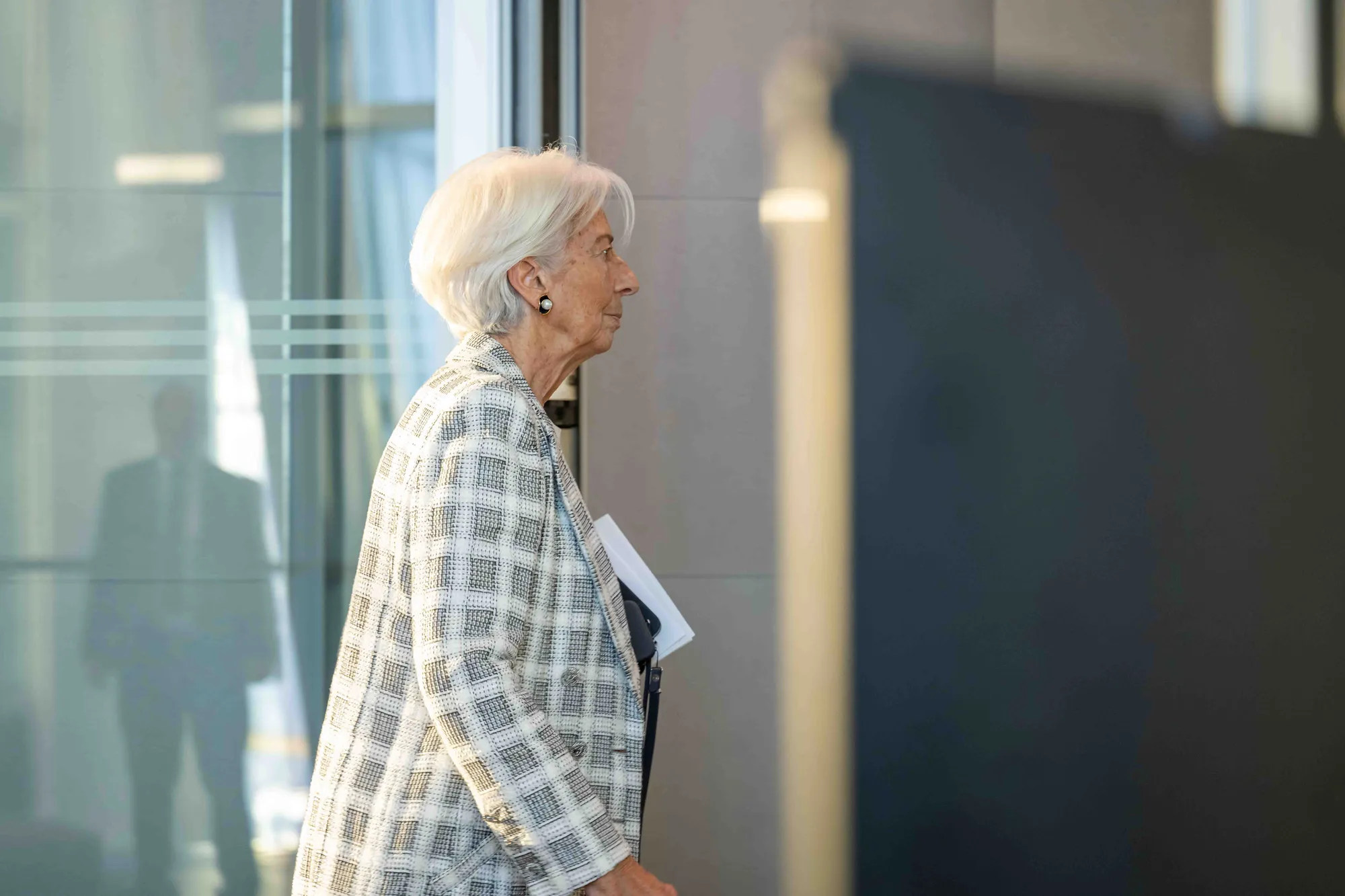
Christine Lagarde will leave her position as European Central Bank president on 7 February, ending months of speculation about an early departure and stepping down roughly nine months before her formal term was due to expire.
The timing appears to be the point. Lagarde has reportedly been weighing an early exit specifically to allow EU leaders to choose her successor while pro-EU French President Emmanuel Macron remains in office, a window that matters because of who could replace him. Right-wing candidate Marine Le Pen is seen as a serious contender in France’s next presidential election, and a Le Pen presidency could give a very different French government significant influence over who leads the ECB next, an outcome Lagarde’s early departure appears designed to avoid.
Two names have emerged as frontrunners for the role: Klaas Knot, the former governor of the Dutch central bank, and Pablo Hernandez de Cos, the former governor of Spain’s central bank. Both bring the kind of national central-banking credibility that has typically been a prerequisite for the ECB’s top job, and their emergence as early favorites suggests EU leaders are already positioning for a succession process that Lagarde’s resignation has now made urgent rather than theoretical.
The departure comes at a genuinely difficult moment for the eurozone. Fresh pressure on interest rates has been building, and whoever takes over will inherit an economy navigating that pressure without the continuity a full, uninterrupted term would have provided. An early handover, managed deliberately rather than forced by circumstance, gives the incoming president more runway to settle in before facing a major policy inflection point, but it also means the eurozone is changing its most senior monetary policymaker at a moment when stability might otherwise be preferred.
Lagarde's tenure at the ECB spanned some of the most turbulent years in the institution's history, including the pandemic response and the inflation surge that followed. Her decision to leave early, on her own terms and with a clear political rationale attached, stands in contrast to how that tenure began, and it leaves EU leaders with a compressed but politically cleaner window to settle on her replacement before France's own political landscape potentially shifts under them.