Staff Report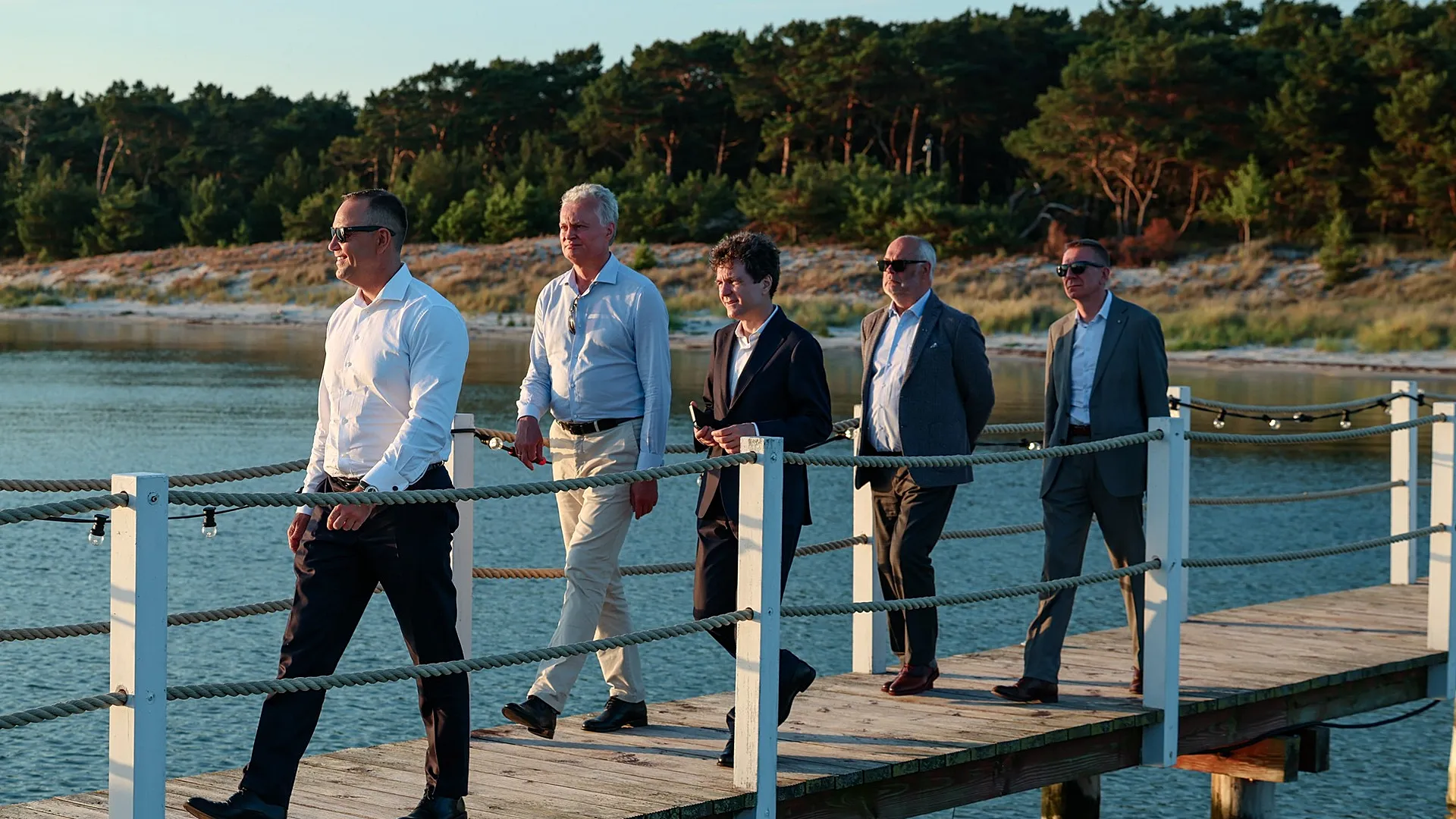
Five heads of state from Central and Eastern Europe convened in Jurata, Poland, for an informal meeting hosted by Polish President Karol Nawrocki. The presidents of Lithuania, Latvia, Estonia, and Romania joined Nawrocki at the presidential residence, a gathering that comes with the Ankara NATO summit on the horizon. Discussions spanned a range of critical topics, from regional security and transatlantic relations to the delicate issue of Poland’s deteriorating relationship with Ukraine, a matter underscored by recent diplomatic friction involving Ukrainian President Volodymyr Zelenskyy.
The leaders dedicated significant attention to forging a united front ahead of the upcoming NATO summit in Turkey. Priorities for regional cooperation, particularly concerning the security of the Baltic and Black Sea basins, were high on the agenda. Strengthening NATO’s eastern flank and the ongoing development of Europe’s defense capabilities also formed a core part of their deliberations, alongside strategies within the Bucharest Nine and the Three Seas Initiative. Beyond security, the informal summit addressed the broader future of the European Union, including key challenges facing the bloc and the development of crucial energy and transport infrastructure across the region. Before their talks commenced, the group visited the Naval Port in Gdynia, underscoring the maritime aspect of regional security discussions.
A notable undercurrent to the formal agenda was the strained relationship between Warsaw and Kyiv. Lithuanian President Gitanas Nausėda publicly offered to mediate between the two nations, contingent on both sides expressing a willingness to engage in such a process. Nausėda emphasized the importance of addressing the issue, stating his desire to understand President Nawrocki’s perspective on the conflict’s origins and potential resolutions. The Lithuanian leader pointed out that while history holds significance, the present situation, particularly with Russia’s ongoing war against Ukraine, demands immediate attention.
The recent escalation in Polish-Ukrainian tensions stems from President Zelenskyy’s decision to name a Ukrainian military unit “Heroes of the UPA.” This move ignited considerable criticism within Poland, drawing condemnation from figures such as Prime Minister Donald Tusk, Deputy Prime Minister and Defence Minister Władysław Kosiniak-Kamysz, and Deputy Prime Minister and Foreign Minister Radosław Sikorski. In a swift and decisive response, President Nawrocki subsequently stripped Zelenskyy of the Order of the White Eagle, Poland’s highest honor. The decoration was reportedly returned to Warsaw via courier, signaling the depth of the diplomatic rift.
At the heart of this dispute lies a profound historical disagreement concerning the actions of the Organisation of Ukrainian Nationalists (OUN) and the Ukrainian Insurgent Army (UPA). These groups are held responsible by Poland for the genocidal ethnic cleansing of the Polish population in Volhynia and Eastern Lesser Poland during the years 1943 to 1945. This historical assessment continues to cast a long shadow over contemporary relations, even as both nations face the shared challenge of Russia’s aggression. The informal meeting in Jurata, therefore, served not only as a platform for regional strategic alignment but also as a quiet venue for navigating sensitive bilateral grievances that threaten broader solidarity.