Staff Report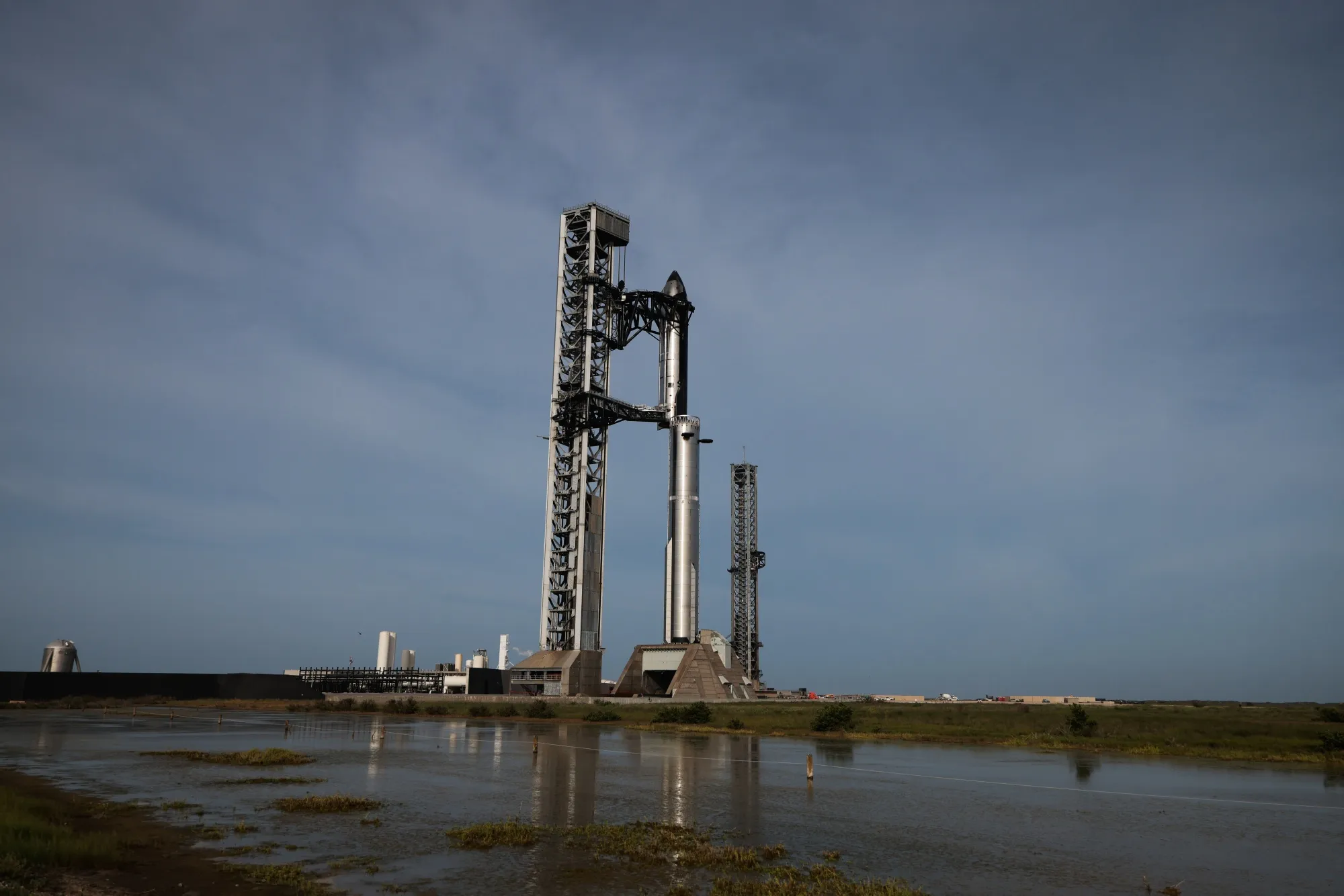
The Texas Gulf Coast once again became the focal point for space enthusiasts and industry observers as SpaceX embarked on its latest high-altitude integrated flight test of the Starship system. This event, drawing considerable attention, marked another critical step in the company’s ambitious program to develop a fully reusable super heavy-lift launch vehicle. The launch window opened early on a recent Thursday morning, with the towering stainless steel vehicle poised on its orbital launch mount at the Starbase facility near Boca Chica.
Engineers and technicians had spent weeks meticulously preparing for this flight, following a series of ground tests and regulatory clearances. The Federal Aviation Administration (FAA) had granted the necessary launch license after a thorough review of the company’s modifications and safety protocols stemming from previous test campaigns. These regulatory hurdles are a standard, yet often time-consuming, part of any aerospace endeavor, underscoring the stringent requirements for operating such powerful hardware. The company’s recent valuation, reportedly nearing $200 billion in secondary market transactions, adds another layer of public and investor interest to these operational milestones.
The primary objective of this particular test was to achieve a successful ascent through the atmosphere, followed by a controlled shutdown of the Raptor engines on both the Super Heavy booster and the Starship upper stage. The flight profile outlined a trajectory that would see the booster perform a “boostback burn” and a guided descent towards a splashdown in the Gulf of Mexico. Meanwhile, the Starship itself was designed to continue on a suborbital path, eventually re-entering the Earth’s atmosphere and targeting a splashdown in the Pacific Ocean, near Hawaii. Such a complex sequence of maneuvers demands precision engineering and flawless execution.
Previous attempts have provided valuable data, even when not achieving all objectives. Engineers have consistently emphasized that these early flights are primarily about gathering information on vehicle performance, dynamic stresses, and the intricate interactions between the booster and the Starship during separation. Each flight, regardless of its ultimate outcome, contributes to the iterative design and development process that is characteristic of SpaceX’s approach to aerospace engineering. This incremental progress is fundamental to refining the vehicle for eventual orbital and interplanetary missions.
The sheer scale of the Starship system, standing nearly 400 feet tall when fully stacked, is a testament to the ambitious goals SpaceX has set for itself. Designed to transport both cargo and humans to the Moon and Mars, its development is being watched closely by NASA, which has selected Starship as the human landing system for its Artemis program, aiming to return astronauts to the lunar surface. The successful evolution of this vehicle could significantly alter the economics and capabilities of space exploration, potentially enabling more frequent and cost-effective access to deep space.
Public reaction to these tests remains a mix of awe, anticipation, and occasional criticism regarding environmental impacts and regulatory oversight. However, for SpaceX, each launch is not just a spectacle but a critical data-gathering exercise. The insights gleaned from every engine firing, every structural stress, and every communication link are fed back into the design cycle, propelling the company closer to its long-term vision of making humanity a multi-planetary species. The recent flight, therefore, represents much more than a single test; it is a vital chapter in an ongoing narrative of technological advancement and human aspiration.