Staff Report
By Chief Business Savior
Dr. MAC Munir Ahmad Chaudhry
The global economic system is under unprecedented strain. Despite rapid technological advancement and historic levels of wealth creation, societies across the world face widening inequality, fragile supply chains, youth unemployment, declining trust in institutions, and recurring economic crises. These challenges are not random or temporary. They are the structural consequences of an economic model designed for a different era. The question before us is no longer whether reform is needed, but whether we are prepared to redesign the system itself. As I often state, you cannot fix a broken future with a system designed for the past. The era we are entering demands a new form of leadership, a redefined capitalism, and a new kind of entrepreneur, one who evolves into a Business Savior.
The existing global economic framework was built for an industrial world that prioritized centralization, extraction, and short-term gains. While this model delivered growth and scale, it also created deep vulnerabilities. Wealth has accumulated without social balance, economic expansion has become detached from human well-being, capital has gained unprecedented mobility without sufficient accountability, and markets increasingly reward speed rather than responsibility. An economy that grows numbers while weakening societies is not succeeding; it is eroding its own foundation. The result has been a recurring cycle of crisis and recovery without resilience. Redesigning the global economic system therefore requires a shift away from profit-first thinking toward purpose-aligned, trust-based economic structures that value long-term stability over short-term extraction.
Redesign does not mean dismantling markets or rejecting capitalism. It means re-architecting how value is created, shared, and sustained. The Business Savior framework is grounded in the alignment of profit with responsibility, the creation of trust as economic infrastructure, the prioritization of collaboration over isolation, and the placement of people, particularly women, youth, and small and medium-sized enterprises, at the center of growth. It also requires institutional stewardship that looks beyond quarterly returns toward long-term governance and vision. The future economy must reward those who protect and grow value responsibly, not merely those who extract it. Under this framework, business is no longer a purely private pursuit but a stabilizing force that contributes to societal resilience and economic continuity.
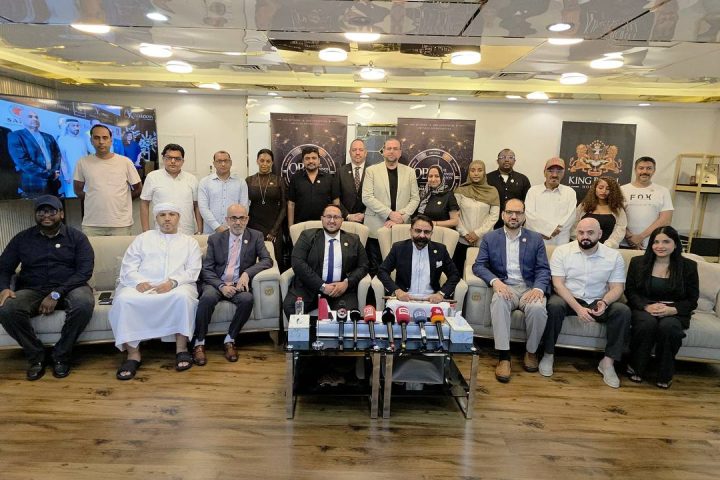
At the operational core of this redesigned model lies the Business Savior Network, or BSN, a global, trust-based collaboration engine within the 1B.World Business Savior Ecosystem. BSN enables verified digital business identity, reputation- and contribution-based trust, ethical capital flow, cross-border collaboration, and opportunity matching aligned with real economic needs. It is not a network of influence, but a network of responsibility. By replacing traditional gatekeepers with transparent trust systems, BSN allows entrepreneurs, investors, institutions, and SMEs to participate in the global economy on the basis of merit rather than privilege. In doing so, it lowers barriers, increases accountability, and aligns economic participation with real-world impact.
The broader 1B.World Business Savior Ecosystem provides the full-stack environment required to scale this redesigned economic model globally. It integrates digital identity, financial technology for transparent and inclusive capital flows, collaborative networks for execution, international communities for global belonging, media platforms to shape narratives and visibility, and real-world events that convert trust into tangible outcomes. This ecosystem is not another platform competing for attention. It is an operating system for ethical global business, designed to ensure that doing the right thing is not only possible, but economically rewarded. By aligning incentives with responsibility, the ecosystem transforms ethics from a moral aspiration into a competitive advantage.
No global economic redesign can succeed without credible and principled institutional leadership. Al Maktoum Holding Group represents a model of how institutions can support transformation without dominating it. Its approach reflects long-term capital stewardship, a governance-first investment philosophy, cross-border economic diplomacy, and a commitment to enabling ecosystems rather than controlling markets. Such leadership reinforces a fundamental principle: institutions shape history not by exercising control, but by creating the conditions in which sustainable systems can emerge. This kind of institutional participation provides the confidence required for governments, investors, and entrepreneurs to adopt new economic models responsibly and at scale.
Ultimately, redesigning the global economic system depends on people. It depends on leaders who are willing to step beyond traditional definitions of success and embrace responsibility as a core measure of achievement. A Business Savior is not defined by size, wealth, or geography, but by responsibility to communities, to future generations, to economic stability, and to ethical growth. A Business Savior understands that success is meaningless if it does not leave the system stronger than before. Choosing this path means prioritizing collaboration over domination, stewardship over extraction, and legacy over short-term gain.
The global economic system will be redesigned, either by intentional leadership or by unavoidable crisis. The true choice before us is whether we lead that transformation with ethics, intelligence, and collaboration, or allow instability to force change upon us. The Business Savior Network, the 1B.World Business Savior Ecosystem, and the principled institutional leadership of Al Maktoum Holding Group together offer a working blueprint for a more resilient, inclusive, and humane global economy. The future will belong to those who chose to become Business Saviors when the world needed them most. This is not ideology. It is economic leadership for a new era.