Staff Report
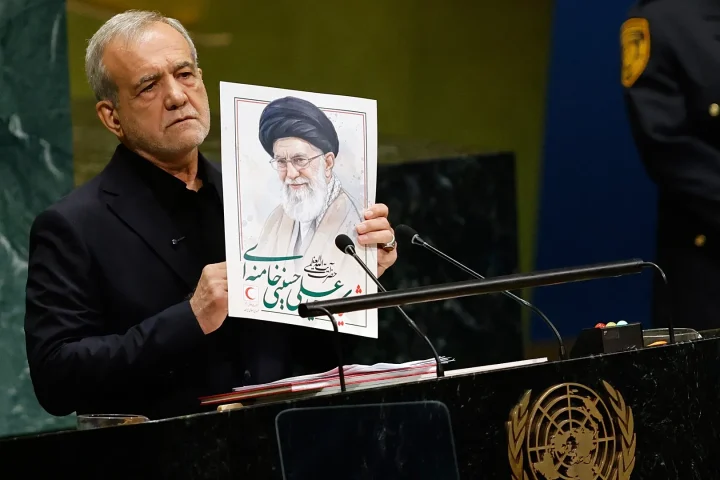
The enduring tenure of Ayatollah Ali Khamenei as Iran’s Supreme Leader represents one of the most resilient political structures in the modern Middle East. Since assuming the role in 1989, Khamenei has navigated internal dissent, international sanctions, and regional conflicts by relying on a sophisticated architecture of authority. This system is not merely a product of religious ideology but is built upon three distinct pillars that secure the regime against both domestic and external threats.
The first and perhaps most visible pillar is the Islamic Revolutionary Guard Corps (IRGC). Originally formed as a militia to protect the nascent revolution, the IRGC has evolved into a massive military and economic conglomerate. Unlike the traditional regular army, the IRGC is directly loyal to the Supreme Leader. It controls vast sectors of the Iranian economy, including construction, telecommunications, and energy. This economic footprint ensures that the military establishment has a vested interest in the survival of the current political order. By placing the country’s security and wealth in the hands of a loyalist elite, Khamenei has created a defensive shield that is difficult to penetrate from the outside.
The second pillar is the clerical and legal infrastructure, specifically the Guardian Council. This twelve-member body acts as the ultimate gatekeeper of Iranian democracy. By vetting every candidate for parliament and the presidency, the Council ensures that only those who demonstrate absolute loyalty to the concept of Velayat-e Faqih, or the guardianship of the jurist, are allowed to run for office. This mechanism effectively neutralizes political opposition before it can even reach the ballot box. Khamenei’s ability to appoint half of the council members directly, and influence the other half indirectly, allows him to maintain a legislative environment that never deviates from his long-term vision for the Islamic Republic.
The third pillar involves the vast network of bonyads, or charitable foundations, which operate as a shadow economy. These organizations manage assets seized during the 1979 revolution and report directly to the Office of the Supreme Leader. Because they are exempt from taxes and government audits, the bonyads provide Khamenei with an independent source of patronage. He can distribute wealth to loyalists, fund paramilitary groups, or provide social services to the poor to maintain a base of support among the religious working class. This financial autonomy means the Supreme Leader is never entirely dependent on the national budget passed by parliament.
Critically, these three pillars do not operate in isolation. They are deeply interconnected, with IRGC commanders often taking roles in bonyads, and clerical leaders providing the moral justification for the IRGC’s regional interventions. This overlapping structure creates a redundancy in the system; if one pillar faces a crisis, the others are positioned to provide support and stability. For example, during periods of civil unrest, the IRGC provides the muscle for crackdowns, while the clerical establishment provides the legal and religious framework to disqualify the grievances of the protesters.
However, the reliance on these specific pillars also creates long-term vulnerabilities. The heavy involvement of the IRGC in the economy has led to widespread allegations of corruption and inefficiency, which have fueled public anger. Furthermore, the exclusionary nature of the Guardian Council has alienated a significant portion of the youth population who feel they have no voice in their country’s future. As the transition to an eventual successor looms, the question remains whether these three pillars are tied specifically to Khamenei’s personal leadership style or if they are robust enough to sustain the system after he is gone.
For decades, observers have predicted the imminent collapse of this power structure, yet it has proven remarkably adaptable. By balancing military might, legal gatekeeping, and independent financial resources, Khamenei has constructed a tripod of power that has survived decades of pressure. Understanding these pillars is essential for any diplomatic or strategic analysis of Iran’s role on the global stage, as they define the limits of reform and the persistence of the current regime.