Staff Report
The European energy market entered a state of high alert this week as wholesale natural gas prices experienced a dramatic surge, nearly doubling in value over a remarkably short trading window. This volatility comes as geopolitical analysts warn of an imminent widening of conflict in the Middle East, specifically involving Iran, which threatens to disrupt the delicate balance of global energy supplies that Europe has fought so hard to stabilize since late 2022.
Market participants are increasingly concerned that a direct military confrontation could compromise the Strait of Hormuz, a critical maritime chokepoint through which a significant portion of the world’s liquefied natural gas (LNG) and oil flows daily. For a continent that has spent the last two years pivoting away from Russian pipeline gas toward a heavy reliance on global LNG markets, any threat to Persian Gulf shipping represents a direct hit to its economic security. The sudden price spike reflects a ‘fear premium’ being baked into future contracts as traders scramble to hedge against the possibility of a prolonged supply vacuum.
Energy analysts in London and Brussels suggest that while European storage levels remain seasonally high, the sheer velocity of the price increase indicates that the market is no longer trading on fundamentals like weather or current inventory. Instead, the focus has shifted entirely to the potential for energy shocks that could mirror the crisis levels seen during the initial stages of the Ukraine conflict. If prices remain at these elevated levels, the progress made by European central banks in taming inflation could be derailed, forcing a rethink of planned interest rate cuts later this year.
Industrial giants in Germany and France are already expressing concern over this renewed volatility. High energy costs have historically forced many manufacturing sectors to curtail production or relocate operations to regions with cheaper power. If the current trend continues, the European Union may face a winter of renewed industrial stagnation. Furthermore, the political implications are significant, as governments may once again be forced to implement multi-billion euro subsidy programs to shield households from skyrocketing utility bills, further straining national budgets already burdened by high debt levels.
Diplomatic efforts are intensifying to prevent the situation from spiraling into a full scale regional war. European leaders have been active in calling for restraint, recognizing that their domestic economic stability is inextricably linked to the cessation of hostilities in the Middle East. However, the energy market remains skeptical of a quick resolution. The current price action suggests that even if a direct conflict is avoided, the era of cheap, stable energy for Europe remains a distant memory, replaced by a permanent state of geopolitical risk and price unpredictability.
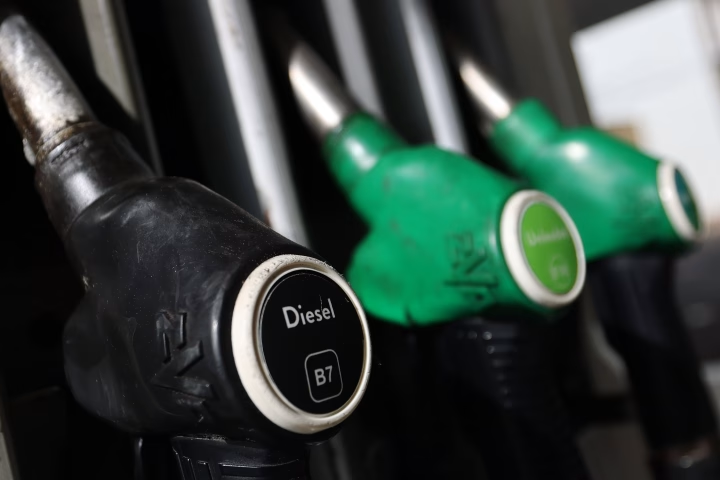
As the week progresses, all eyes remain fixed on the movements of the Iranian military and the diplomatic responses from Washington and Tel Aviv. For the average European consumer, the headlines of geopolitical maneuvering are quickly translating into the reality of higher costs at the pump and in the home. The next few days will be critical in determining whether this price spike is a temporary reaction to uncertainty or the beginning of a sustained energy crisis that could reshape the European economic landscape for years to come.