Staff Report
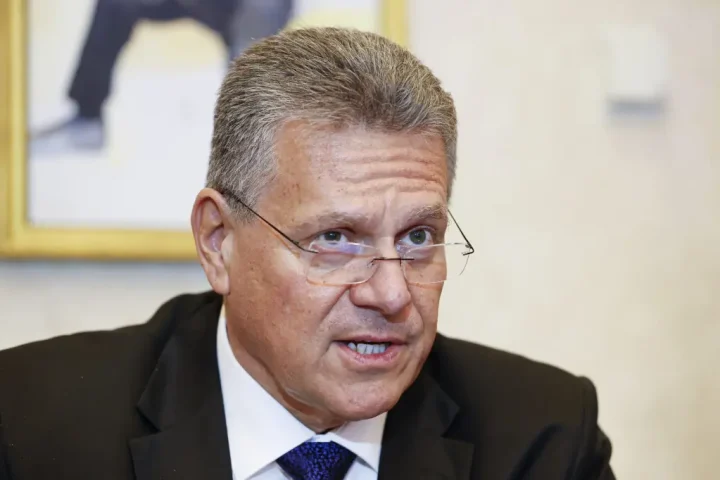
The political landscape in Hungary is witnessing a dramatic shift as Peter Magyar, the rising leader of the opposition Tisza party, has issued a direct and forceful warning to the Kremlin regarding foreign interference. During a series of recent public addresses, Magyar has positioned himself as a staunch defender of national integrity, calling on Russian authorities to refrain from any attempts to influence the democratic process within the country. This bold stance marks a significant departure from the more cautious rhetoric often associated with the current administration in Budapest.
Magyar has emerged as the most formidable challenger to Prime Minister Viktor Orban in over a decade. His movement has gained rapid momentum by tapping into public frustration over corruption and the perceived erosion of democratic norms. By explicitly naming Russia as a potential threat to the sanctity of Hungarian elections, Magyar is signaling a pivot toward a more proactive and security-conscious foreign policy. He argues that the Hungarian people alone should decide the future of their nation without the shadow of external psychological operations or digital manipulation.
Political analysts suggest that Magyar’s strategy is designed to highlight the complex relationship between the current Hungarian government and Moscow. While much of the European Union has moved to isolate Russia following the invasion of Ukraine, Budapest has maintained various economic and diplomatic ties. Magyar is using this backdrop to frame his opposition as the truly independent choice for voters who are wary of foreign leveraged interests. He has called for increased transparency in media funding and more robust cybersecurity measures to protect the electoral infrastructure from state-sponsored actors.
The timing of these statements is critical as Hungary prepares for a cycle of high-stakes voting. The Tisza party leader has frequently pointed to the use of disinformation as a tool for destabilization across Eastern Europe. He maintains that preserving the sovereignty of the ballot box is not just a matter of domestic policy but a fundamental requirement for Hungary’s standing within the Western alliance. His rhetoric effectively fuses traditional conservative values of national independence with a modern, pro-European outlook.
Furthermore, Magyar has urged his supporters to remain vigilant against a barrage of domestic propaganda that he claims is often amplified by foreign interests. He contends that the blurring of lines between state media and political messaging creates a vulnerability that external powers can easily exploit. By demanding that Russia stay out of Hungarian affairs, he is attempting to reclaim the narrative of national pride from the incumbent government, suggesting that true sovereignty cannot exist alongside secret deals or quiet dependencies.
As the election season intensifies, the international community is watching closely to see if Magyar’s message resonates with the broader electorate. His ability to mobilize large crowds has already proven that there is a significant appetite for his brand of politics. Whether his demands for non-interference will be met by Moscow remains to be seen, but the conversation has already shifted. Peter Magyar has successfully moved the issue of foreign meddling to the center of the political debate, forcing his opponents to address uncomfortable questions about the country’s international alliances.
In the coming months, the resilience of Hungary’s democratic institutions will be put to the test. Magyar’s vocal opposition to Russian influence serves as a rallying cry for those who seek a transparent and fully autonomous political future. By framing the upcoming elections as a battle for the soul of the nation’s sovereignty, he has raised the stakes for both domestic politicians and foreign observers alike.