Staff Report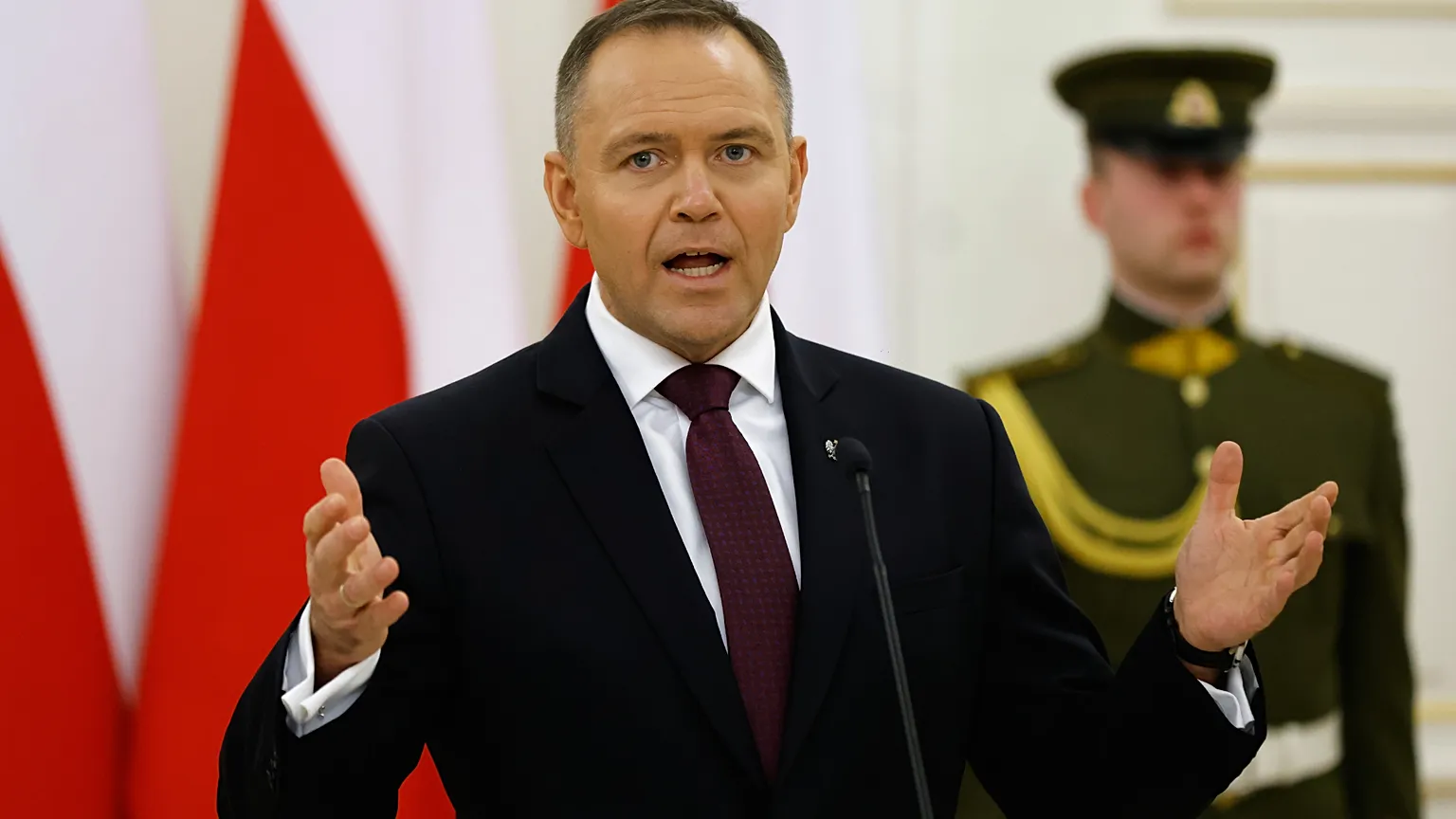
The Polish government’s ambitions to significantly bolster its defense capabilities have hit a substantial roadblock. President Karol Nawrocki recently exercised his veto power, rejecting legislation that would have paved the way for Poland to access nearly €44 billion in defense loans from the European Union. This decision has intensified a political standoff with Prime Minister Donald Tusk’s administration, particularly concerning the most effective means to finance the nation’s burgeoning defense expenditures.
At the heart of the dispute lies the EU’s Security Action for Europe (SAFE) program, a wide-ranging €150 billion initiative designed to invigorate defense spending and fortify Europe’s defense industrial base. Poland stood as the prospective leading beneficiary, with approximately €43.7 billion earmarked for its military modernization efforts. The Tusk government, known for its pro-EU stance, had championed the legislation, viewing these loans as a crucial, favorably priced financial mechanism. They argued that such funding would accelerate military upgrades, especially pertinent given the elevated security concerns across the continent following Russia’s full-scale invasion of Ukraine. Officials had indicated the funds could support diverse defense projects, from strengthening Poland’s eastern border defenses to investing heavily in domestic arms production.
President Nawrocki, however, holds a different perspective, one that aligns with the conservative opposition. His concern centers on the potential for increased dependence on Brussels should Poland rely on EU loans for such a critical sector. He instead advocates for leveraging domestic resources to finance these vital defense investments, suggesting that profits from the country’s central bank reserves could be a viable alternative. This philosophical divergence on financial sovereignty versus expediency has now moved from policy debate to direct executive action, creating palpable tension within Warsaw’s political landscape.
The presidential veto immediately drew sharp criticism from government officials. Prime Minister Donald Tusk, expressing his disappointment on social media platform X, stated that the President had “lost his chance to act like a patriot,” framing the decision as a missed opportunity to secure essential EU financing for defense. Tusk also announced an urgent cabinet meeting for Friday morning, where his administration plans to introduce alternative strategies to secure the necessary funds, indicating a “plan B” was already being prepared to ensure Poland could still access the SAFE funds.
Foreign Minister Radosław Sikorski echoed these concerns on social media, warning that obstructing access to the EU mechanism could significantly impede Poland’s capacity to enhance its defense capabilities. The sentiment within the government is one of frustration, particularly given the perceived urgency of military strengthening in the current geopolitical climate. Defense Minister Władysław Kosiniak-Kamysz further underscored the government’s position, explaining that the EU loans offered a pathway to expand military spending without imposing additional burdens on the national budget, a considerable advantage for any nation seeking to modernize its armed forces without compromising other public services.
This political impasse highlights a deeper ideological struggle within Poland regarding its relationship with the European Union and its strategic autonomy. While the Tusk government sees integration and shared financing as a pragmatic approach to collective security, President Nawrocki’s stance emphasizes national self-reliance. The coming weeks will reveal how the government intends to navigate this significant hurdle and whether a viable alternative can be forged to secure the substantial funding deemed essential for Poland’s defense. The implications extend beyond immediate military upgrades, touching upon the very nature of Poland’s future engagement with its European partners.